

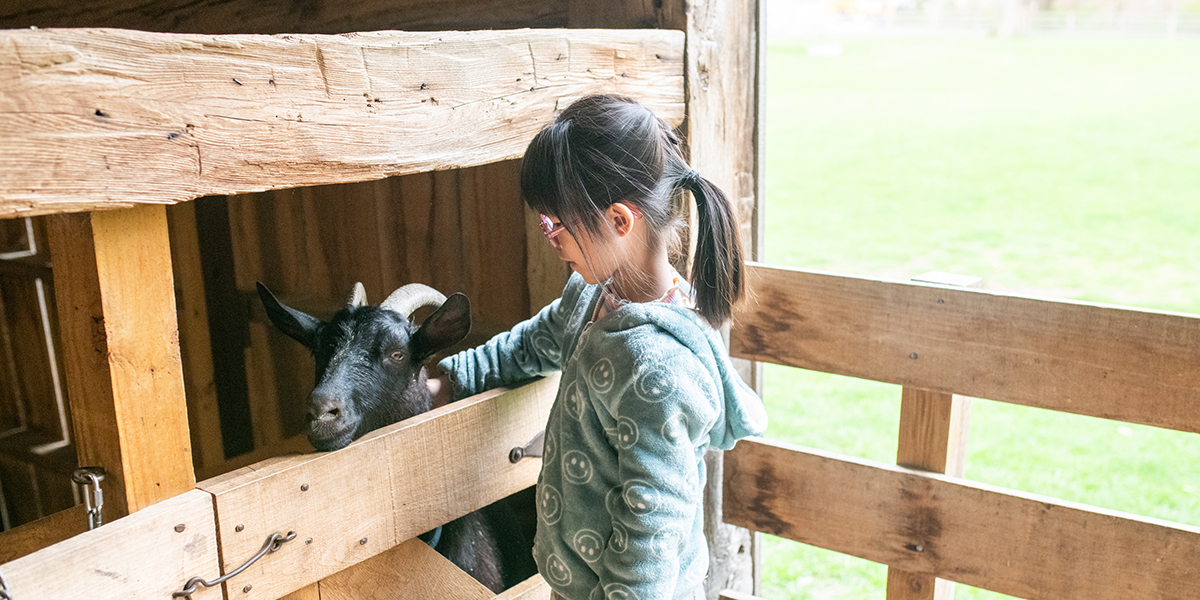
An animal experience up close
Interact with your favorite farm animals! You'll encounter big life lessons about animal husbandry, life cycles, and silly and surprising animal behaviors. Speak one-on-one with the specialists who care for animals year-round on our grounds. Make sure you ask about our rare historical breeds of livestock, and the important role Conner Prairie plays in preserving these animals.
Purchase General Admission Tickets
- Encounter Something Rare
- Observe Incredible Behaviors
- Chat With a Pro
- Make a Diet Discovery
-
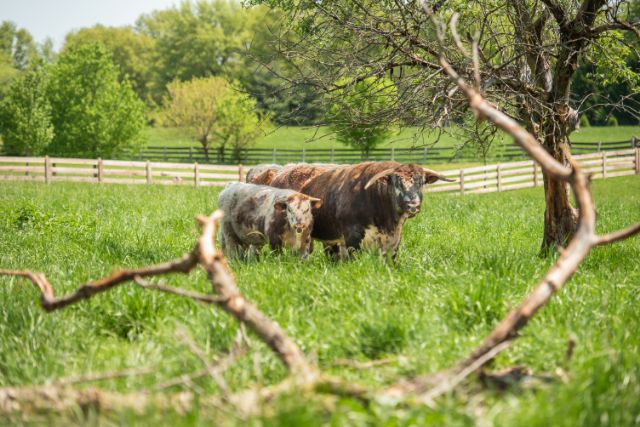
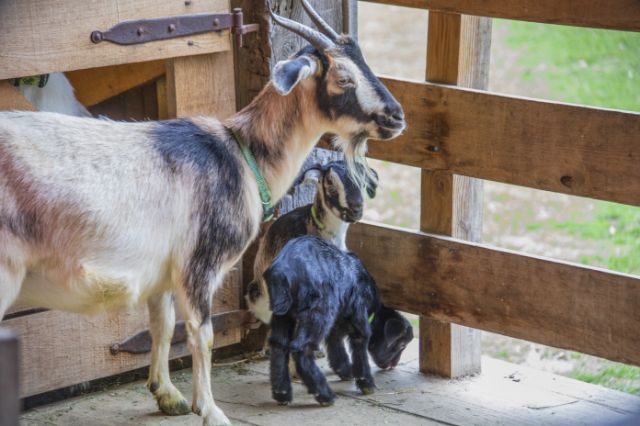
Get a closer look at animals from our world-class rare breeding program, including English Longhorn cattle, Ossabaw hogs, Tunis sheep, and Arapawa goats.
-
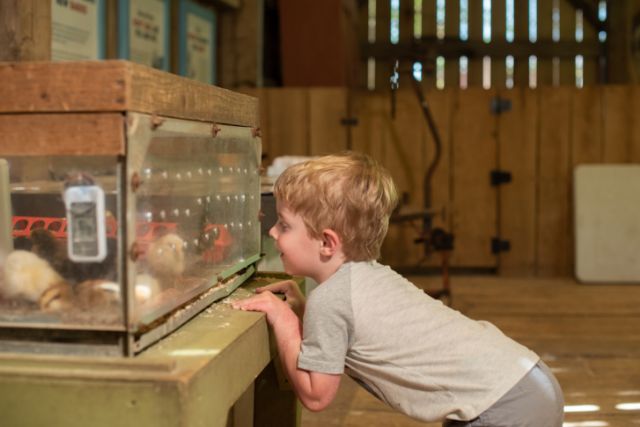
Learn how farm animals are different from people—and your pets at home! You can observe how these animals carry on their daily live and also how they interact with each other as well as other animals.
-
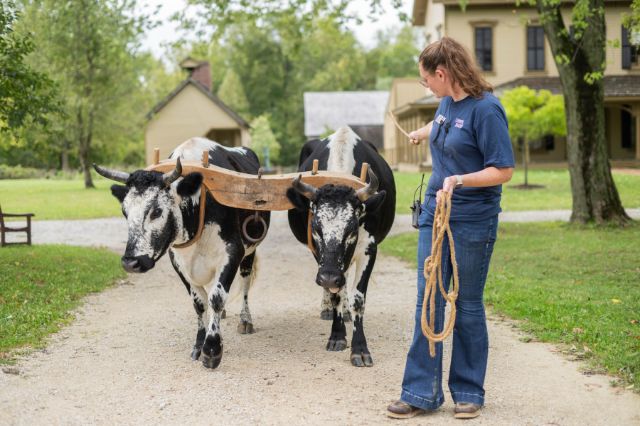
Conner Prairie’s animal specialists care for these animals year-round. Speak directly with these agricultural experts to learn what life is like on a working farm.
-
What’s an Arapawa goat’s favorite snack? How much does a hog eat each day? Ask questions and see if you can discover how an animal’s diet differs from yours.
Heritage Breeds Week
May 17–23, 2026
Participate in exciting activities, watch fascinating demonstrations, learn about Conner Prairie's efforts to preserve heritage breeds and discover what makes these rare animals so special. Meet and Greet with animals all across the grounds. Learn about how livestock has changed throughout the years and how the livestock of the past are important for us today!
Heritage Breeds Week Programming
Sheep to Scarf on the Porter House Porch, 10 a.m. –5 p.m.: Watch the youth spinning team as they transform wool all the way from the sheep to a finished scarf!
Heritage Breeds Activities in Featherston Barn, 10 a.m. –5 p.m.
Prairie Provisions Shop in Featherston Barn, 10 a.m. –5 p.m.: Stop by this pop-up shop and pick up some hand-crafted goods created with products from Conner Prairie’s very own heritage breed animals
Play Invitations in the Junction, 10 a.m. –5 p.m.
Mayor of Animal Encounters: Your Vote, Your Voice! at the Candle Shed near the Animal Encounter Barn, 10 a.m. –5 p.m.: Design a campaign poster for your favorite mayoral candidate. Cast your vote and encourage others to use their voice!
Farm Chores at the Golden Eagle, 10 a.m.–5 p.m.: Stop by throughout the afternoon and help the Prairietown citizens with chores such as skirting wool, scything, cleaning the barn, building fence, sowing seeds etc., while learning about the importance of livestock in Indiana history!
Creature Feature in the Junction, 10 a.m., Noon, 2 p.m., and 4 p.m.: Each day, guests will get the chance to get up close and personal with one of our heritage breed animals. Depending on the time, they might meet an American Rabbit, an English Longhorn cow, a heritage duck, an Ossabaw Hog, or an Arapawa Goat.
Story Time in Featherston Barn, 10:30 a.m. and 3 p.m.: Come listen to fun farm stories read by author and Ag Staff member Chele Denney!
Taste the Past in Featherston Barn, 11 a.m.: Sample some heritage breed meats and learn about what makes these products so unique (supplies limited).
Sheep Shearing in the Junction, 11 a.m.: Watch as our sheep are shorn for the year and learn about the wonders of wool!
Wool Dryer Ball Make and Take in the Junction ($5), 11 a.m.: Learn how to make an eco-friendly, money saving alternative to dryer sheets, and make a real wool dryer ball to take home.
Heritage Breeds Walking Tour, 1 p.m.: Join our Ag Staff for a walking tour focusing on our heritage breed livestock and the conservation work Conner Prairie does to help give these unique breeds a fighting chance at survival. Tour will last approximately 40 minutes; sign up at Guest Relations required and the tour will start at Featherston Barn.
Dairy Taste Test in Featherston Barn, 2 p.m.: Sample dairy products from three different species of animals: sheep, goats, and cattle! Compare the flavors of each product type or test your taste buds to identify which animal each one comes from.
Cattle Demonstration at the Golden Eagle, 3 p.m.: Come meet our cattle up close! You may get the chance to watch and learn what oxen are and how they are trained, while our Randall Lineback oxen show off their skills!
Sheep to Scarf on the Porter House Porch, 10 a.m. –5 p.m.: Watch the youth spinning team as they transform wool all the way from the sheep to a finished scarf!
Heritage Breeds Activities in Featherston Barn, 10 a.m. –5 p.m.
Prairie Provisions Shop in Featherston Barn, 10 a.m. –5 p.m.: Stop by this pop-up shop and pick up some hand-crafted goods created with products from Conner Prairie’s very own heritage breed animals
Play Invitations in the Junction, 10 a.m. –5 p.m.
Mayor of Animal Encounters: Your Vote, Your Voice! at the Candle Shed near the Animal Encounter Barn, 10 a.m. –5 p.m.: Design a campaign poster for your favorite mayoral candidate. Cast your vote and encourage others to use their voice!
Farm Chores at the Golden Eagle, 10 a.m.–5 p.m.: Stop by throughout the afternoon and help the Prairietown citizens with chores such as skirting wool, scything, cleaning the barn, building fence, sowing seeds etc., while learning about the importance of livestock in Indiana history!
Creature Feature in the Junction, 10 a.m., Noon, 2 p.m., and 4 p.m.: Each day, guests will get the chance to get up close and personal with one of our heritage breed animals. Depending on the time, they might meet an American Rabbit, an English Longhorn cow, a heritage duck, an Ossabaw Hog, or an Arapawa Goat.
Dairy Taste Test in Featherston Barn, 10 a.m.: Sample dairy products from three different species of animals: sheep, goats, and cattle! Compare the flavors of each product type or test your taste buds to identify which animal each one comes from.
Story Time in Featherston Barn, 10:30 a.m. and 3 p.m.: Listen to fun farm stories read by author and Ag Staff member Chele Denney!
Got Your Goat in the Junction, 11 a.m.: Meet some of Conner Prairie’s resident goats, learn about the importance of goats in agriculture, and explore what makes the different breeds – both modern and historic – unique!
Goat Soap Make and Take in the Junction ($5), 11 a.m.: Learn about the process of making soap using goat milk and make a real bar of soap to take home. Pick up for the soap will start at 1 p.m. at Featherston Barn.
Heritage Breeds Walking Tour, 1 p.m.: Join our Ag Staff for a walking tour focusing on our heritage breed livestock and the conservation work Conner Prairie does to help give these unique breeds a fighting chance at survival. Tour will last approximately 40 minutes; sign up at Guest Relations required and the tour will start at Featherston Barn.
Cattle Demonstration at the Golden Eagle, 3 p.m.: Come meet our cattle up close! You may get the chance to watch and learn what oxen are and how they are trained, while our Randall Lineback oxen show off their skills!
Mayor of Animal Encounters: Your Vote, Your Voice!, 10 a.m. –5 p.m.: Cast your vote for your favorite mayoral candidate!
Farm Chores at the Golden Eagle, 10 a.m.–5 p.m.: Stop by throughout the afternoon and help the Prairietown citizens with chores such as skirting wool, scything, cleaning the barn, building fence, sowing seeds etc., while learning about the importance of livestock in Indiana history!
Creature Feature in the Junction, 10:30 a.m.: Each day, guests will get the chance to get up close and personal with one of our heritage breed animals. Depending on the time, they might meet an American Rabbit, an English Longhorn cow, a heritage duck, an Ossabaw Hog, or an Arapawa Goat.
Story Time in Featherston Barn, 10:30 a.m. and 1 p.m.: Come listen to fun farm stories read by author and Ag Staff member Chele Denney!
Ossabaw Observations in the Junction, 2 p.m.: Help the Ag Staff create enrichment activities for our Ossabaw Island Hogs while you learn about their diets and natural behaviors.
About our Heritage Breeds
- English Longhorn Cattle
- Ossabaw Hogs
- Arapawa Goats
- Tunis Sheep
- American Rabbits
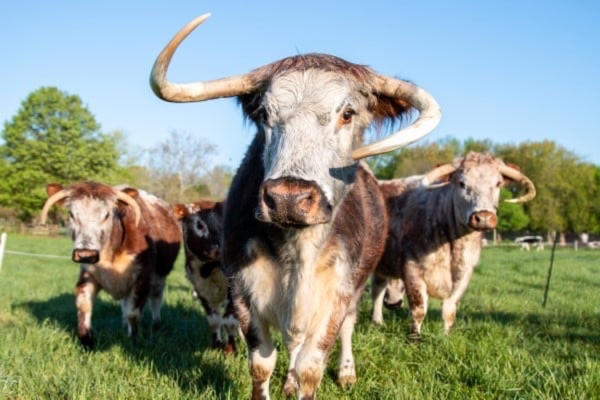 Origin: England
Introduced to USA: 1600s, 1990s
Uses: Meat, Milk, Draft Power
CPL Status: Not Listed, but critically endangered in the U.S.
Reintroduction
At some point in history, English Longhorns went extinct in North America and were only reintroduced in the 1990s. Even today, there are fewer than 100 longhorns in the U.S.
Selective Breeding
Robert Bakewell, the father of modern day breed improvement, used his methods to make the "Dishley Longhorn," nicknamed for Bakewell's home, the predominant cattle breed for a short time during the 1700s.
Horned cattle were preferred in 1836 as they could more easily protect themselves from predators while free ranging.
Important Facts
- Their characteristic long horns were often crafted into "poor man's glass" or other household items such as buttons, cups, lamps or cutlery, making the longhorns even more useful to early settlers.
- Conner Prairie is one of the only herds with registered longhorns in the U.S. Because the breed does not have an association in the states, all the cattle have to be registered through the Longhorn Cattle Society in England.
- Many people often mistake these cattle for Texas Longhorns, but there's no relation between the breeds. Texas Longhorns descend from Spanish stock and have horns that grow out and away from their head rather than curving down around their face.
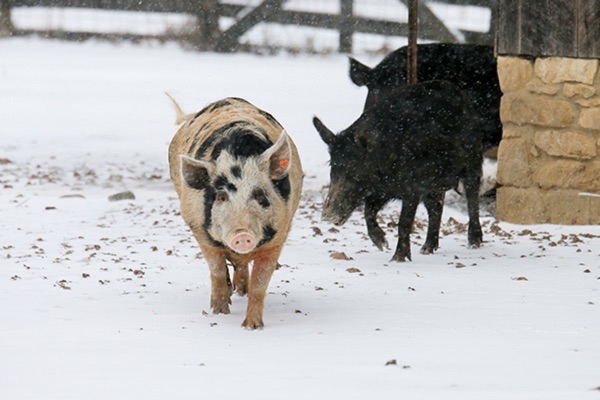
Origin: USA
Introduced to USA: 1500s
Uses: Meat, Lard
CPL Status: Critical
Genetic Mystery
Although it's agreed that Spanish explorers were responsible for releasing hogs on Ossabaw Island, the hogs are not necessarily Spanish in origin as genetic analysis shows Asian influence.
Isolated Population
While this breed was not historically in Indiana, its centuries-long isolation on Ossabaw Island makes them the closest genetic representative of stock brought over by the Spanish that would have been available at the time.
Early Indiana farmers found they could turn more profit if they fed their excess corn to fatten their hogs before market.
Important Facts
- Historically, most hogs in America were once lard type. Lard enhances the flavor of the meat, but it is also a versatile substance as it can be used as a cooking fat, lubricant, preservative for eggs, and for many other purposes.
- Because of the challenging island climate, Ossabaws have adapted to store large amounts of fat for times of food scarcity. This mechanism functions like non-insulin dependent diabetes in humans.
- These hogs are smaller than average hogs, partially due to insular dwarfism caused by their limited environmental range on the island. This effect reverses in hogs raised on the mainland, making new generations slightly larger than their predecessors.
.jpg)
Origin: New Zealand
Introduced to USA: 1994
Uses: Meat, Milk
CPL Status: Critical
Genetic Mystery
Although James Cook introduced the goats to Arapawa Island, their exact origin is still unknown. The Old English goat is though to be their ancestor; however, recent genetic studies link them to an unknown South African origin.
Natural Selection
While living feral on Arapawa Island, the breed adapted to the harsh climate and, as a result, are more hardy, self-sustaining and disease-resistant than most modern-day goats that have been selectively bred for production.
Not only can goats provide food products, they are also adept browsers and are excellent at clearing underbrush.
Important Facts
- Arapawas were at risk of going extinct in the 1970s when an eradication program was initiated after it was deemed that the goats posed an ecological threat to the New Zealand island's biodiversity. Luckily, and island resident saw their value and saved a small population through the foundation of the Arapawa Wildlife Sanctuary.
- With approximately 20+, Conner Prairie ranks among the top five of the largest active breeding herds in the country.
- Arapawa bear a striking resemblance to the Old English Milch Goat, a now extinct breed of goat common among early English settlers. This style of goat fell out of favor in the 1900s as Swiss dairy breeds known for their high milk production out-competed them.
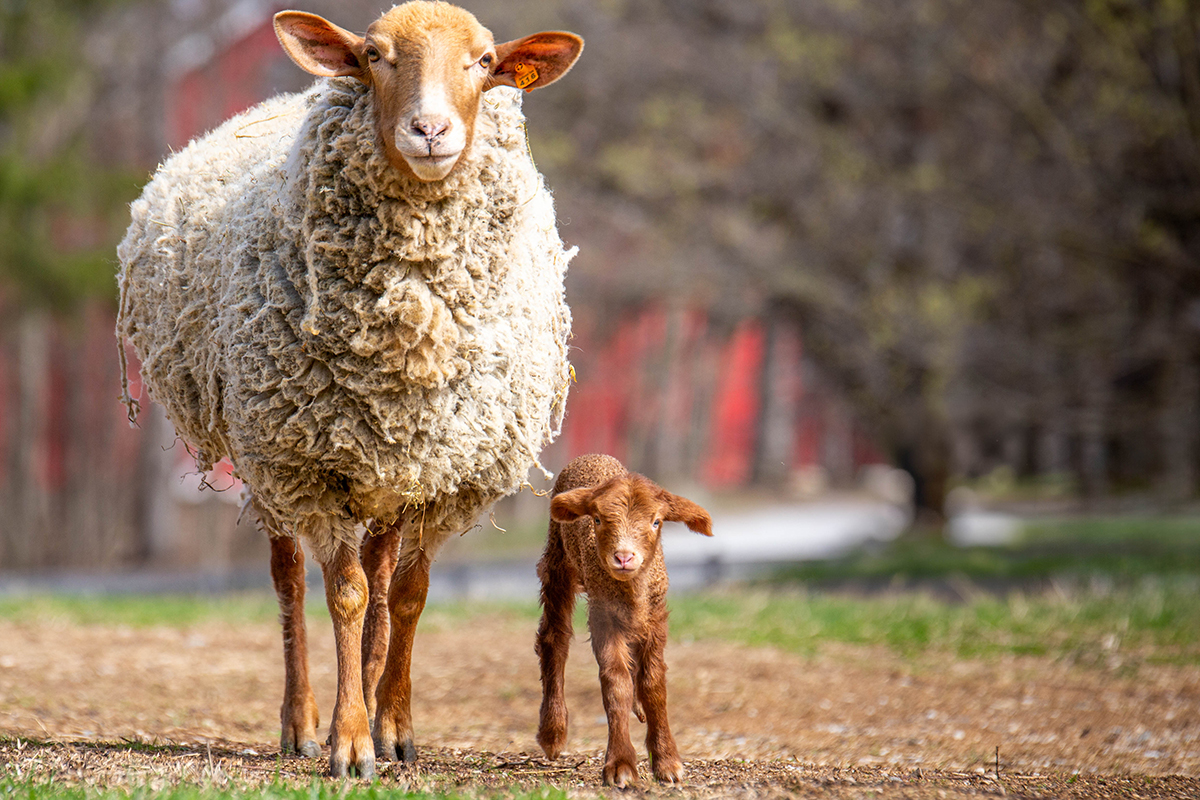
Origin: USA
Introduced to USA: 1700s
Uses: Meat, Fiber
CPL Status: Watch
Uniquely American
The breed was developed after the Bey of Tunis in North Africa gifted George Washington with sheep. These sheep were crossed with local American stock to develop one of North America's first unique livestock breeds.
Founding Fathers
Records show that many big names and agricultural leader in the Revolutionary world kept these sheep on their farms including John Adams, Thomas Jefferson, Richard Peters and George Washington Custis.
Wool in the early 1800s could be cheaply shipped to eastern markets such as Boston, where it fetched up to fifty cents a pound.
Important Facts
- Tunis sheep almost went extinct during the Civil War due to fighting and the soldiers' need for food, but one farm in South Carolina hid away a flock on their land. After the war, the breed made its way to the Great Lakes region where it began its recovery.
- These sheep have a medium-grade cream-colored wool with a three to five inch staple. One sheep can produce anywhere form seven to twelve pounds annually.
- Because of their North African influence, Tunis sheep are more tolerant of warm, humid climates. They are also known for their disease resistance and grazing ability which has made them popular in the sustainable agriculture movement.
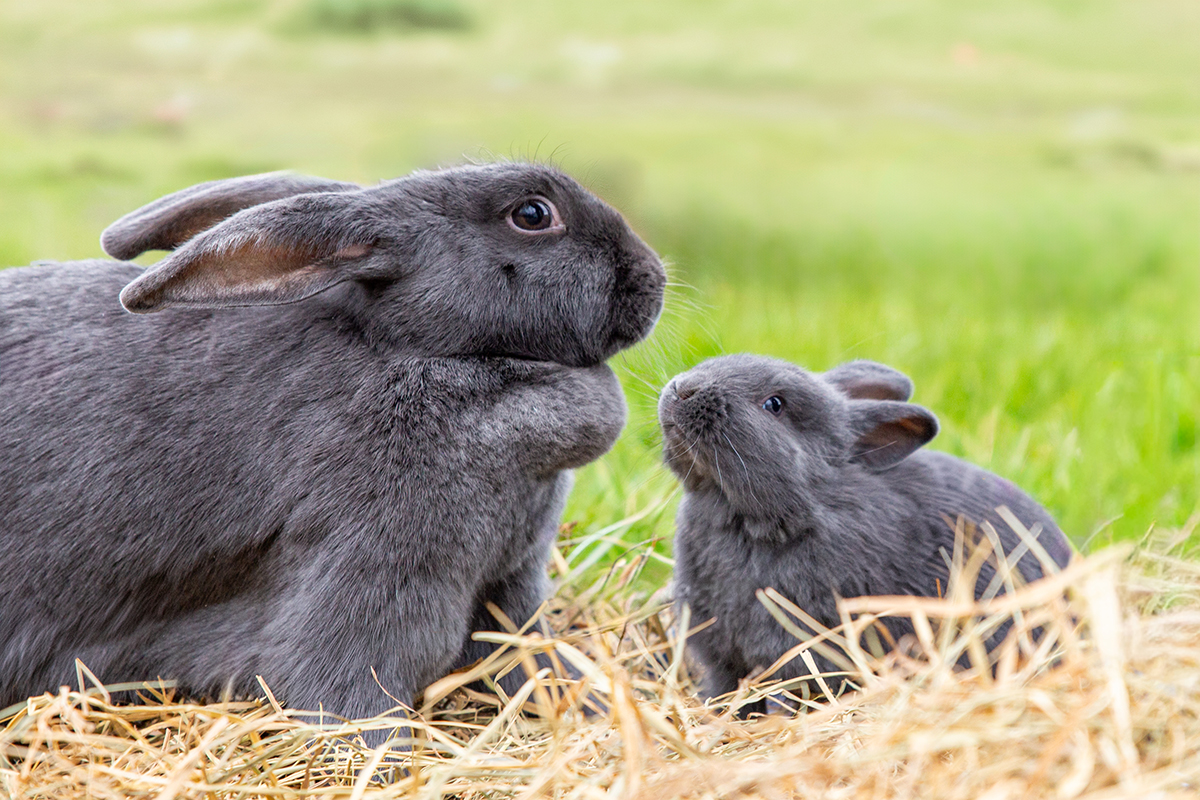
Origin: USA
Introduced to USA: 1918
Uses: Meat, Fur
CPL Status: Threatened
European Export
Although there are rabbits native to North America, all domestic rabbits in the U.S. descend from the European rabbit - the only species of rabbit known to be domesticated by humans.
Color Morphs
While originally only recognized in the blue variety, these rabbits con be blue, white or black. The white variety was recognized in 1925 but the black rabbits have yet to be recognized as an accepted color variant for the breed.
Americans were thought to have the best blue color and could fetch up to two dollars per pelt in 1920.
Important Facts
- With fewer than 200 animals known to exist at the time, American Rabbits almost went extinct toward the end of the 20th century due to availability of imported commercial breeds and the collapse of the fur market, but began their recovery when the Livestock Conservancy added rabbits to the conservation priority list in 2005.
- Because of the founding stock used to develop it, the breed was originally known as the German Blue Vienna but was quickly renamed due to World War I.
- While there is little to no documented evidence of domestic rabbits being in the U.S. prior to the 1840s, it is likely they were casually raised on farms or in gardens among early settlers given their popularity at the time in Western European countries.
Resources
Blogs:
- https://www.connerprairie.org/blog/posts/blog-a-passion-for-preservation
- https://www.connerprairie.org/blog/posts/a-decade-with-the-arapawas-how-rare-goats-found-a-home-and-a-future-at-conner-prairie
- https://www.connerprairie.org/blog/posts/taste-the-past
- https://www.connerprairie.org/blog/posts/why-livestock-conservancy-is-an-important-leader-for-heritage-breeds
- https://www.connerprairie.org/blog/posts/heritage-breeds-why-should-we-care
- https://www.connerprairie.org/blog/posts/heritage-breeds-week-impact-report
Videos:
Articles: