

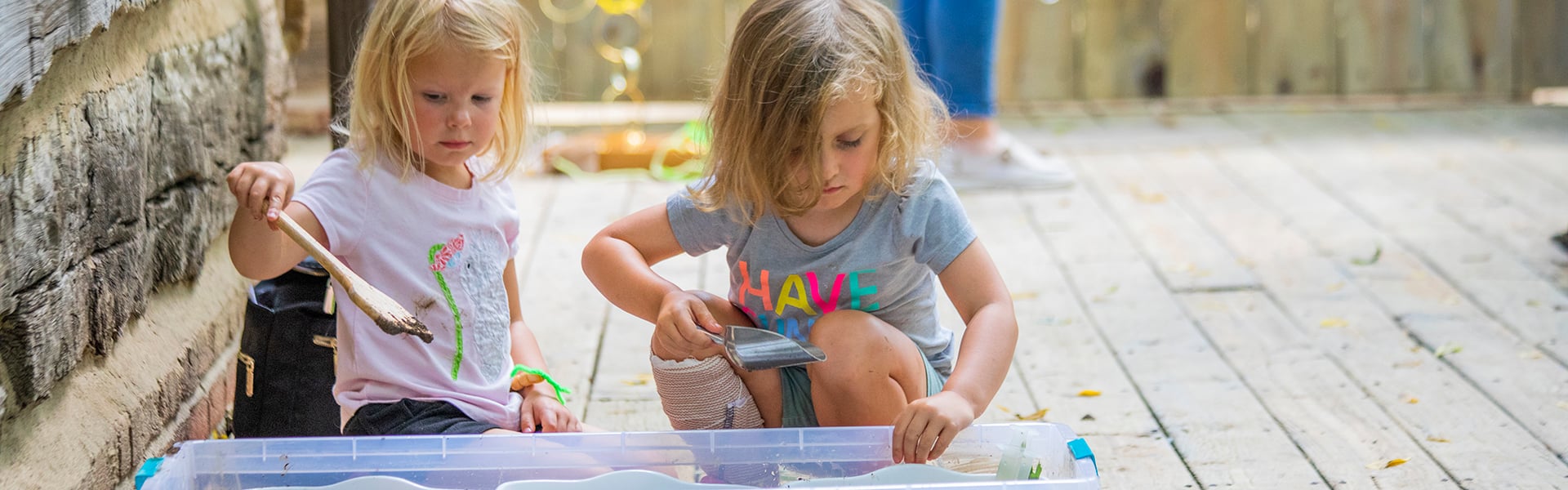
Conner Prairie’s early learning programs offer young children meaningful, hands-on experiences that spark curiosity and support growth through play. Rooted in research and inspired by nature, these programs create joyful opportunities for exploration, creativity, and connection in a warm, welcoming environment for both children and their caregivers.
Playtime on the Prairie
Playtime on the Prairie season is June, July, and August, and features sessions for groups ages 0–2 and ages 3–5.
2026 dates, Ages 0-2: June 26, July 24 and August 28.
2026 dates, Ages 3-5: June 12, July 10 and August 14.
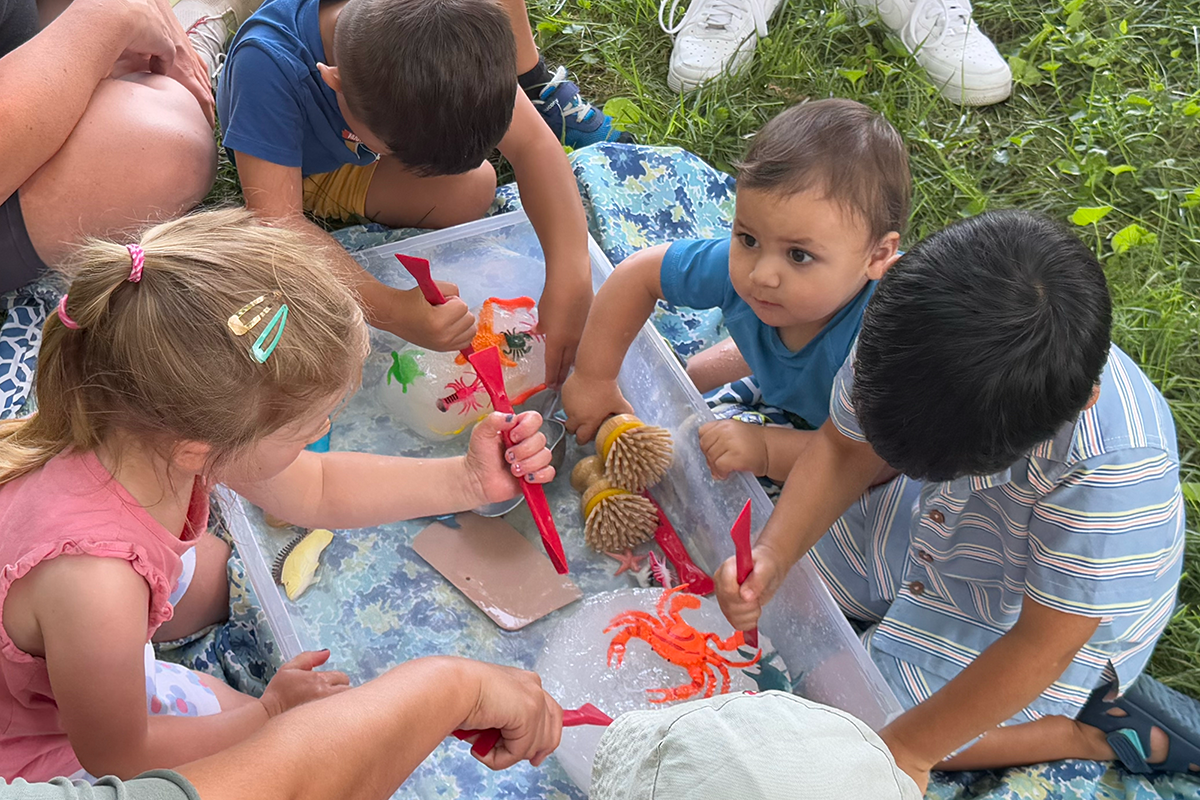
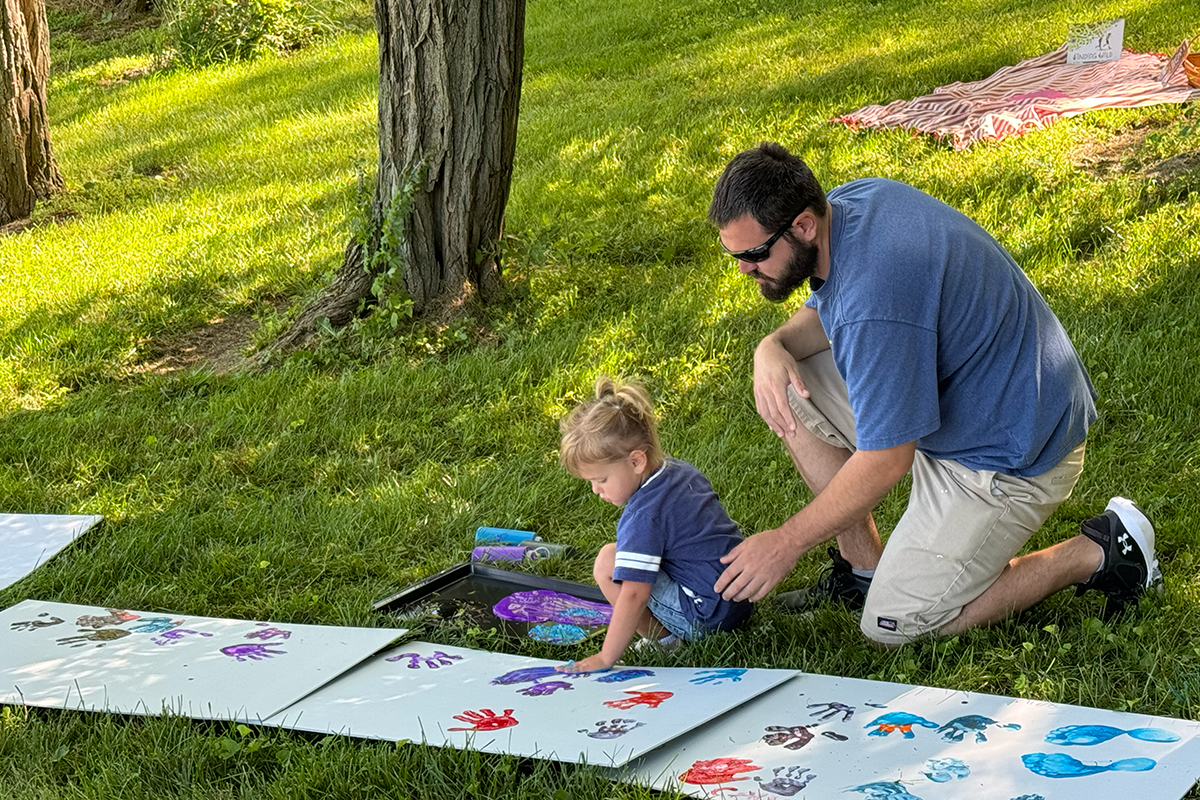
Playtime on the Prairie is an early childhood experience tailored for our youngest guests ages 0-5 years. Each hour and a half long session will take place on the historic grounds and throughout the vast natural areas available on our property. Attendees will have the opportunity to play, explore, inquire, and learn in an environment set up with intentionally selected materials referred to as play invitations or provocations.The program will take place outside in a special shady spot. Please dress for the weather. A light snack and drink will be provided. An adult must accompany each child participant and remain with the child during the program.
Information to guide your Playtime on the Prairie Experience
Please park in the Museum Experience Center's parking lot and enter through the main entrance doors. An education staff member will greet you in the lobby and check your child in for the program.
We will have your name in our online registration system. Please be prepared to show your confirmation email on your mobile device.
You and your child should dress for play and for the weather. We may paint, play in the mud, or do other hands-on activities that are sometimes messy. We will go outside in nearly all weather conditions.
Yes, please let Guest Services know before your visit if your child has any food allergies.
Conner Prairie strives to provide a quality museum experience for individuals of all abilities. If you have any special requests for assistance, please contact Guest Services to help plan.
Your tickets are good for Playtime on the Prairie admission only. If you'd like to stay and visit the rest of the museum, you may purchase general admission at the main gate entrance. Conner Prairie members receive complimentary general admission and can check in at the main gate entrance to receive their admission stickers. If you'd like to become a member on the day of your visit, you may purchase a membership and enjoy free admission to the indoor and outdoor areas (when open) immediately.
Still or video photography is welcome at Conner Prairie for personal, non-commercial use only. We cannot accommodate tripods.
During your visit, you may be photographed for promotional purposes by Conner Prairie staff. If you do not wish to be photographed, please let the Playtime on the Prairie staff know at the start of the program.
All ticket sales are final and non-refundable. Conner Prairie reserves the right to cancel any class due to low enrollment. In the event of a cancellation by Conner Prairie, you will receive a notification from Guest Services and will be able to reschedule your class for another date or receive a full refund.
Guest Services can assist you with all your questions. Call (317) 776-6000 or (800) 966-1836 or email info@connerprairie.org.
Read, Rock & Roll!
2026 Dates:
April 17
June 19
July 17
August 21
September 11
October 2Ages: 0–6
Time:
9–10:30 a.m.Prices:
Members $12
Non-Members $14Includes one adult (additional adults $8)
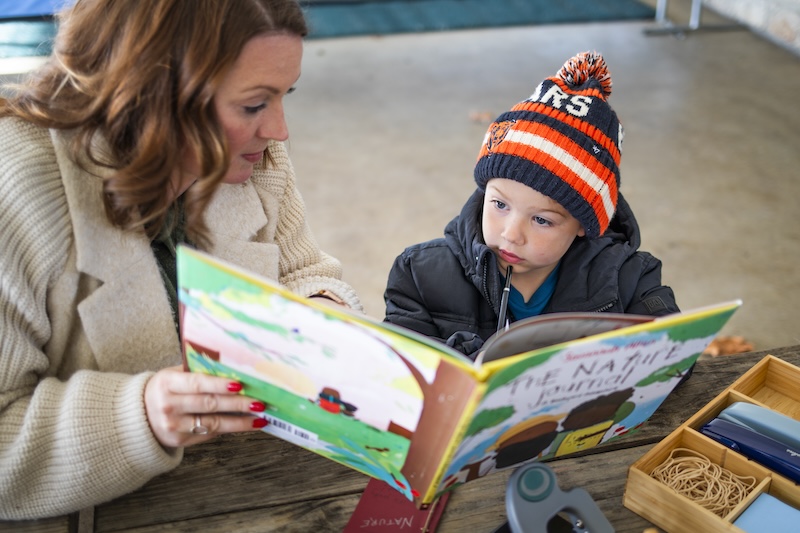
Enjoy a casual, relaxed morning specially designed to encourage community and connection with others and with your child. Indulge in yummy breakfast treats and drinks before you roll along our trails with your strollers and wagons in tow. Along the path you'll discover cozy spots to stop at your leisure and rock a little, read a good story together, let your child's curiosity roam free or chat for a while as you slow down, breathe deeply and take in the beauty of nature in a safe and beautiful spot.
Philosophy, Research, & Ideas for Enhancing Your Child’s Experience
Key Concepts of Conner Prairie’s Philosophy of Early Learning
We believe children construct their own knowledge based on interactions and communication with each other and with the environment. The role of the teacher/facilitator is to set up an environment with intentionally selected materials, referred to as provocations or invitations to play.
Throughout this process, the role of the teacher/facilitator is to listen, observe, and learn about the children. As the children explore the materials, tinker, think, repeat, and talk with each other, the “curriculum” will naturally emerge. (For example, if children are looking at dandelions and see an insect, they may ask a question about insects, and we may switch our focus from plants to insects). The curriculum comes from the play we observe and the dialogue we hear. As we encourage children to wonder, explore, discover, and create, the focus is on the process involved in a learning or play task, rather than the final product.
Through this specific type of play, children are developing problem-solving skills, autonomy in risk taking, confidence, persistence, resiliency, a sense of freedom, respect for self and others, conceptual understanding, communication skills, and joy! Adding exposure to nature and natural materials enhances these experiences, creating even more meaningful connections in the brain. Pediatricians, educators, and psychologists have been researching and sharing the benefits and importance of outdoor play for many years, and we are listening!
How can you support learning while your child is playing?
Our materials/set ups require little to no direction. We invite you to relax during this time, take care of a sibling, or even play a little yourself! You are always welcome to engage with your child, but we encourage you to let them lead!
Try to avoid naming their creative work (i.e., “is that grass?,” “is that the sky?”). Instead, use phrases like “tell me about your painting” or wait for them to tell you about it when they feel ready/finished. When you talk with them, use open-ended questions - What do you notice? Hear? See? Smell? Try not to tell them something you’ve discovered, robbing them of the opportunity to discover it for themselves (i.e., “If you put that in there, it will overflow”).
Let your child guide transitions. When your child is engaging with something, try to avoid phrases like; “Do you want to try this now? Are you ready to move to the next thing?” Try not to worry about leaving enough of something or sharing the space if possible. Our job as facilitators is to try to have enough space and materials for children to move about using things as they please. This gives children the opportunity to practice asking when they need something and develop their sense of self.
We understand this philosophy can be very different from what many are used to. We are happy to answer any questions you may have after class. Please remember, children are our top priority, so we cannot always have extensive conversations during class.
Evidence & Research
Play
"The Decline of Play and Rise in Children's Mental Disorders," in Psychology Today
"Early Academic Training Produces Long-Term Harm," in Psychology Today
"Play-based learning can set your child up for success at school and beyond," in The Conversation
Connection with Nature
"Benefits of Connecting Children with Nature," in Natural Learning Initiative
"Experiences of nature boost children's learning," in Science Daily
"The Perks of a Play-in-the-Mud Educational Philosophy," in The Atlantic