

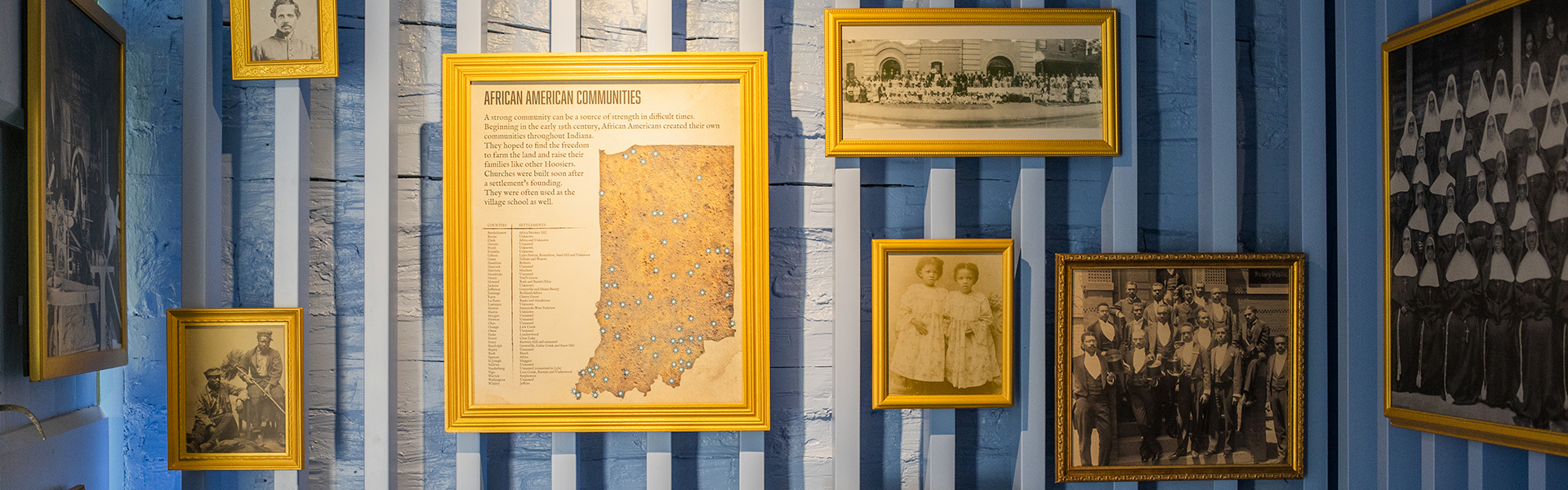
February is Black History Month, and we are honored to celebrate and amplify the voices of people of color in our community of the past, present, and future.
Hoosier History makers You Should Know
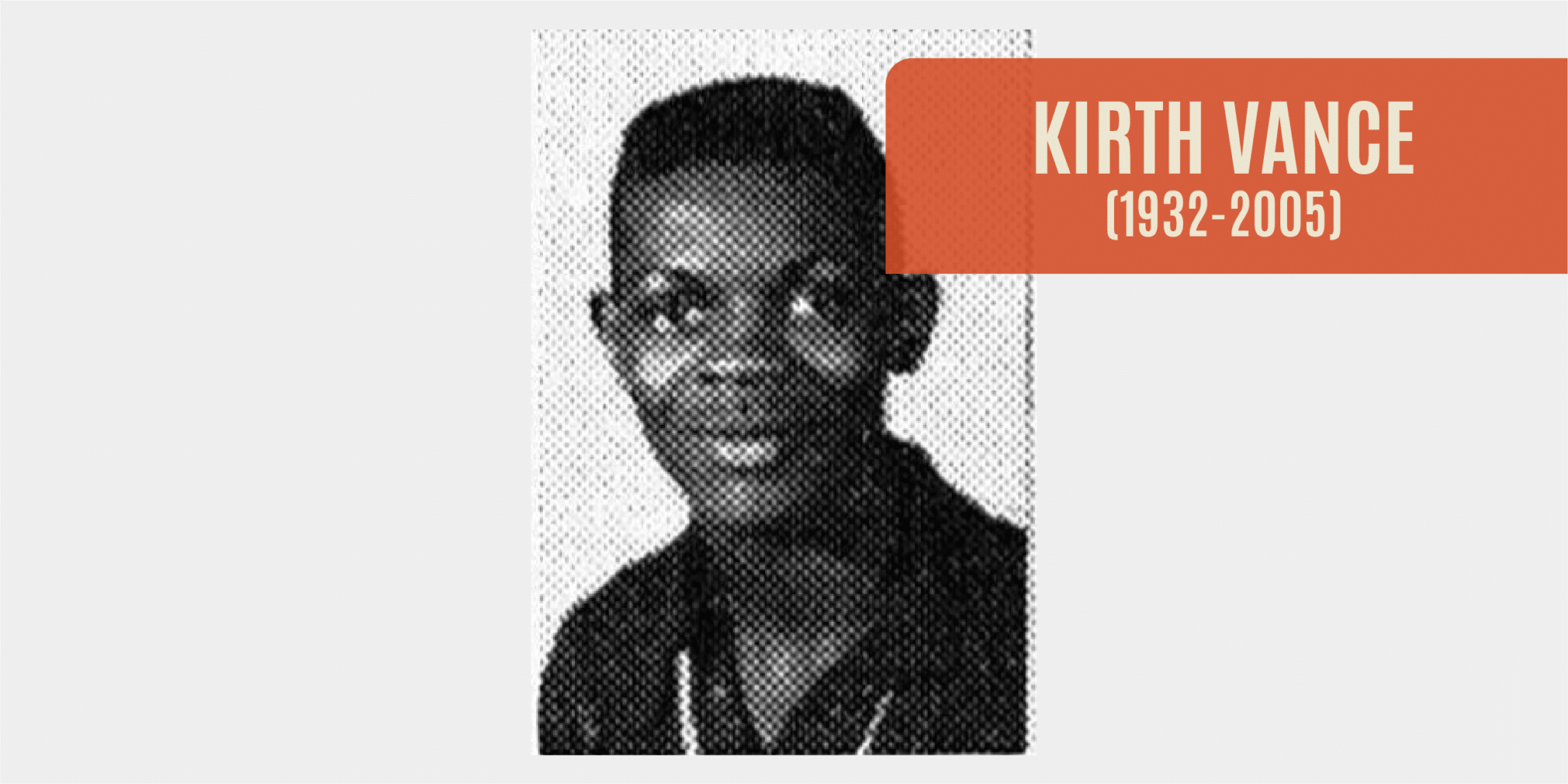
Reverend Kirth Vance Crispus was the child of Reverend Richard William Vance and Geneva Ewing. Kirth would go on to succeed his father as pastor of the Greater Tried Stone Baptist Church, who was sick for a large portion of his time as pastor according to a piece written in the Indianapolis Recorder in 1978.
Born in 1932, he attended Crispus Attucks. As a young man, Kirth was an amateur boxer until his professional debut in 1958 and was often featured in the boxing section of the Indianapolis Recorder. At some point, according to a 1997 article in the Recorder, it is said that Kirth fought Muhammad Ali when he still went by the name Cassius Clay. Although the result of the fight was not recorded on Kirth’s behalf, It is likely that Clay was the victor, as Clay had amassed a quick 19-0 record despite his professional debut coming in 1960, two years after Vance.
Kirth Vance served in the United States Armed Forces from 1953 to 1956 and then as an Indianapolis police officer during the tumultuous 1960s. In 1973, he became a member of Trinity Lodge No. 18. He served as an assistant pastor to his father at the Greater Tried Stone Baptist Church and continued as pastor into the 1990s after his fathers passing in 1986.
Rev. Kirth Vance passed away March 28, 2005 and was buried at Washington Park North Cemetery.
Sources:
Hannah Ryker, “702 W 9th STREET,” 1908 Baist Atlas, Indiana University–Purdue University Indianapolis, March 6, 2020, Accessed 11/19/2021, https://exhibits.ulib.iupui.edu/CanalCollection/exhibits/show/702-9th-street/702-w--9th-street Ibid
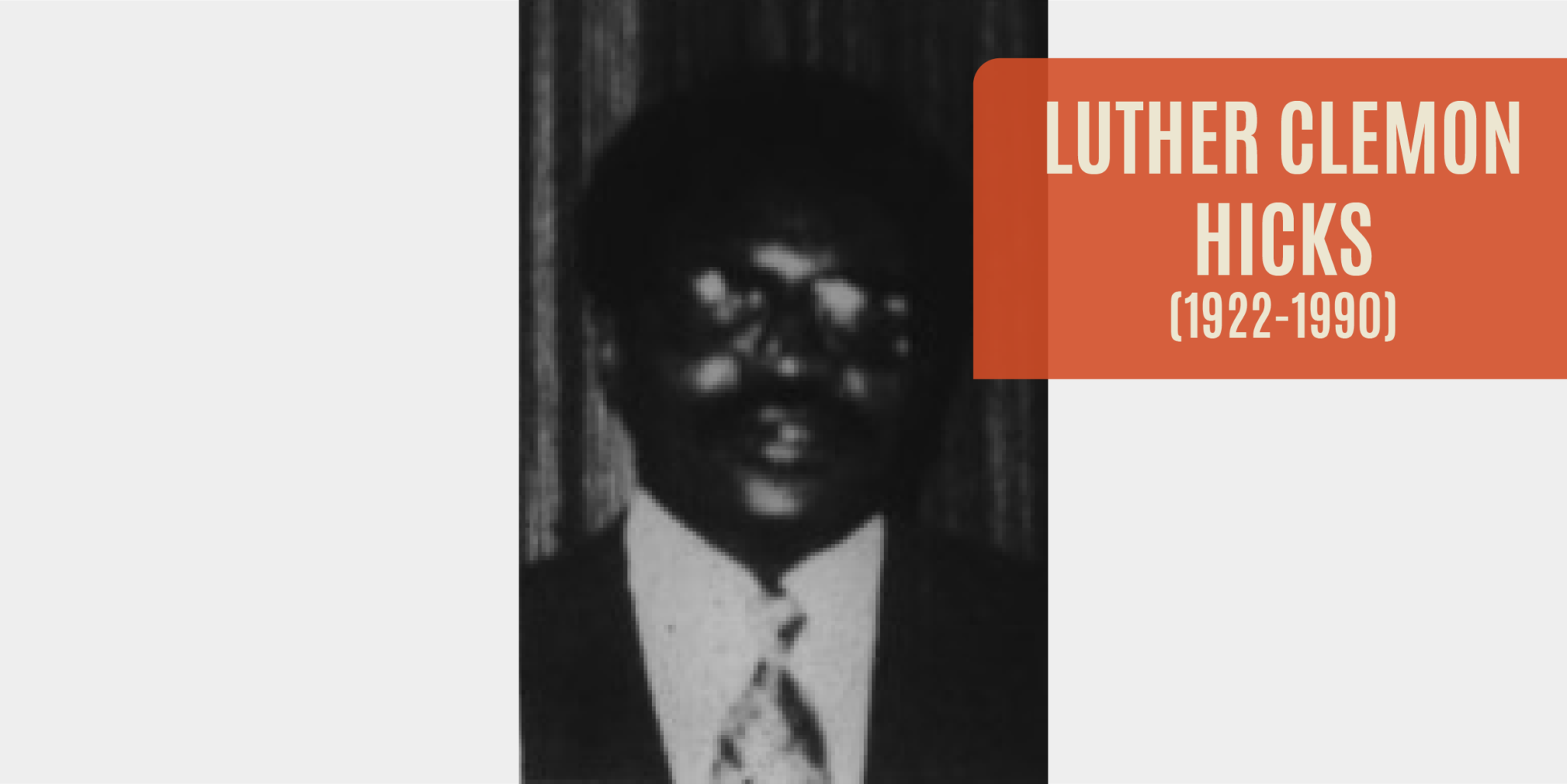
Born on April 27th, 1922 in Richmond, Virginia, Luther Hicks would rise to be one of the most socially prominent Black ministers in Indiana history, especially among the young generations.
Hicks, the youngest son of Reverend and Mrs. Elijah Hicks attended the Hampton institute before he enlisted in the U.S. Coast guard in 1952. He also received his Doctor of Optometry degree from the Chicago college of Optometry and practiced his profession before he felt called to join the Christian ministry. It is said that he employed non-traditional ministerial methods in his own evangelical efforts. It was 1966 that he moved to Indiana to pastor at Riverside Methodist Church.
Reverend Hicks was a simple and effective communicator, which helped him deliver on a promise he’d made for a Methodist inner-city ministry. He opened a store-front headquarters by Shortridge High School near 34th and Meridian streets. There, he founded “dignity unlimited”, a youth group for those living in particularly at-risk communities. The goal of the group was to advocate for the issues relevant to black youth at the time and ensure their future employment in order to support themselves and their families.
The local authorities looked upon Hicks with great suspicion and arrested him on at least two occasions during peaceful protests. However, Hicks had only been present in both cases to ensure the activities did NOT escalate to violence. Hicks had only been guilty of walking the most volatile and vulnerable neighborhoods promoting patience and reason. That did not save him from paying fines at the time of his release from prison.
The efforts of those like Hicks are assuredly the reason that Indianapolis remained one of the only American cities where large-scale violence was avoided following the assassination of Dr. King. Although the fear was present considering the city’s black population in 1968 was 20% of the total city’s numbers, the vast majority of black citizens were- and still are- law-abiding people.
Luther Hicks passed away on July 5, 1990.
Sources:
“Rev Luther Hicks Named to Pastorate at Riverside Park.” The Indianapolis Recorder. September 24, 1966.
E. Carver McGriff, Amazing Grace: A History of Indiana Methodism 1801-2001. (Franklin, Tennessee: Providence House Publishers, 2001), 127-128. Ibid.
Hannah Ryker, “702 W 9th STREET,” 1908 Baist Atlas, Indiana University–Purdue University Indianapolis, March 6, 2020, Accessed 11/19/2021,
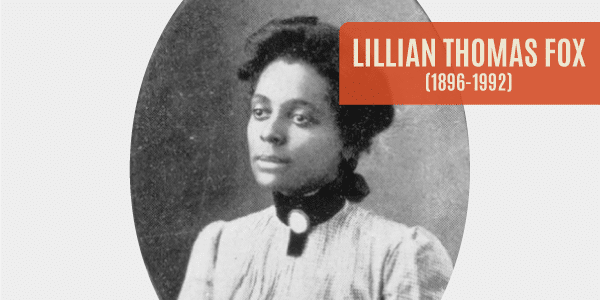
Lillian was born Lillian May Parker to Byrd Parker and Jenneta J. (Jane) Johnson. It is unclear exactly when Lillian was born; it seems as though she was born in 1854 based off of her gravestone. Later, some of the census records state her birth as sometime in the 1860s. Byrd and Jane were born in North Carolina., At the time of Lillian’s birth Byrd was a Methodist Episcopal preacher. Jenneta and Byrd were married in Marion, IN 6th of January 1854. Byrd passed away early in Lillian’s life in April 1860 aged only 46.
By 1870 Lillan was living with her mother at age 15 and working as a HairDresser in Oshkosh, Winnebago, Wisconsin. It is thought that she moved to Indianapolis sometime around 1885 and began writing for the Indianapolis Freeman in 1891. The early 1890s were a foundational time in Lillian’s life. Lillian married James E. Fox in 1893. Abiding by norms of the time for women of higher class, Lillian withdrew from her career post-marriage. She briefly stopped writing for newspapers and shifted her attention to her community work including the Indianapolis Anti-Lynching League and the National Afro-American Council. Within that year, Lillian’s life changed dramatically as her mother and brother both died of Tuberculosis. These losses inspired her to create change. She founded the Indianapolis Women’s Improvement Club in 1903 which would become a force for change for African Americans with TB. This work was done in association with Beulah Wright Porter, a Black female physician in Indianapolis.
Lillian’s break from writing was brief. By 1899 she was the first Black woman writing for the predominantly white and male Indianapolis News, and the first African-American writer to write for any white newspaper in the state of Indiana. Her column was “News of the Colored Folk”. She wrote this column for almost twenty years, acting as a megaphone for her community before health forced her to retire.
A senior archivist at the Indiana Historical Society Wilma L. Moore called Lillian “a true leader with grit”. This grit is well demonstrated in a 1896 experience she had while traveling through the south. She was attending a conference in Atlanta where the train company prohibited her from “riding in the ladies coach”. Lillian refused to move and was physically removed from the train. Fellow passengers protested and she was allowed to re-board the train. Lillian refused to accept the train company’s mistreatment and filed a lawsuit against the train company. Unfortunately the outcome of that lawsuit is unknown, but the story tells us a lot about her strength.
Lillian passed away on the 29th of August 1917 and is buried in Crown Hill Cemetery in Indianapolis. Lillian was well known amongst her community but like many of the women of her generation, her story could have faded into obscurity if it had not been for interest of local newspaper columnists and students. There have been a number of articles and even a dissertation published about Fox’s life. There is certainly still more to be uncovered about the amazing life of Lillian.
Sources:
“Lillian Thomas Fox was a journalist and champion for her race,” Indianapolis Star (Indianapolis, IN), 15th February 2018. Online edition at https://www.indystar.com/story/news/history/retroindy/2018/02/15/lillian-thomas-fox-journalist-and-champion-her-race/312494002/.
Lillian Thomas Fox, Crown Hill Heritage Foundation, https://crownhillhf.org/lillian-thomas-fox/.
Lilla Parker, “1870 US Federal Census” (Oshkosh, Winnetago, Wisconsin, 1870) accessed at Ancestry.com.
Jane J. Thomas, “1870 US Federal Census” (Oshkosh, Winnetago, Wisconsin, 1870) accessed at Ancestry.com.
Bird Parker, “1850 US Federal Census” (New Albany, Floyd, Indiana, 1850) accessed at Ancestry.com.
Byrd Parker, 6 January 1854, Marion, IN, Indiana, U.S., Select Marriages Index, 1748-1993, accessed at Ancestry.com.
Byrd Parker, April 1860, Oshkosh, Winnebago, WI, U.S., Federal Census Mortality Schedules, 1850-1885, accessed at Ancestry.com.
Lilla Parker, “1870 US Federal Census” (Oshkosh, Winnetago, Wisconsin, 1870) accessed at Ancestry.com.
Lillian Thomas Fox-2014, Indianapolis Journalism Hall of Fame, https://ijhf.org/fox-lillian-thomas. Ibid.
“Lillian Thomas Fox was a journalist and champion for her race,” Indianapolis Star (Indianapolis, IN), 15th February 2018. Online edition at https://www.indystar.com/story/news/history/retroindy/2018/02/15/lillian-thomas-fox-journalist-and-champion-her-race/312494002/.
Lillian Thomas Fox, Crown Hill Heritage Foundation, https://crownhillhf.org/lillian-thomas-fox/.
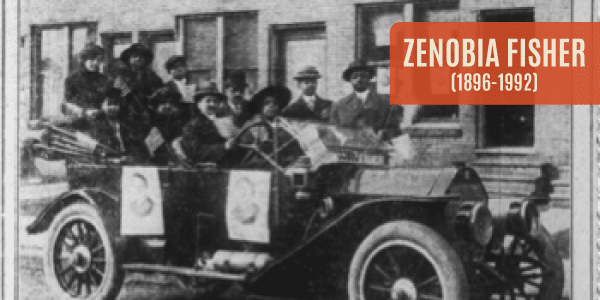
Zenobia Fisher was born on the 10th of August 1896 in Denver, Colorado to William Byrd Fisher and Lillian B. Sweeney, William is from West Virginia and Lillian from Indiana. In 1900 Zenobia can be found listed as “Sinobia” living with her father William and mother Lillian in Indianapolis at 828 Walnut Street, her father was working as a Cook and Steward. Zenobia’s first name appears to be Mary based on the 1910 census where she’s listed as “Mary Z.” but she mostly seems to have gone by her middle name Zenobia. Zenobia’s mother is still listed as married in 1910 but her father is missing. By 1910, the family had purchased their home at 2331 Ogden Court in Indianapolis and Lillian was bringing in money working as a dressmaker.
Mary Z. Fisher married Ray W. Fisher on the 29th of November 1917 at St. John’s Church in Indianapolis by Rev. Father Gavisk., At the time of their marriage, Zenobia was working as a private secretary to Freeman Briley Ransom (legal counsel to Madam C.J. Walker). In 1920 Zenobia and Ray were living together in Indianapolis, Ray was originally from Michigan and was working as a Chauffeur. On his registration card for the First World War Ray listed his race as “Ethiopian”. Ray’s parents' birthplaces were listed as Indiana and Michigan, this makes Ray’s notation really interesting as it suggests that there may have been cultural retentions allowing Ray to know where specifically in Africa his family was from.
Zenobia filed for divorce from Ray on the 26th of March 1926 in Marion County, IN. After their divorce Zenobia continued to work in public service, as she had before their marriage. By 1930, she was employed as a County Clerk living in the city of Indianapolis as a lodger living on California Street. By 1940 Zenobia had trained and was working as a stenographer for the State Office and living at 813 Camp Street in Indianapolis with her mother Lillian, who had remarried by this time.
Zenobia was a public servant in every area of her life. Outside of her public service at work, she was also consistently advocating in her daily life. For decades Zenobia can be seen throughout the newspapers fighting for community needs. In her early years, as early as 1916, Zenobia served on the executive staff of the Indiana Association of Colored Men (as pictured above). She frequently wrote letters to the newspaper calling out mistreatment of Black Indianapolis citizens. Some examples of this are protesting use of race requirements on job applications in 1950, the difference in city funded protection for Black and White neighborhoods (she was very concerned about the risk women were under of assault and abuse) in 1947, lack of suitable bus services to Black neighborhoods in 1949, lack of suitable public services like street cleaning in 1948 and calling out the Greyhound bus company for their attempts to buy up her home at 1310 West 35th Street in 1969. A battle close to her heart, she fought with the city in 1960 over ensuring there were Stop and Wait signs at St Clair and West Streets to protect the citizens of the area.
Zenobia died living at the Alpha Home in Indianapolis on the 28th of September 1992. She was interred at Holy Cross Cemetery. At the time of her death aged 96 she was still employed as a Secretary for the United Way of Greater Indianapolis.
Sources:
“Executive Staff of Indiana Association of Colored Men,” Indianapolis Recorder (Indianapolis, IN), 18th March 1916.
Fisher, Zenobia, Indiana, U.S., Death Certificates, 1899-2011 [database on-line], Provo, UT, USA: Ancestry.com.
Fisher, Sinobia, U.S. Federal Census 1900 [database on-line], Provo, UT, USA: Ancestry.com.
Fisher, Mary Z., U.S. Federal Census 1910 [database on-line], Provo, UT, USA: Ancestry.com.
Fisher, Mary Z. and Ray W. Sawyer, Indiana, U.S., Marriages, 1810-2001 [database on-line]. Provo, UT, USA: Ancestry.com.
Fisher, Zenobia Marriage, Indianapolis News (Indianapolis, IN), 1st December 1917, P. 11.
Fisher, Zenobia, U.S. Federal Census 1920 [database on-line], Provo, UT, USA: Ancestry.com.
Sawyer, Ray, WW1 Registration Card [database on-line], Provo, UT, USA: Ancestry.com.
Sawyer, Zenobia and Ray Sawyer, 26th March 1926, Marion County Divorce Index 1912-1935 [database on-line], Indiana Legacy at Indiana State Library.
Fisher, Zenobia, U.S. Federal Census 1930 [database on-line], Provo, UT, USA: Ancestry.com.
Fisher, Zenobia, U.S. Federal Census 1940 [database on-line], Provo, UT, USA: Ancestry.com.
“813 Camp Street,” Canal Class Research Class, https://exhibits.ulib.iupui.edu/CanalCollection/exhibits/show/https---exhibits-ulib-iupui-ed/the-history-of-813-north-camp-.
“Executive Staff of Indiana Association of Colored Men,” Indianapolis Recorder (Indianapolis, IN), 18th March 1916.
“A Job for our Topflight Organizations,” Indianapolis Recorder (Indianapolis, IN), 6th May 1950, p. 12.
“Miss Zenobia Fisher,” Indianapolis Recorder (Indianapolis, IN), 30th August 1947, p. 13.
“Waited Half Hour on Bus,” Indianapolis Times (Indianapolis, IN), 1st May 1949, p. 26.
“Lived up to Promises,” Indianapolis Times (Indianapolis, IN), 24th November 1948, p. 12.
Fisher, Zenobia, Indiana, U.S., Death Certificates, 1899-2011 [database on-line], Provo, UT, USA: Ancestry.com.
Videos to Watch
- Promised Land As Proving Ground
- Emancipation and Juneteenth: The Rise of Black Liberation
- MLK Day 2021- MLK Lasting Legacy
-
-
-
Dr. Martin Luther King Jr.: Legacies of Social Justice examines historical moments in the civil rights movement and relates those moments to what is happening in our world today. This exhibition features a short documentary film with four students who in autumn of 2020 worked as Conner Prairie Activists in Residence. The students reflect on the Legacy of Dr. King and examine where we’ve been and discuss how far we have yet to go as a society. The exhibit provides further context to the work these young people have done with Conner Prairie by examining and uplifting the history of a movement, drawing a clear line from the mid-twentieth century into present day American life.

Learn More about Black voices through our blog articles:
Explore thoughtfully researched articles that highlight the histories, cultures, and perspectives of Black communities. This section features documented stories, cultural analysis, and historical context developed in collaboration with Black voices and scholars. Learn about the Black experience through well-sourced content that brings deeper understanding to both past and present.


Smithsonian Resources
As a Smithsonian-affiliated museum, below you will find educational resources provided by the Smithsonian Institute that honor Black history month. We want to celebrate the work that is being done across the nation with regard to community building and activism. Follow along with #SmithsonianBHM to learn about the importance of these voices by the Smithsonian and partnered Smithsonian-affiliated institutions.
Wanting to discover more about Black history month? View the sources below:
- The Association for the Study of African American Life and History’s (ASALH) theme for Black History Month 2025 is African Americans and Labor.
- Explore The History of #BlackHistoryMonth by National Museum of African American History and Culture
- Web story on the history and power of #BlackJoy by National Museum of African American History and Culture
- Smithsonian Learning Lab Collections
- Researching African American family history
- Explore Google Arts & Culture exhibitions and the new “Making a Way Out of No Way” Searchable exhibition by National Museum of African American History and Culture
- Learn more about the founder of Black History Month by National Museum of African American History and Culture
- This Sidedoor Podcast uncovers the story of Lena Richard: America’s Unkown Celebrity Chef
- Fighting Racism in the Trenches: A Colored Woman in World War I from our Affiliate the DuSable Museum of African American History