Where the Past comes alive!
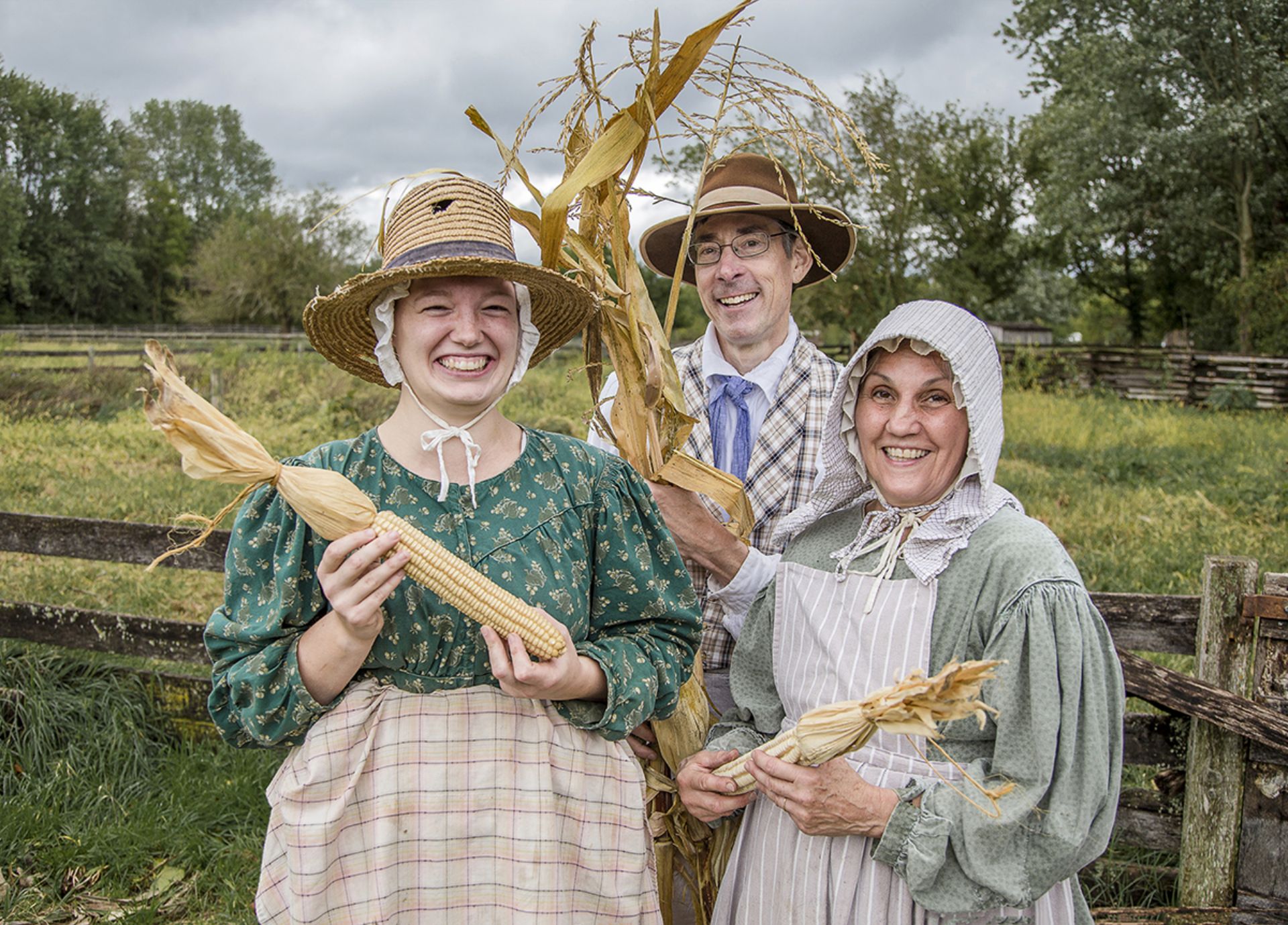
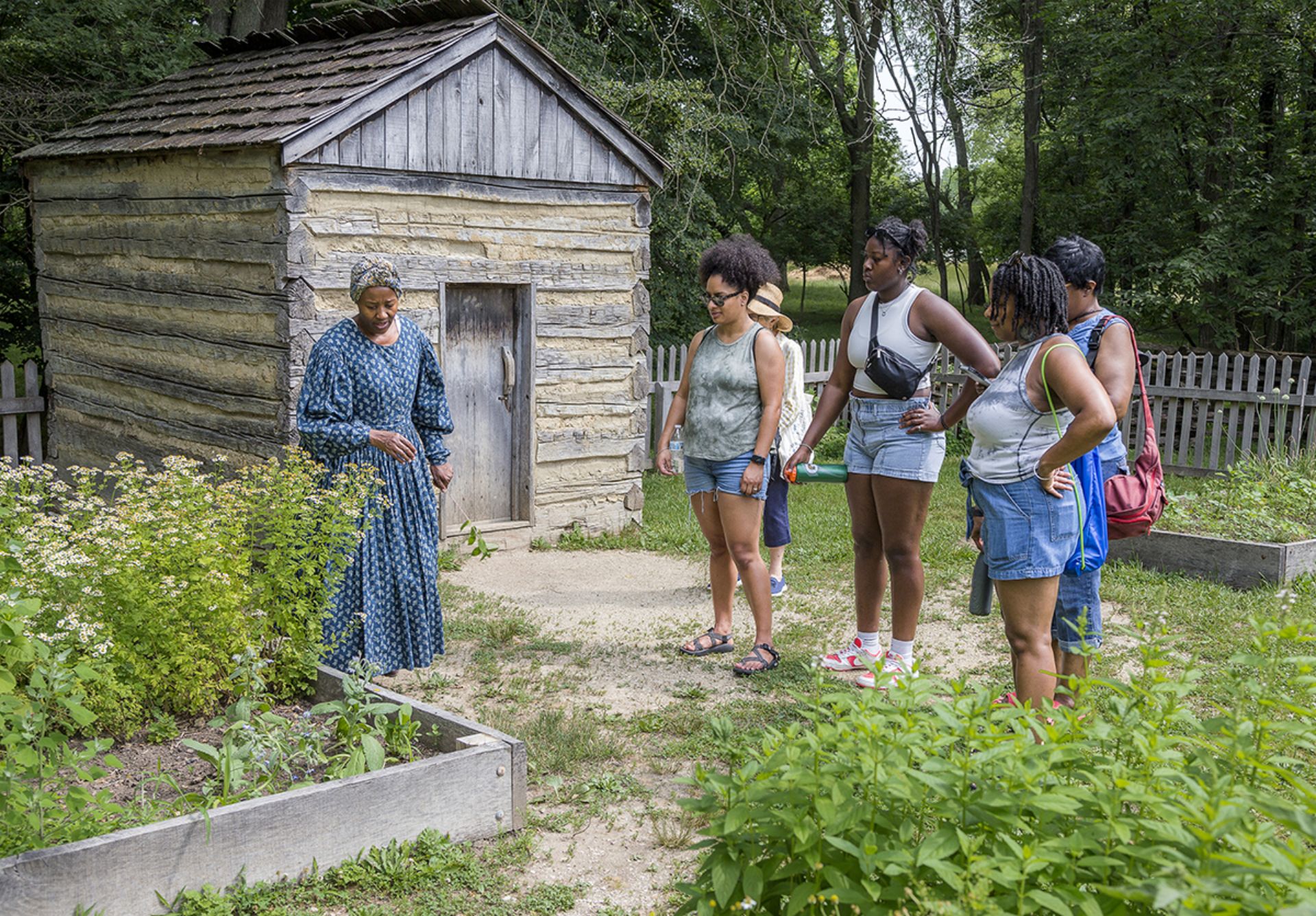
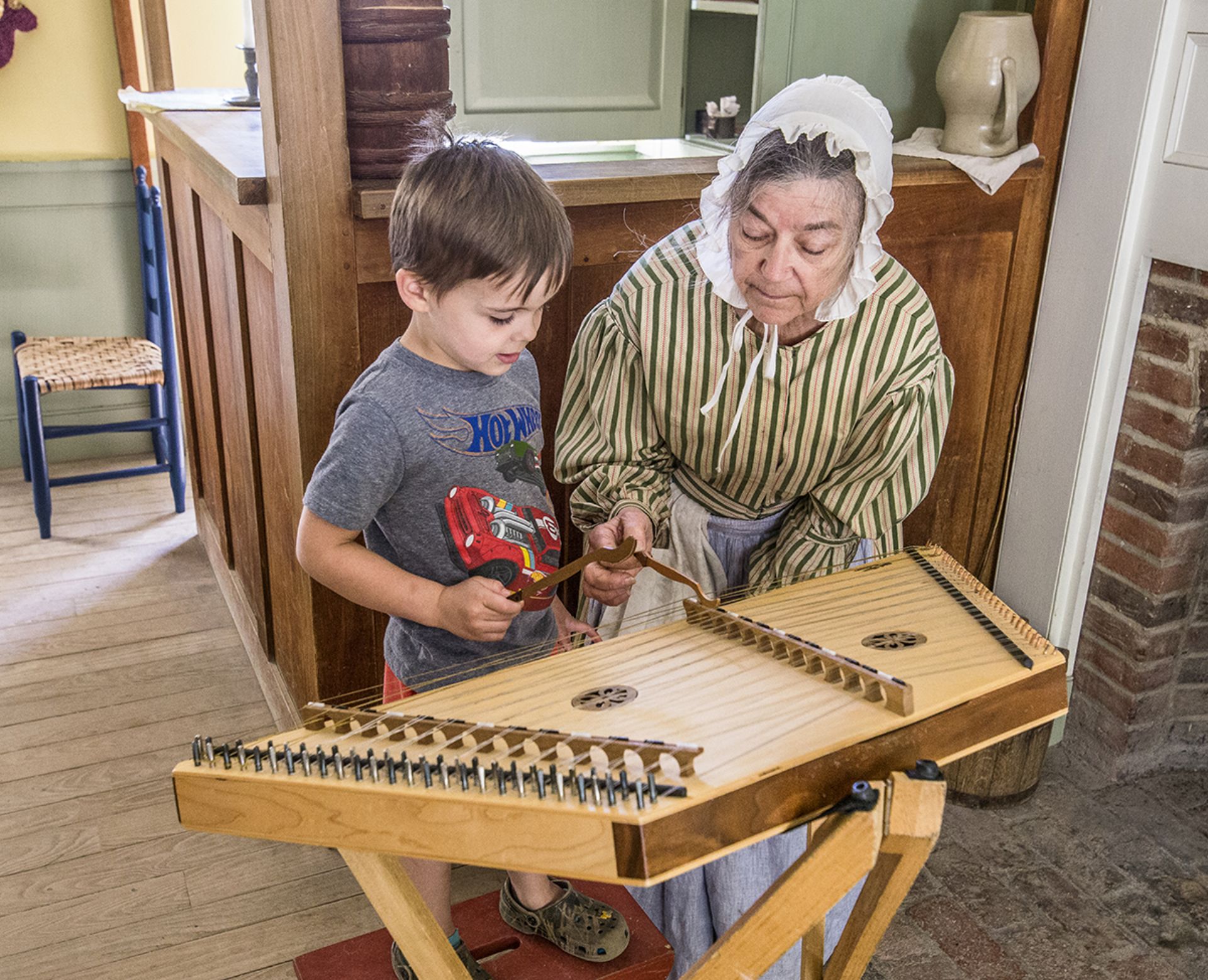
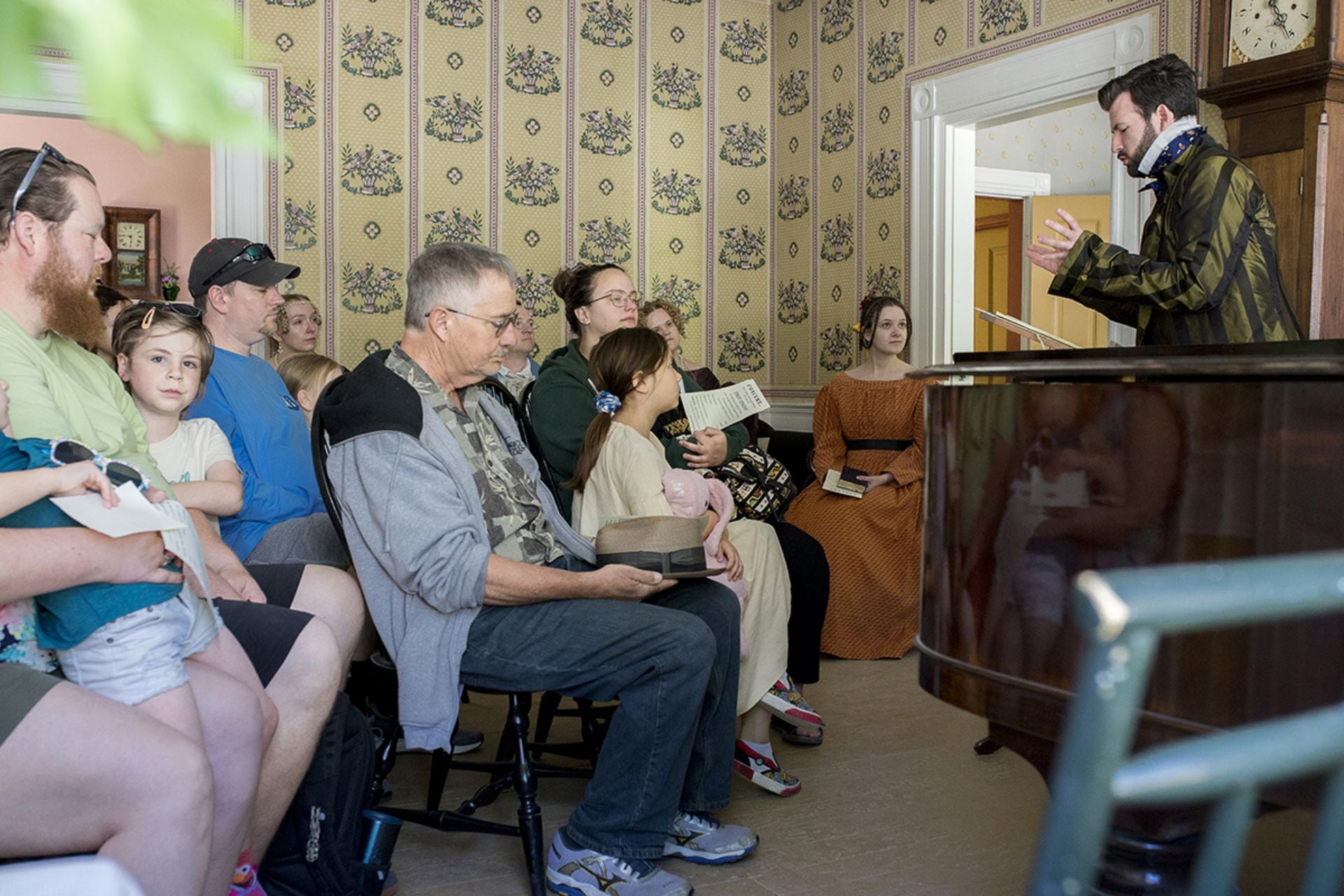
Immerse yourself in a 19th-century village and interact with the people, animals, objects, and routines of life in Central Indiana in 1836. You can study in the one-room schoolhouse, help with chores, or watch a tradesperson at work. You'll also meet the residents of Prairietown as they go about their daily lives. You'll learn new skills, and they might even tell you stories and share some local gossip. Come prepared to learn and play. Prairietown's success depends on you!
See what is happening in Prairietown
Explore Prairietown
Although Prairietown is a fictional village, stories and material culture are carefully researched and embedded in history. You'll find an interesting mix of individuals with differing views on religion, politics, and daily life. Get to know them a little better before your next visit and also find out more about Prairietown's fate!
Want to know more about the happenings in Prairietown? View our Prairietown Advocate.
- Play a 19th Century Game
- Clothing in the 1830s
- Meet the prairietown residents
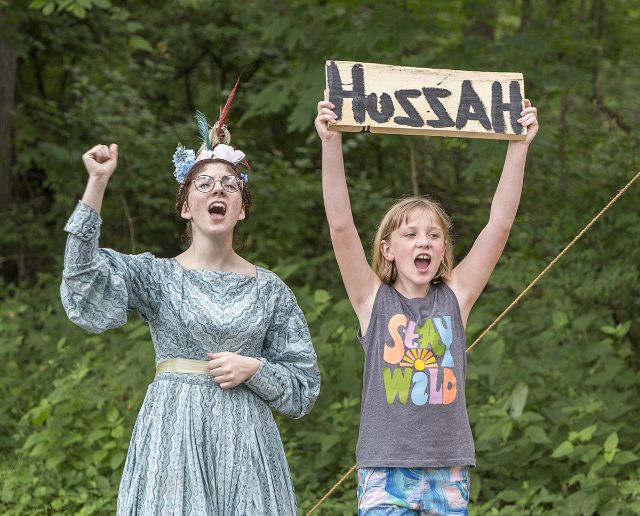
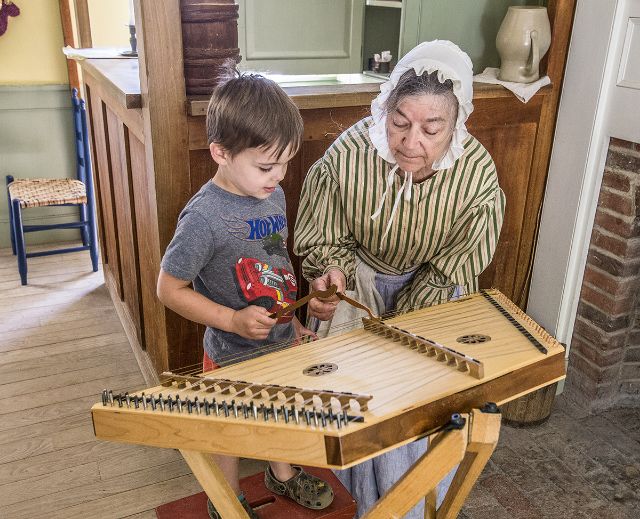
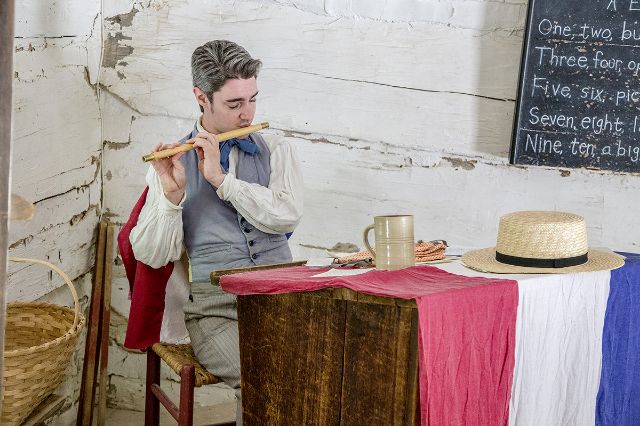
Even though children had many chores to do during the 1830s, games were an important part of their lives. Children regularly tried to transform their work into play. For example, children might sing while churning butter. Singing could be used to teach lessons such as counting, as in the case of “One, two, buckle my shoe.” Play also became a tool for showing children what roles they were expected to fulfill in society.
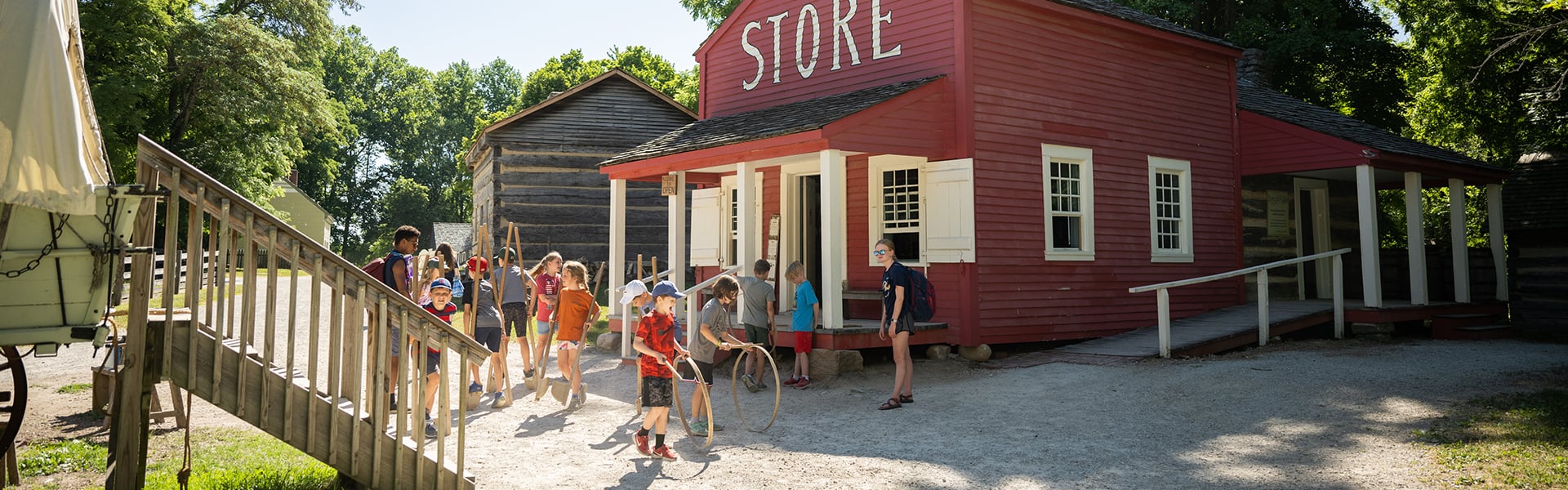
Children's games during this time involve a lot of physical activity. The game known as "hoop and sticks” involved wooden or metal rings that could be pushed along with simple sticks. The goal of this game was to see how far or fast the hoop could go before toppling over.
Another pastime activity called “French and English” (now referred to as tug-of-war) only required a strong rope for children to have fun. A bowling game with wooden balls and pins called “ninepins” was a favorite, too.
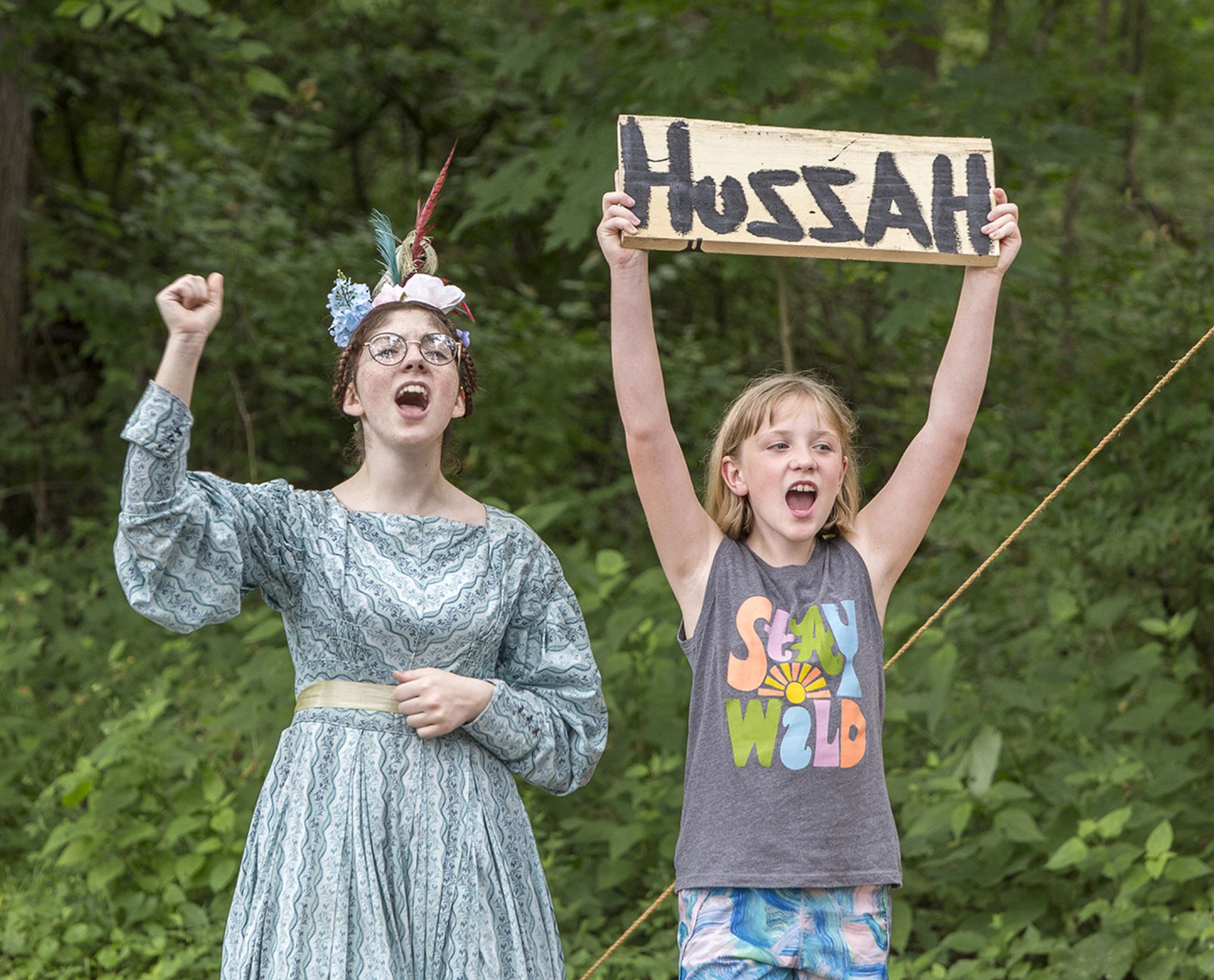
It's time to have fun and play!
Children's games were not as readily available in stores as they are today. This meant families often designed their own toys or games for children from nearby materials like wood, metal, or an object found around the house. At other times, games were a result of pure i
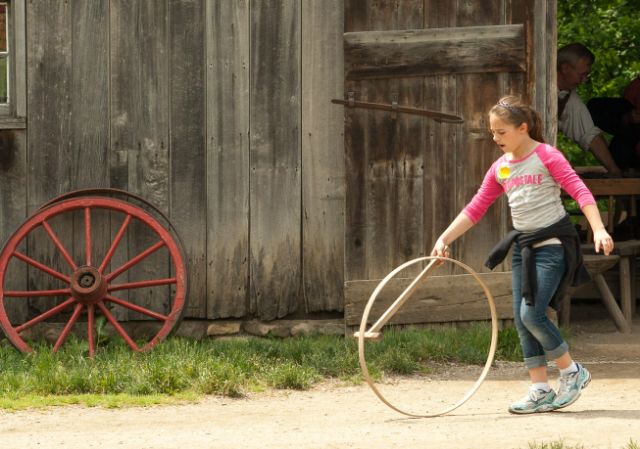
magination! We encourage you to get involved in the games and toys available in 1836 Prairietown. Who knows, after a visit here you might try inventing your own game!
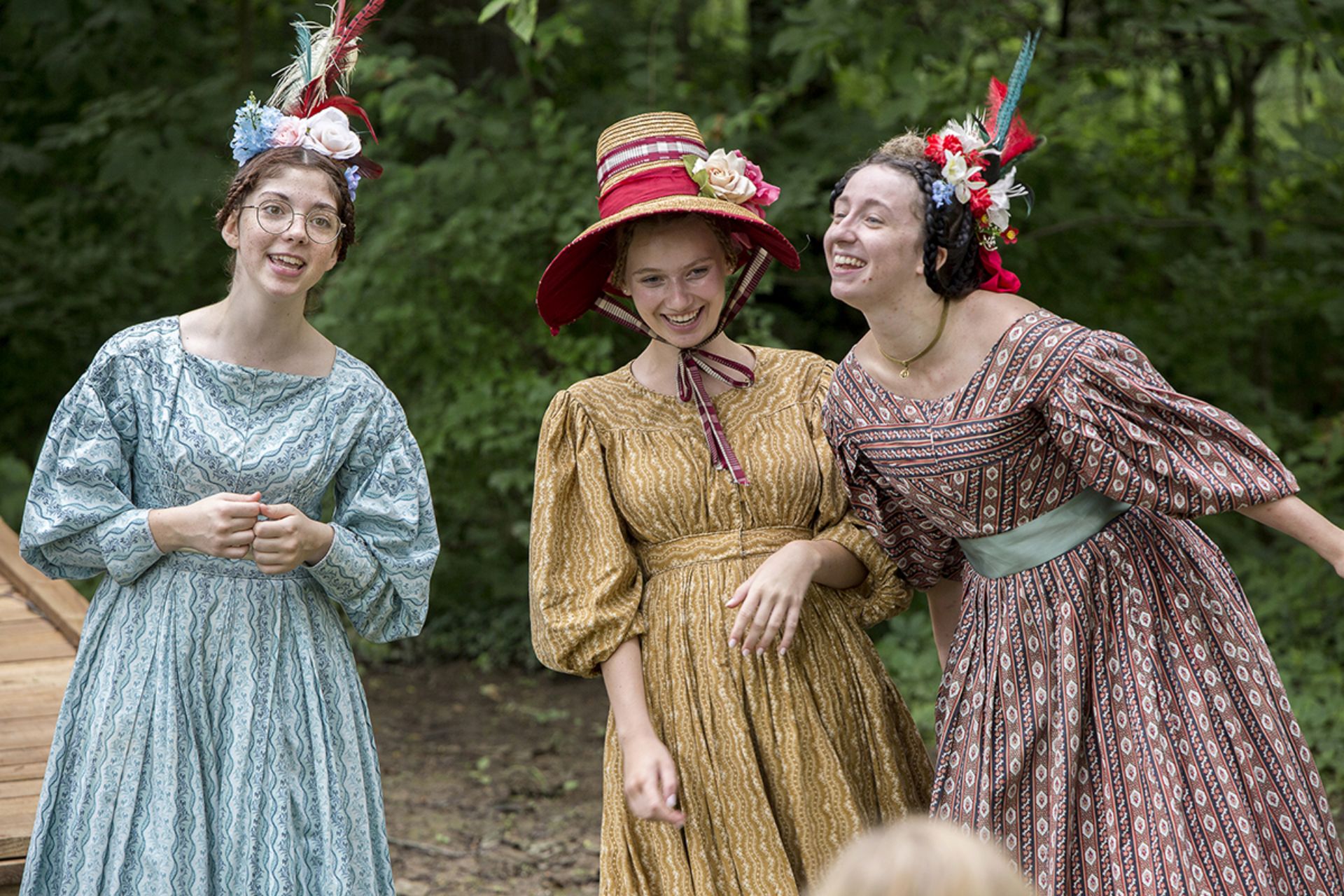
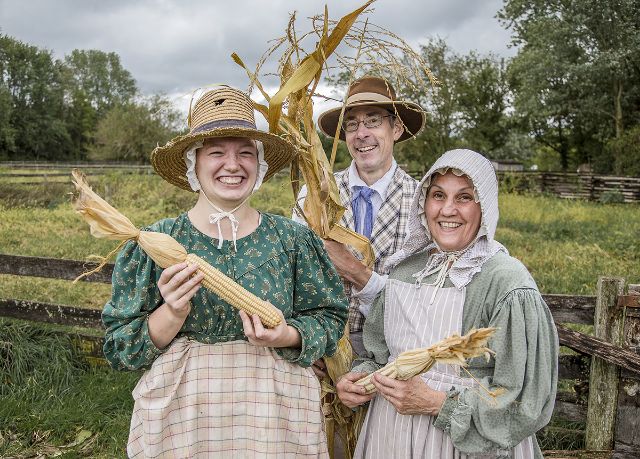
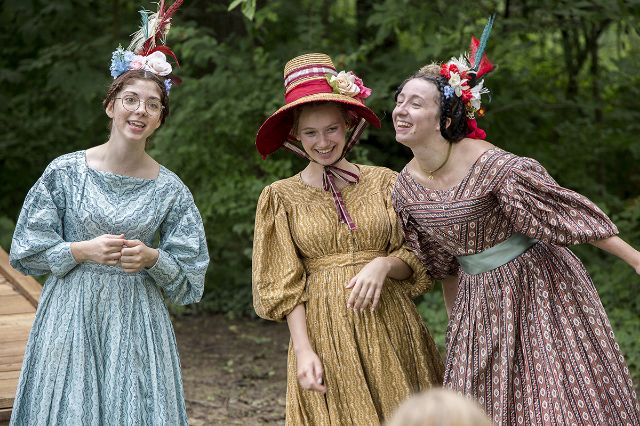
As you tour Prairietown, take notice of the clothing worn by the townspeople. Most are wearing basic outfits as they do housework, gardening, or a trade. A few may dress a bit fancier than others. 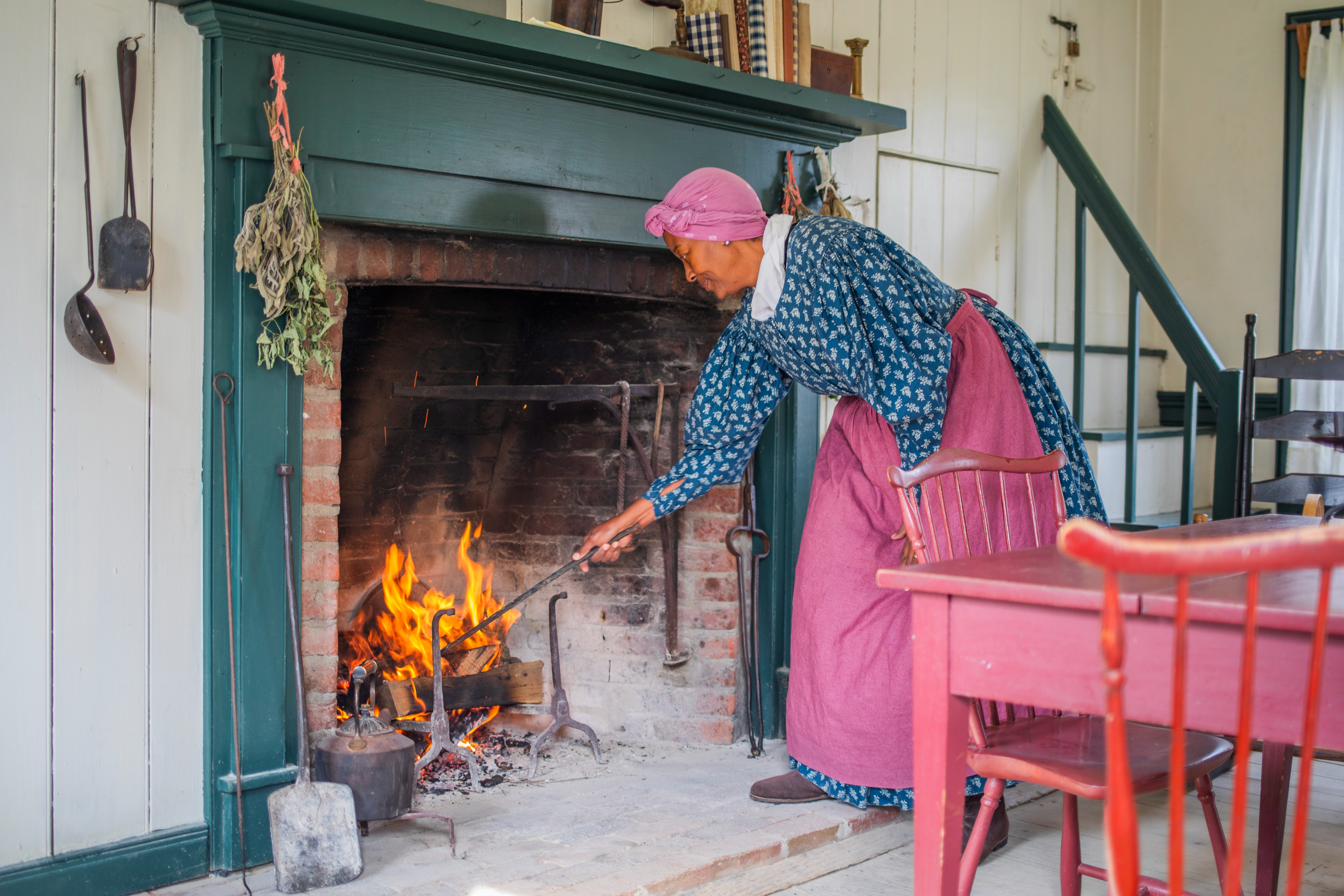
Doc Campbell and His Wife Welcome You to Prairietown
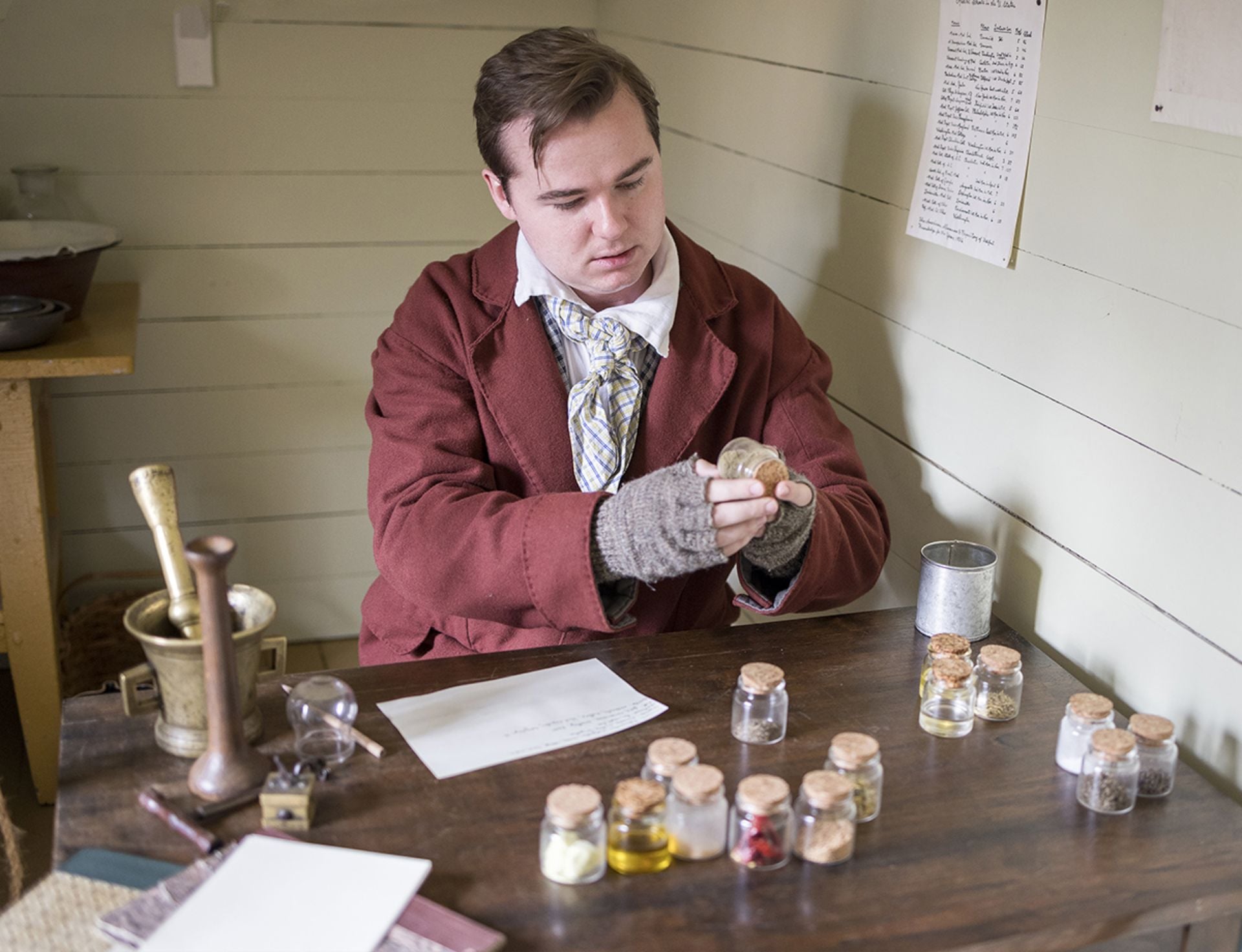
Dr. Campbell is the founder of Prairietown. He wields influence and power and is something of a social elitist. He started Prairietown as an investment, a way to make himself some money, but he is also a very charming and smart man. Because of his role in town, many of Prairietown’s residents owe the doctor money and may resent him. In fact, the rumor is he married Mrs. Campbell for money! The doctor has plenty of land for sale to the public and is interested in attracting young families to settle in town.
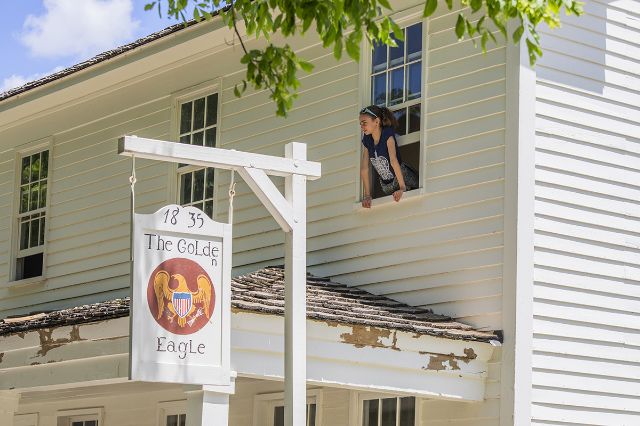
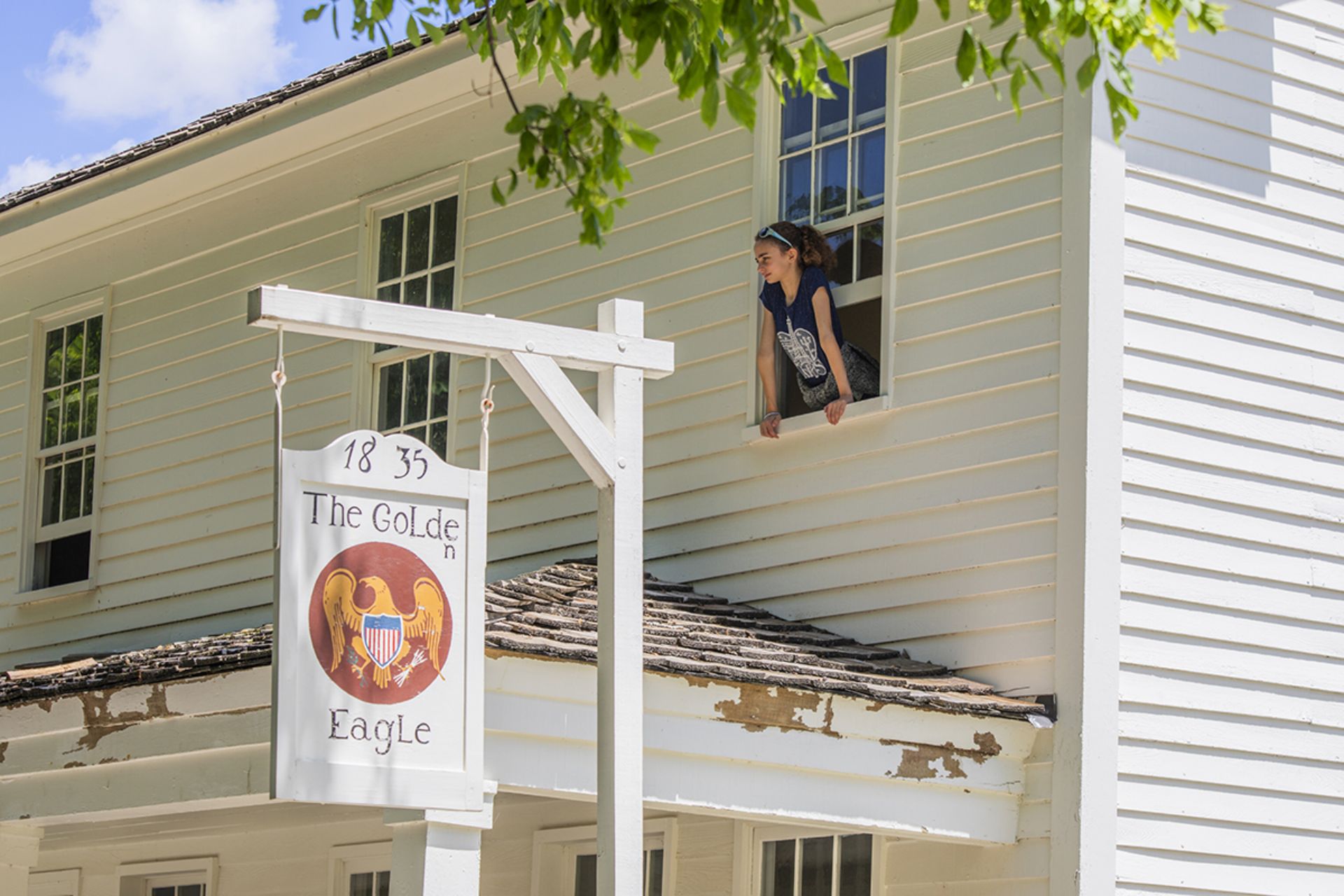
Mrs. Zimmerman, a widow, runs the Golden Eagle Inn for Dr. Campbell. She may inwardly disagree with the good doctor on operational issues but would never jeopardize her job by saying anything within his earshot. Mrs. Zimmerman lives at the Golden Eagle Inn with her sons, daughter, and daughter-in-law. The family came to Indiana from Pennsylvania and brought many of their German heritage traditions with them.
Meet the Whitakers
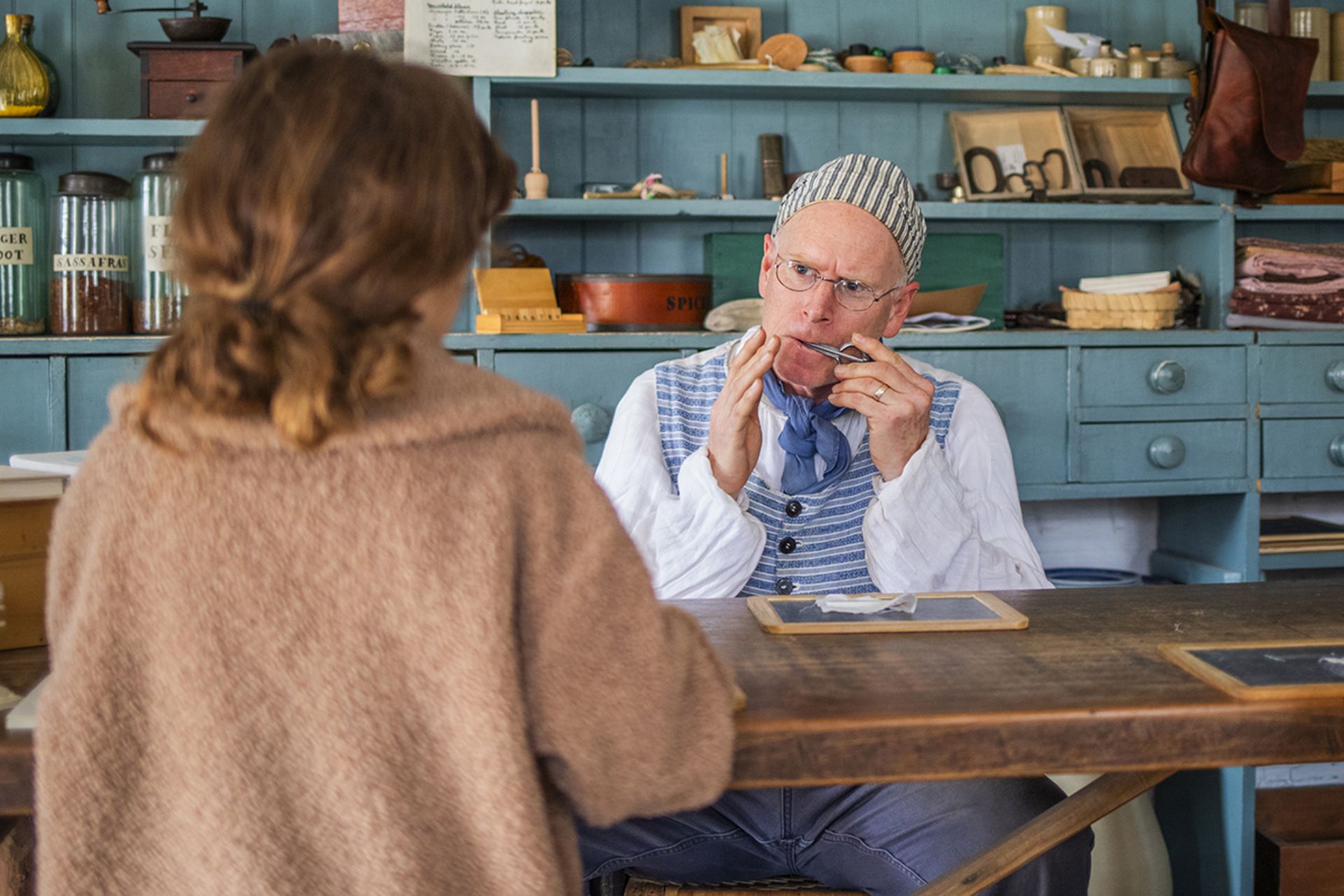
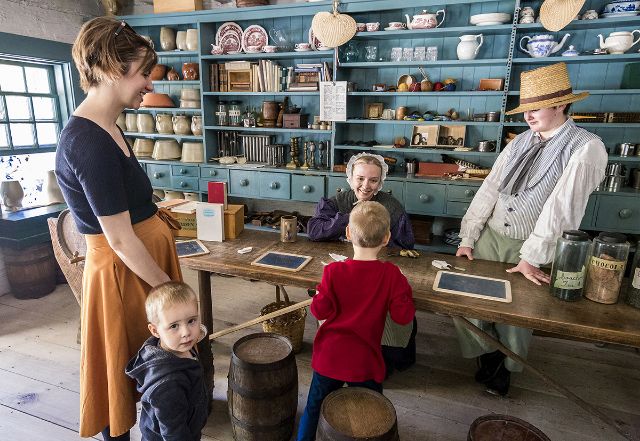
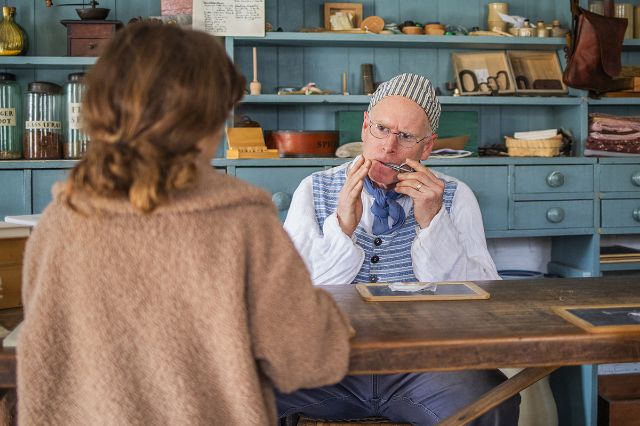
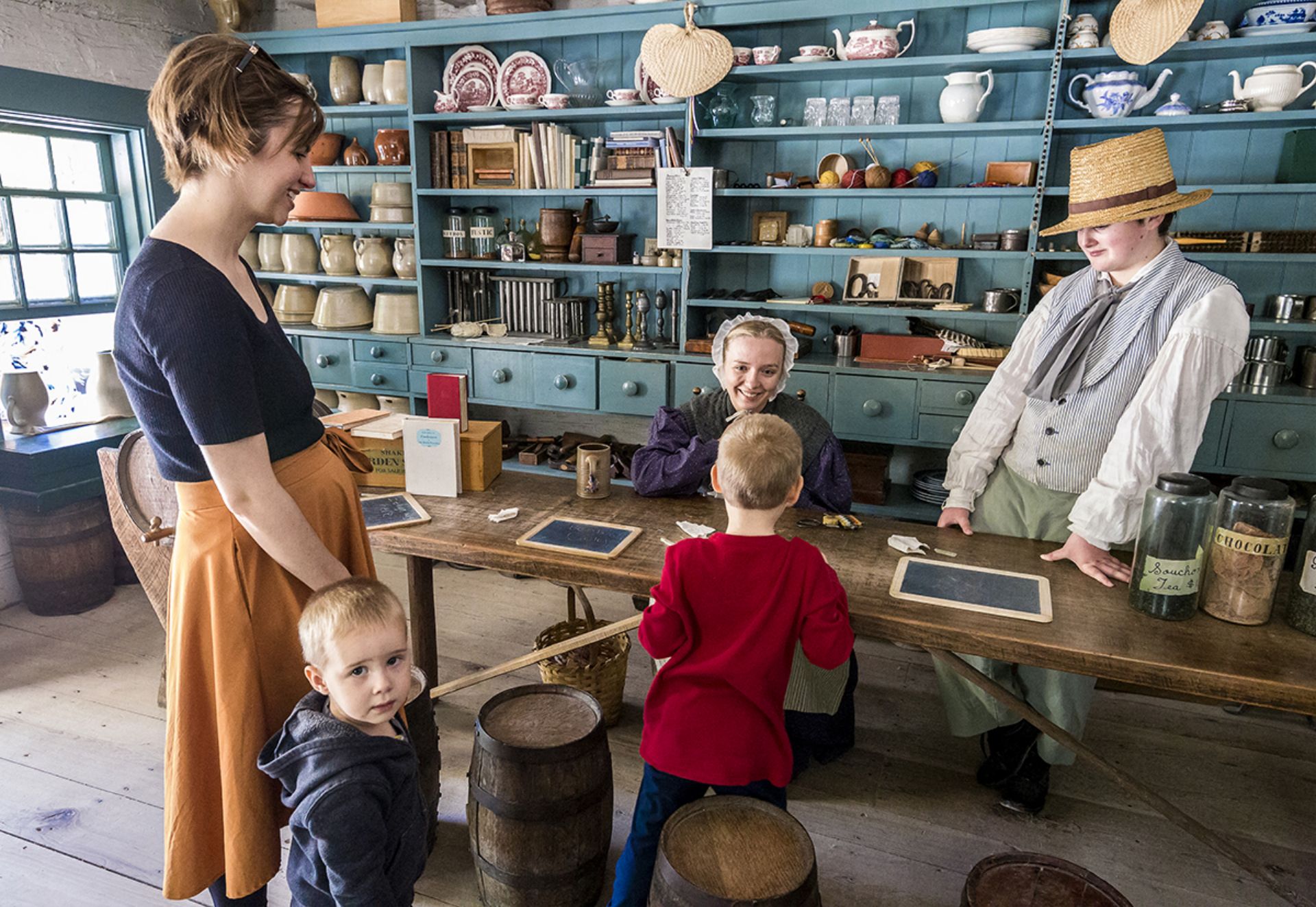
Most everyone in town is indebted to Mr. Whitaker, the owner of the store, and must be friendly to him to get a good deal. The store is a vital part of Prairietown, making goods from all over the world available to its citizens – at a price, of course!
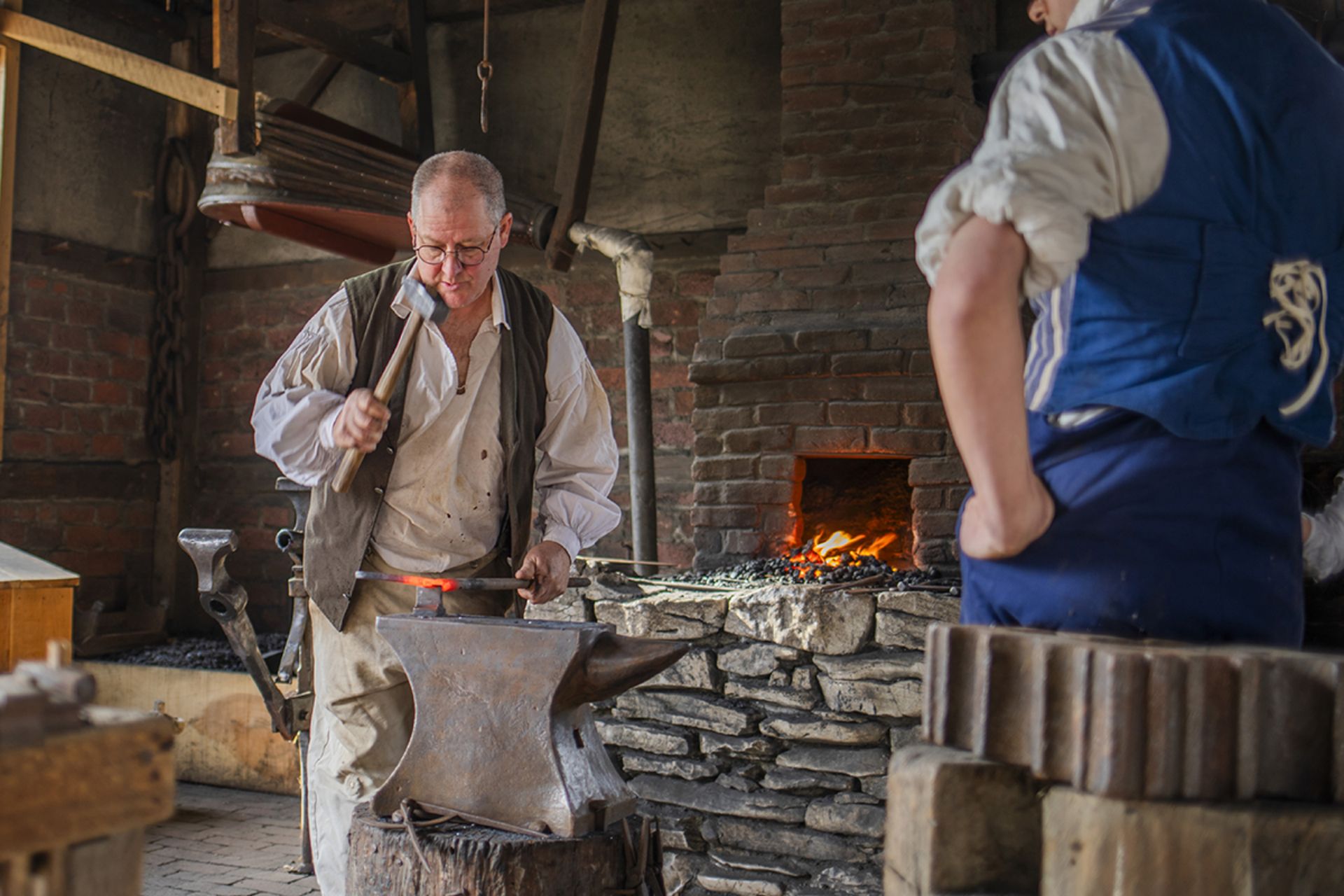
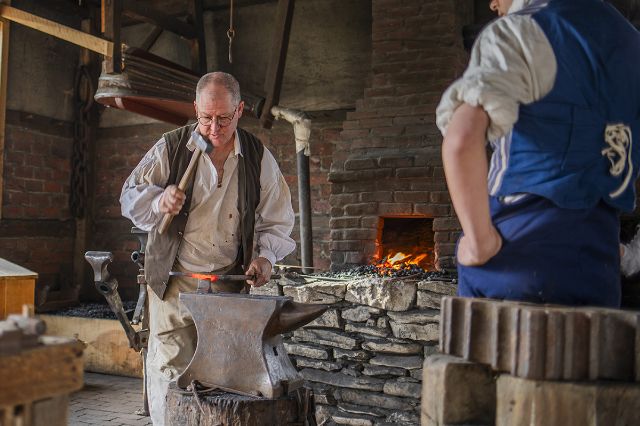
Mr. Curtis, the town blacksmith, is an important part of the Prairietown community. He and his family made the long journey to Indiana from New York and have found the western frontier to be different in many ways. As Methodists, Mr. Curtis, his wife, and sister Mary abstain from hard spirits, and the family does not think singing – outside of church – to be proper.
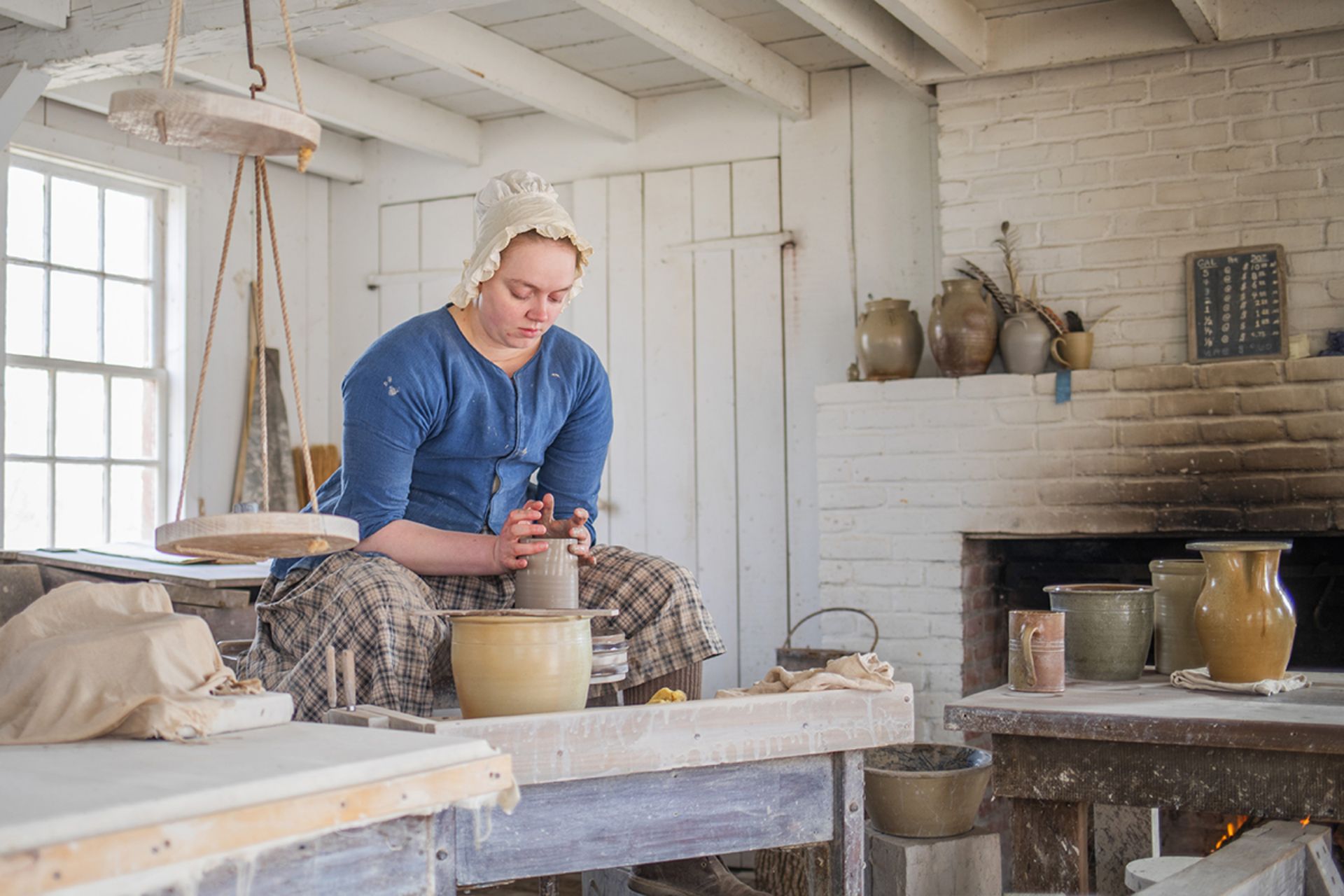
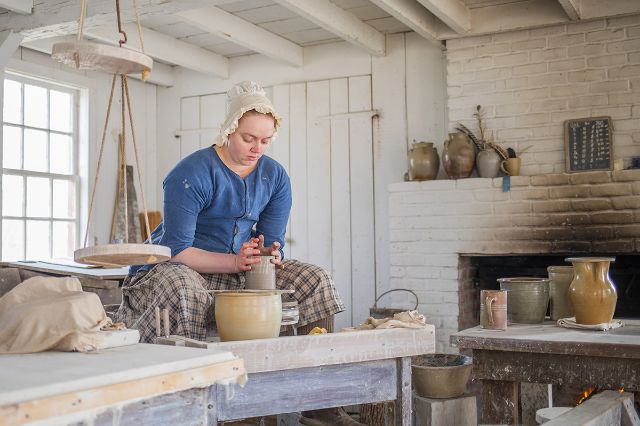
Drop by the Barker's Pottery Shop
Isaac and Jonathan Barker are potters; a trade passed down to them by their father. Since every household in Prairietown uses pottery in one form or another, the Barker Brothers and their shop are very successful. Though they may hold the most credit in Mr. Whitaker’s store, the Barkers are rarely found socializing with the Prairietown upper crust – the family prefers the simpler things in life and might be considered a bit uncivilized by some of the town’s other citizens.
Architecture of Prairietown
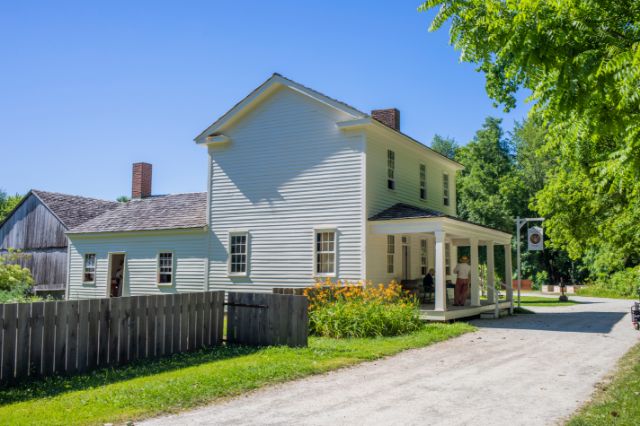
- Golden Eagle Inn (1830s)
- Golden Eagle Barn (1820s)
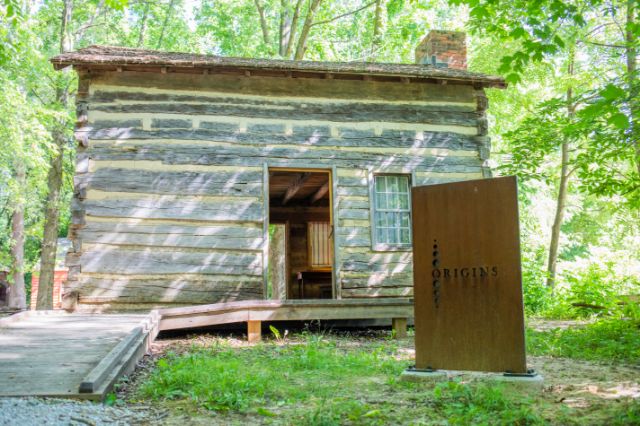
- Origins Cabin (1834)
- Baker Brother's Pottery Shop (2012)
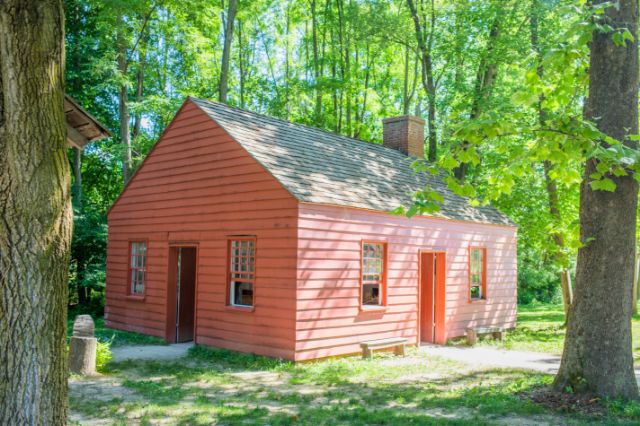
- McClure House (C. 1840)
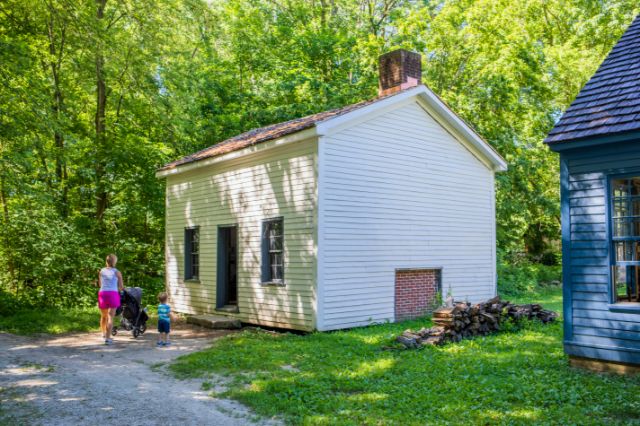
- McClure Carpenter Shop (2010)
- Turner House
- Campbell House (1840s)
- Campbell Barn (1820s)
- Prairietown Schoolhouse (1823-1853)
- Whitaker's Store (Reconstructed 1972)
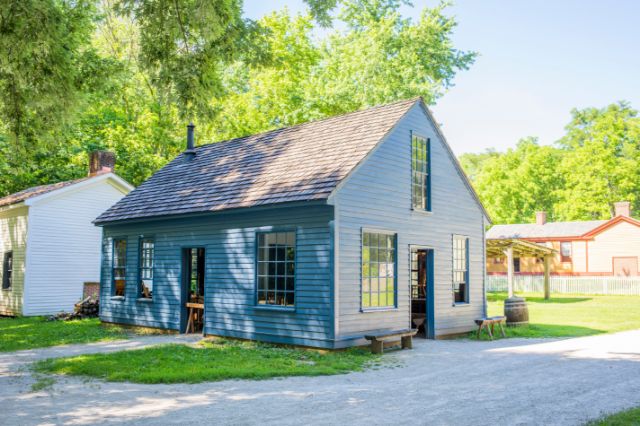
- Curtis Blacksmith Shop (Potentially 1840s Reconstructed 1972)
- Curtis House (1830s)
- Resistance Cabin (1936)
- Reflection Cabin (Date Unknown)
-
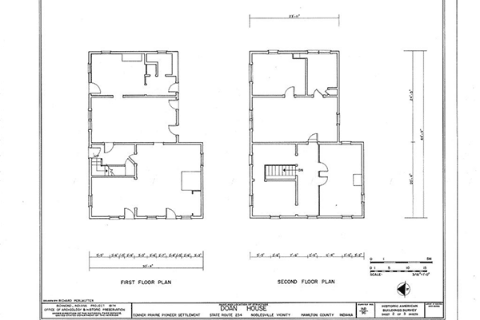
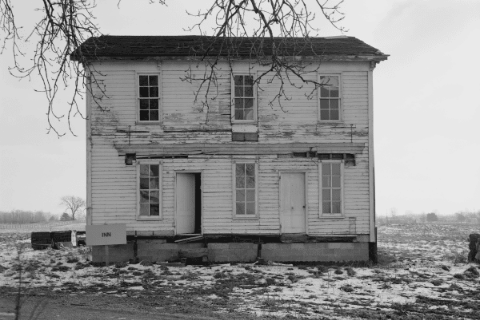
The Golden Eagle Inn was constructed in the 1830s and is believed to have been home to the founders of Westfield, Indiana. It was later owned by the Doan family, which was very active in farming and civic activities in Westfield. The Doan family donated the home in 1972. It has gone through many internal and external reconstructions.
-
The Golden Eagle Barn and Dr. Campbell’s barn were located on the same site in Noblesville. One was built in 1826 and the other in 1829. Both barns show insights into the construction and type of structures for the time period.
-
This 1 ½ story log structure was built in 1834 by Simpson Jones in Hancock County, Indiana, near Mohawk. It remained a family dwelling until about 1900 when it was converted to a farm storage shed. In 1973, Lloyd Fuqua moved the cabin 15 miles to his home in Hamilton County and opened it to the public on July 4, 1976. The structure was donated to Conner Prairie by Fuqua’s family in 1996. The cabin was carefully restored by the museum’s historic trades staff.
-
This fully operational pottery shop was dedicated in 2012. This was the second building that was built by Conner Prairie trades staff. The new kiln shed was completed in 2013.
-
The home belonging to Prairietown’s McClure family of carpenters was built between 1830 and 1850 in Hamilton County. Believed to be the home of Jacob Heiny, an early farmer in Hamilton County. Known as the Holtkamp-White cabin, this one-room log cabin was restored in 1976, after its move to Conner Prairie.
-
This fully operational carpentry shop was officially dedicated on August 9, 2008, and completed in 2010. This was the first building addition to Prairietown in more than a decade. The carpenter shop was the first at Conner Prairie to be completely built by hand from the ground up.
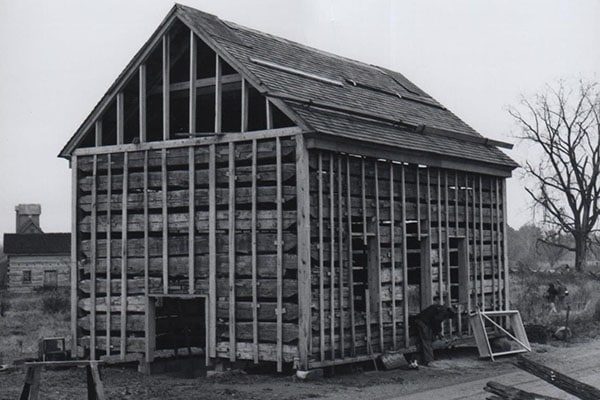
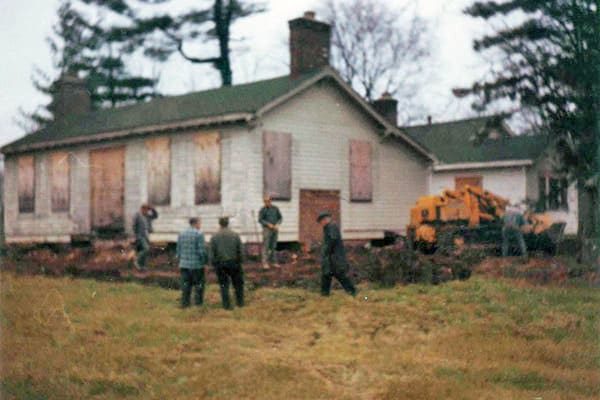
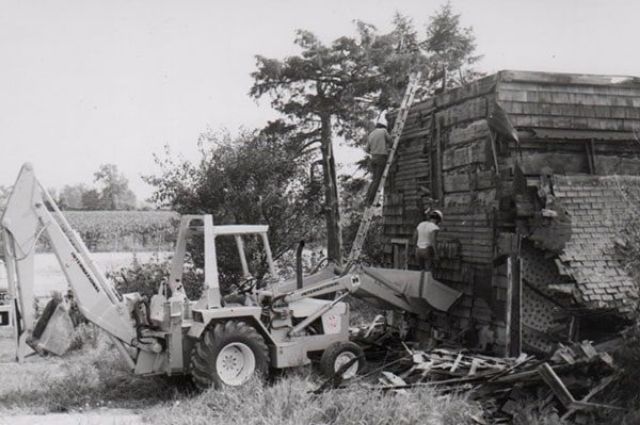
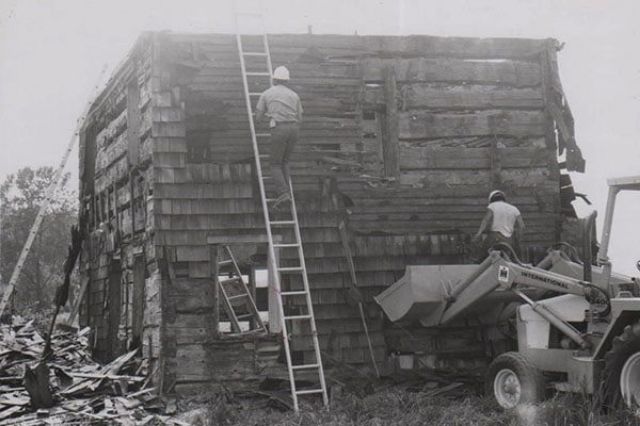
Original photo of the Turner House being reconstructed.
-
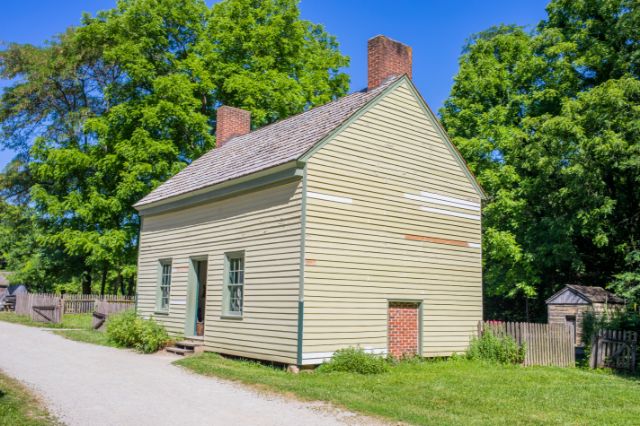
This two-story home was moved to Conner Prairie from Cicero, Indiana. It was owned by the Fraley Family, however not much more is known about the home.
-
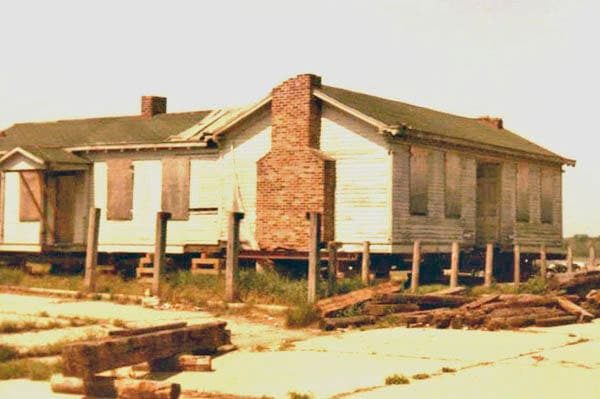
This one-story Greek Revival house was built around 1840. The home is a modest interpretation of a Greek Revival house but an upscale home for the era and the region. The Campbell House was home to Dr. A.G. Ruddell, the first physician in an area known as Allisonville in the 1830s and 1840s. The house stood at the corner of 465 and Allisonville Road.
-
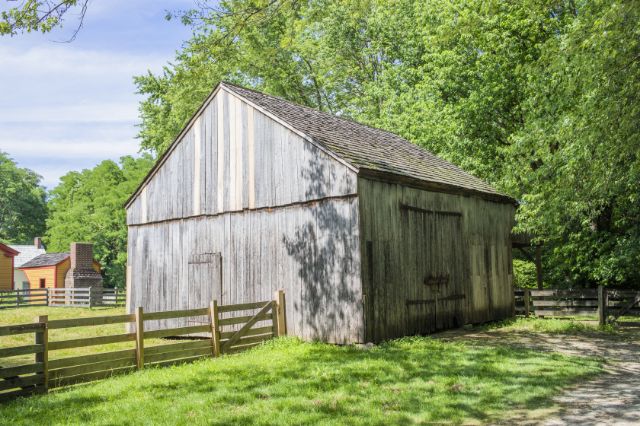
This barn was allegedly built in the mid-1820s in Hamilton County, Indiana. It shows insights into the construction and type of structures for the time period and region. It is a rectangular barn with hewn support beams and timber siding.
-
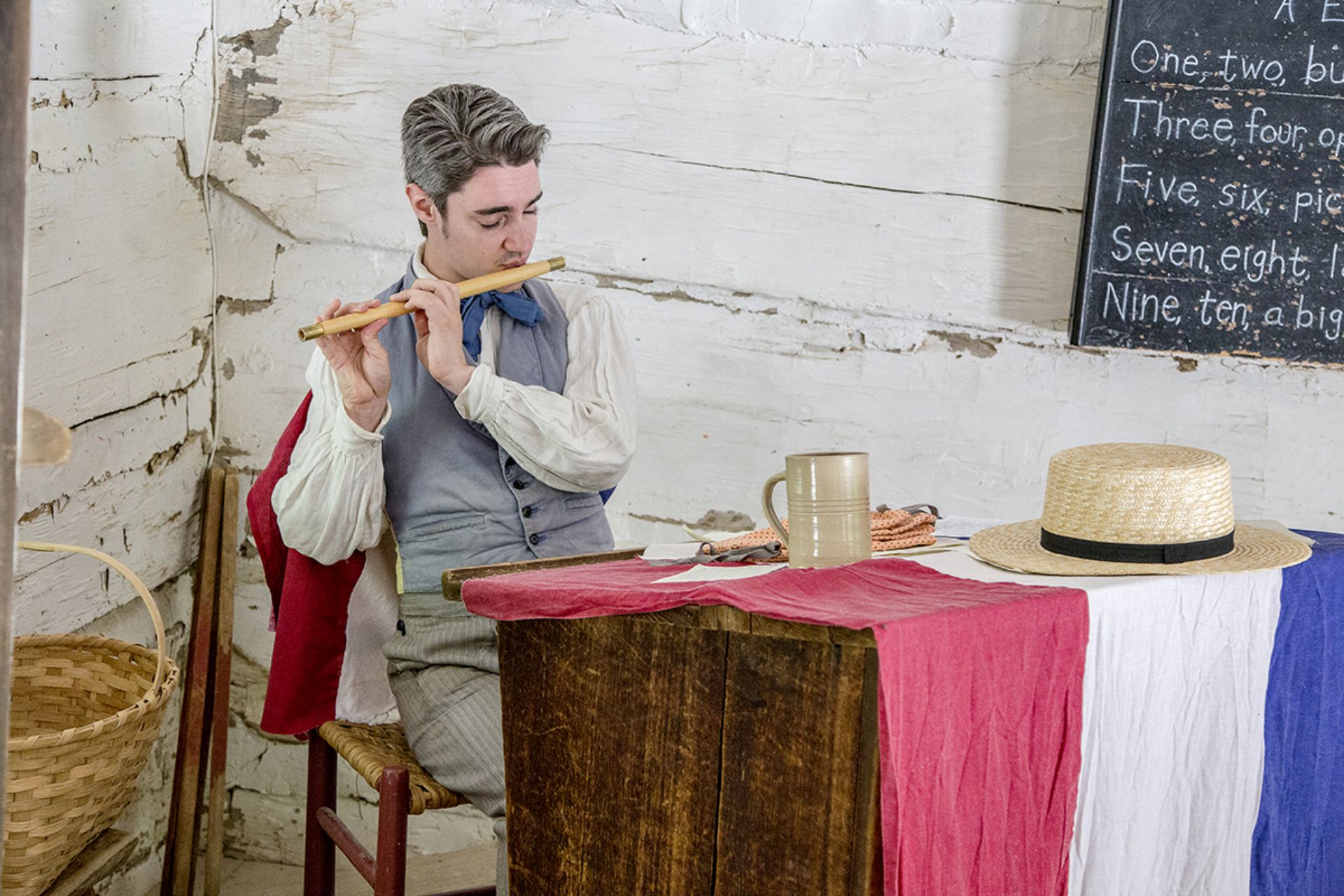
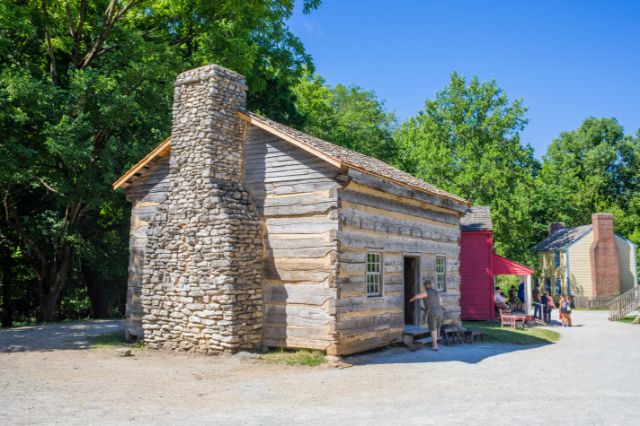
This one-room log cabin was built between the 1820s and 1850s in Bentonville, Indiana, and now serves as Prairietown’s schoolhouse. It has undergone restoration, including the replacement of exterior logs, flooring, roofing, and several supports.
-
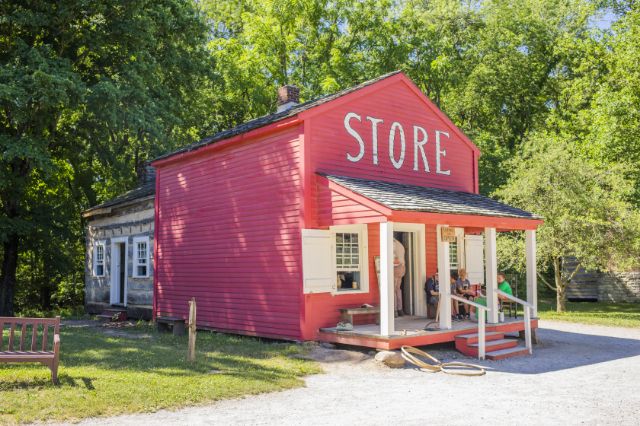
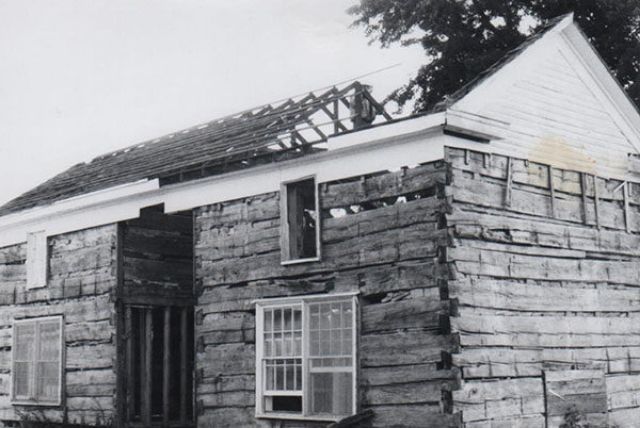
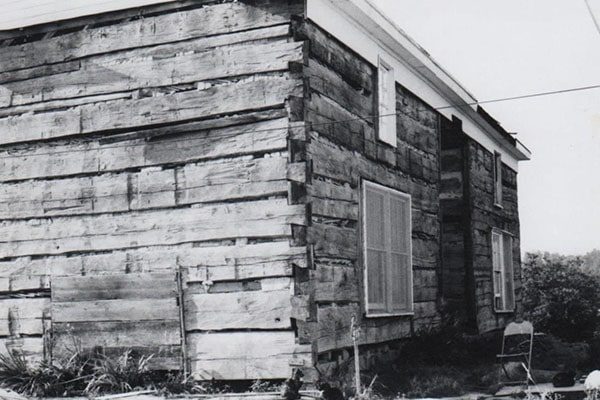
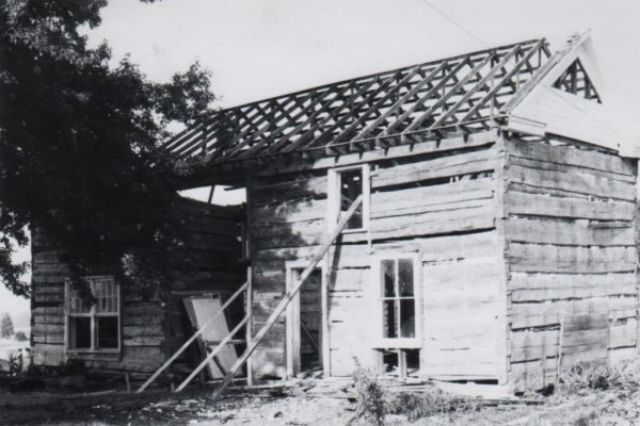
The Whitaker Store was built in Crothersville, Jackson County, Indiana. This 1-1/2 story log cabin also has an attached one-story cabin. It has been altered since its move to Conner Prairie, with lapped siding added to the main structure.
-
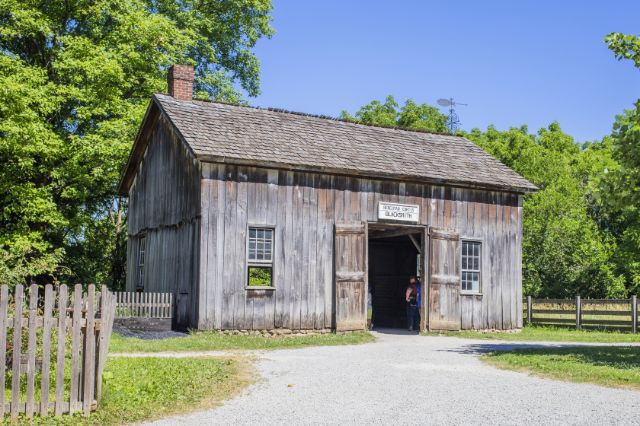
Built in Angola, Indiana, the blacksmith shop originally belonged to the Dygert family. It served as a blacksmith and carpenter shop in the late 1800s and was eventually moved and reconstructed at Conner Prairie in 1972.
-
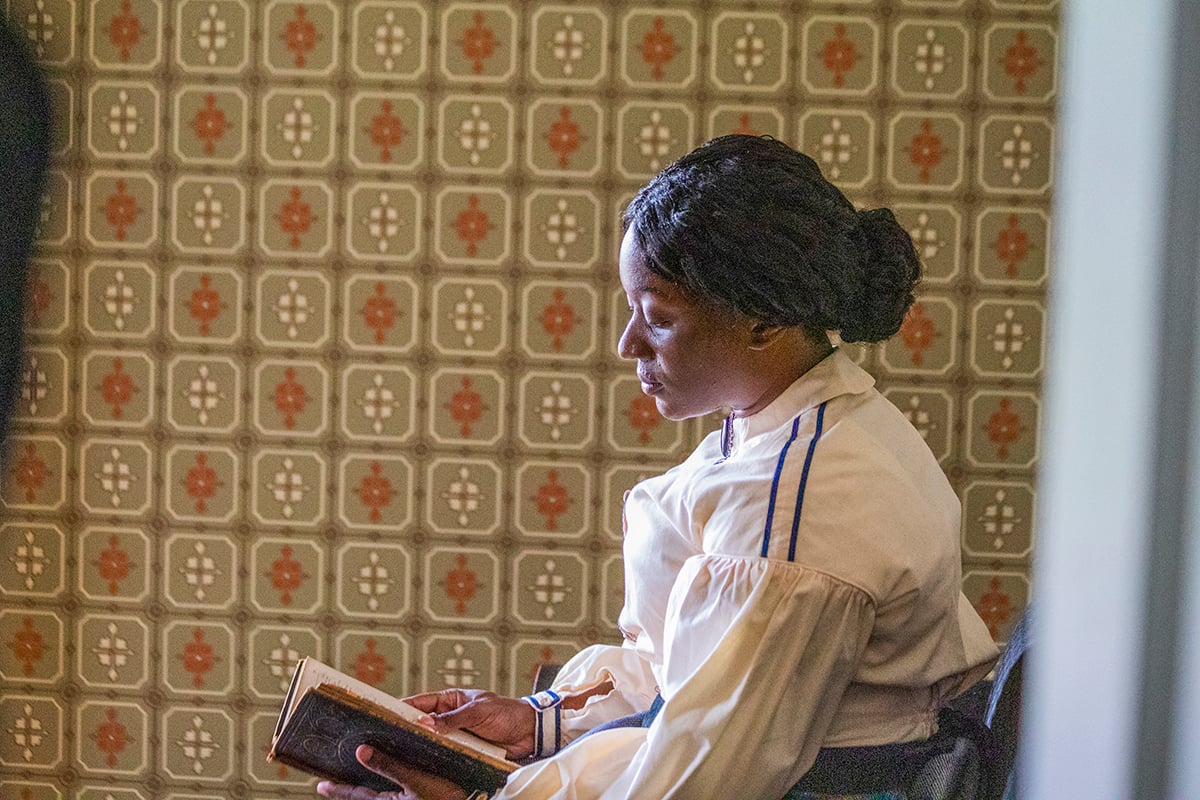
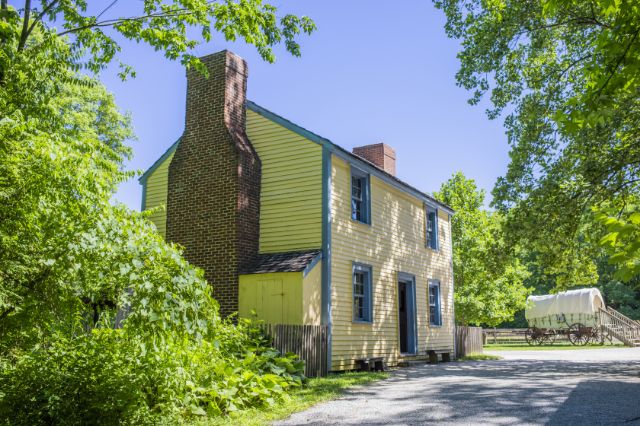
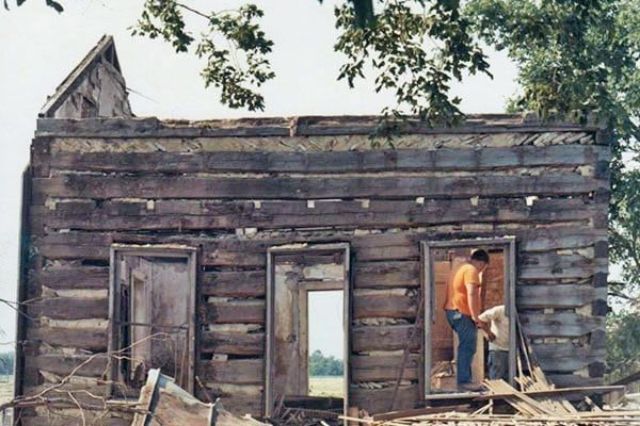
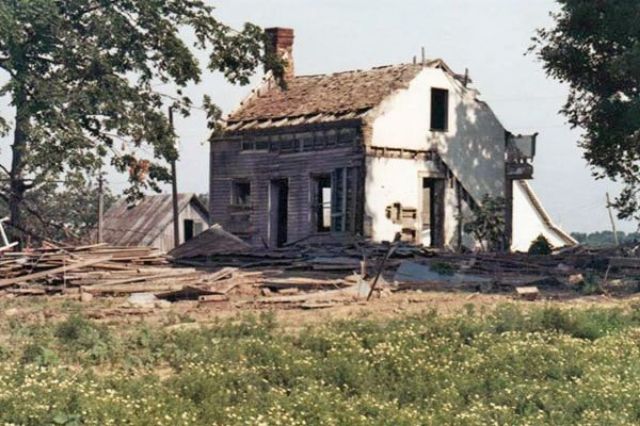
This 1830s-era two-story log cabin originally belonged to the John Berger family. It was located along the National Road (present-day U.S. 40) near Lewisville, IN (Henry County). This home served as a regular stop for travelers and stagecoaches bringing families west in the 1830s. It was also said that this home accepted boarders for extra money. This building was reconstructed by Conner Prairie; staff found old Cincinnati newspapers (Daily Gazette) behind printed wallpaper. These newspapers date back to 1837 and 1862.
-
This 1 ½ story, one-room log home was built near Greencastle, Putnam County, Indiana. Other information about the cabin is unknown.
-
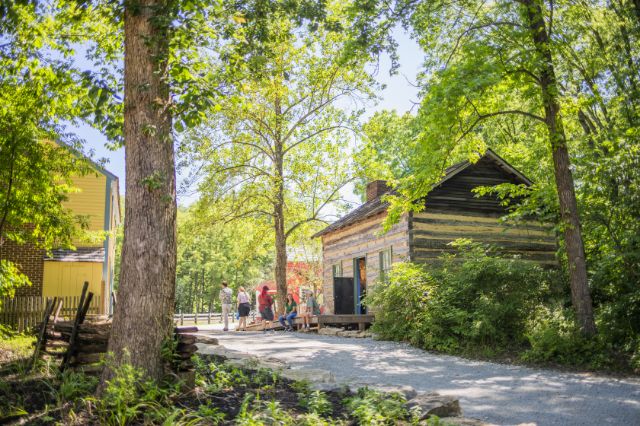
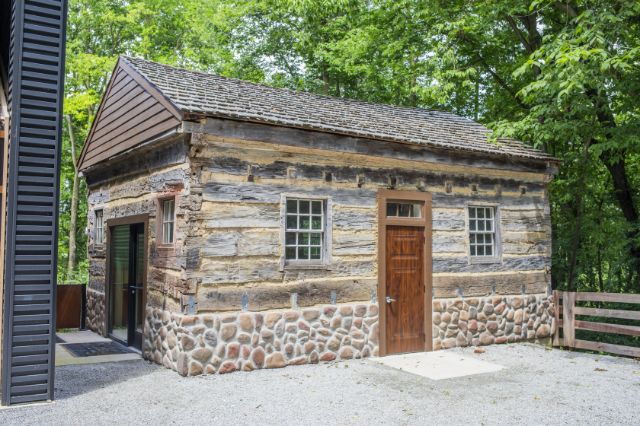
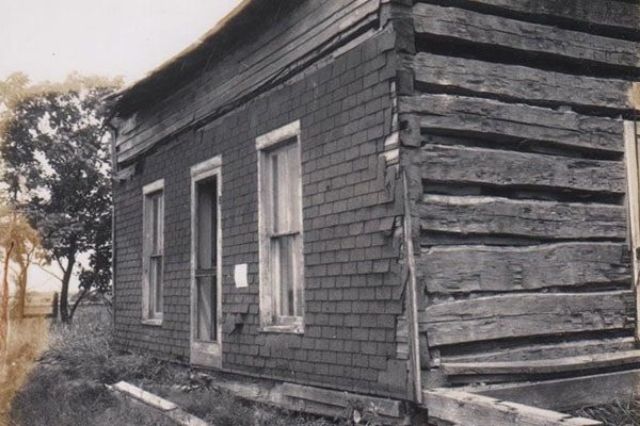
This 1 ½ story log cabin was moved from Fortville, Hancock County, Indiana. Its date of construction is unknown, although it was owned by the Hall family of Hancock County. The exterior shed outside the cabin was added after its reconstruction in the 1970s at Conner Prairie.
50 Commitments
In 2024, Conner Prairie celebrated the 50th anniversary of Prairietown, a cornerstone of the Museum’s immersive experiences that have impacted visitors from around the world. To commemorate this landmark anniversary, Conner Prairie is announcing 50 Commitments to the community that will highlight the work the Museum has done and continues to do to provide avenues for cultural enrichment, foster learning, spark curiosity and enhance the human experience.
af90.jpg?w=600)
af90.jpg?w=600)
af90.jpg?w=600)
f419.jpg?w=1920)
f419.jpg?w=1920)
f419.jpg?w=1920)