

.jpg)
Conner Prairie's collections are focused on Midwest and Indiana material culture circa 1800 to the present, including domestic and agricultural objects, historic textiles, science materials reflecting invention and innovation, and live animals that help visitors make connections with the natural world. It may also include such non-regional and foreign objects to help define and delineate the material culture of Indiana.
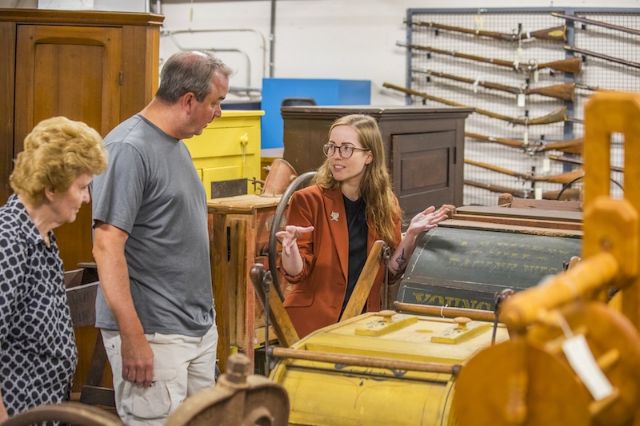
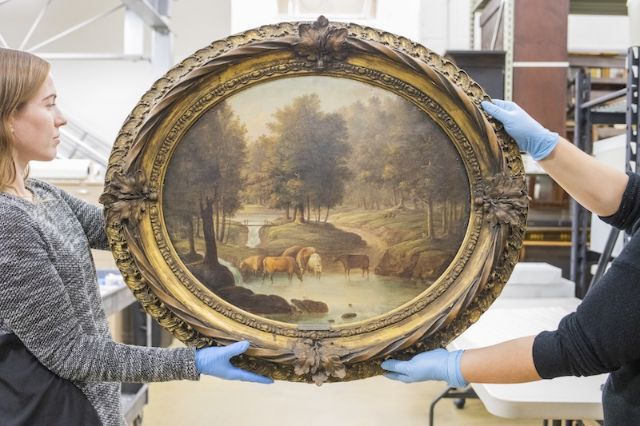
In an effort to preserve the fast-disappearing rural heritage of Hamilton County and central Indiana, Conner Prairie's Rural History Project (RHP) has collected materials and gathered oral histories from area residents. The effort was funded through a grant from the Lilly Endowment's Legacy Fund of Hamilton County and headed by former Conner Prairie Historian Tim Crumrin. Nearly 200 people were interviewed, and many of those provided photos, artifacts, and research materials.
Thinking of donating to our Collections?
If you have an object that falls within Conner Prairie’s collecting scope that you are interested in donating to the museum, we would love to get in contact!
Learn about our historical buildings



William Conner House
- William Conner House (1823)
- The Loom House (Date Contested)
- The Spring House (Date Unknown)
-
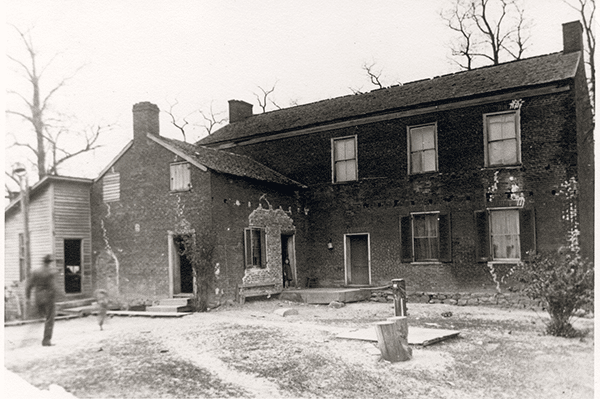
The William Conner House was built in 1823 after he married his second wife, Elizabeth. William Conner lived in this home from 1823 to 1837. Conner’s brick home is believed to have been the first 2-story brick structure in central Indiana. It is likely that the bricks were fired onsite – the remains of a kiln were found near Animal Encounters. It is one of two historic structures at Conner Prairie on their original sites. This house has six rooms: a sitting room, dining room, kitchen, two bedrooms, and quarters over the kitchen. Its Federal-style architecture has a balance of details on each side- a door in the middle and windows distributed evenly on each side of the room.Conner’s house served as the first county post office. The Hamilton County commissioners and the circuit court met regularly at the Conner house. Conner’s prairie and house were major landmarks for central Indiana travelers in the early 19th century.
Eli Lilly purchased the William Conner house in 1934 from a businessman named Eugene Darrach. Before Darrach purchased the house, it was used by tenant farmers. Once Lilly had bought the home, he immediately started the restoration process.
“It had insufficient foundations, the walls on the west side were bulged out about six inches, all of the brickwork needed repointing, the roof leaked badly and the east porch had disappeared! The kitchen wing had been struck by lightning, its floor beams were rotten, and the brickwork was cracked. It had to be entirely torn down and rebuilt, using for the most part the original materials.”
—“Notes,” by Eli Lilly, The Conner Farm, 1968
-
-
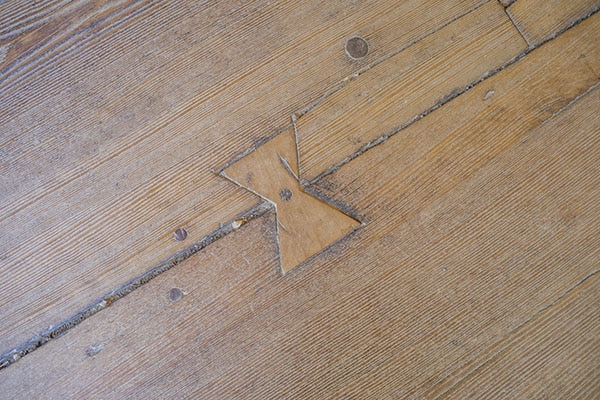
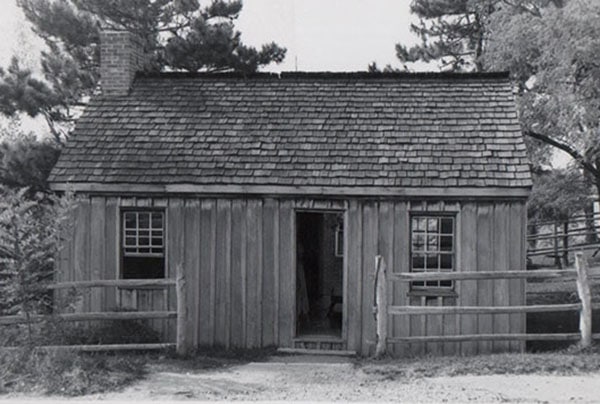
The loom house was relocated to Conner Prairie by Eli Lilly. The loom house might be two or more buildings pieced together to form this structure. The siding and internal floors have been replaced, and the floors now incorporate “butterfly” joints to allow for expansion in seasonal climate changes.
-
-
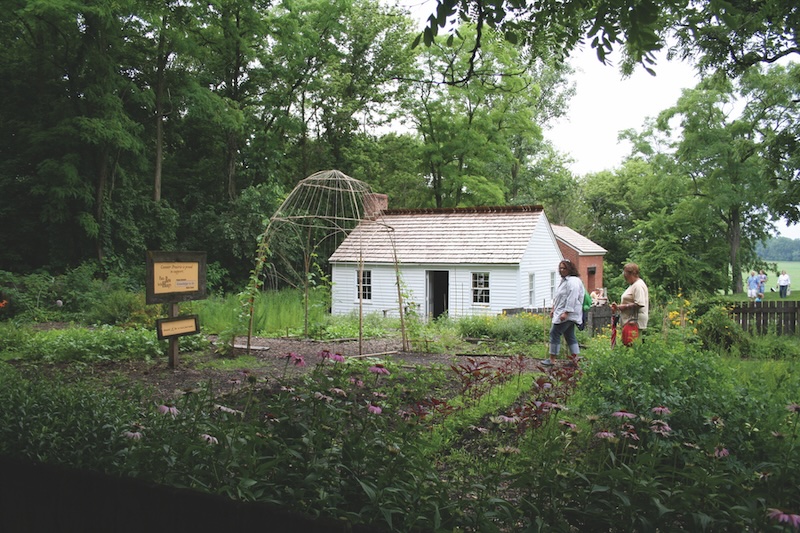
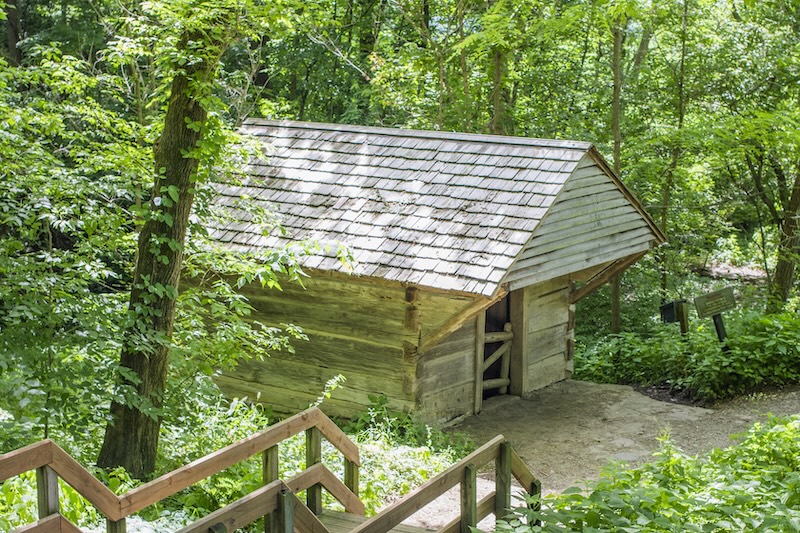
The Spring house is a home hidden behind the annex that was bought by Lilly to represent a typical spring home for the era. A spring house is a building that keeps cool temperatures throughout the year and is typically used for refrigeration.
-
.jpg)
Animal Encounters
- Animal Encounters
-
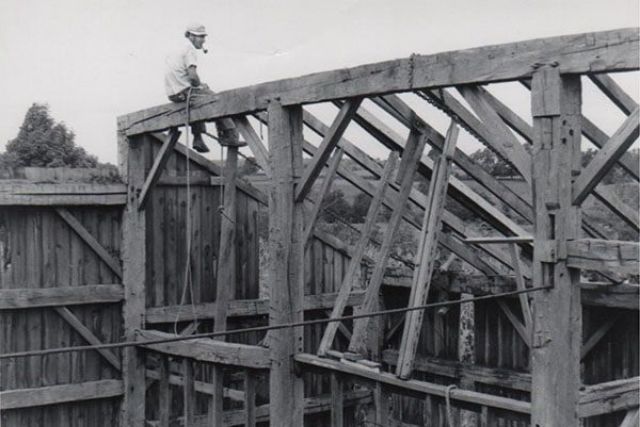
This barn was donated by the Stuntz family of Delphi, Indiana, and once stood in Rossville, Indiana. The barn was not William Conner’s but is a good representation of construction methods and floor plans common to barns of the early 19th century. Originally built in the 1830s by Isaac Roll The barn features a substantial main beam and a tightly fit wooden floor where grain was threshed. The barn was reconstructed at Conner Prairie in 1976.
-
1836 Prairietown
- Golden Eagle Inn
- Golden Eagle Barn
- Origins Cabin
- Pottery Shop
- McClure House
- McClure Carpenter Shop
- Turner House
- Campbell House
- Campbell Barn
- Prairietown Schoolhouse
- Whitaker's store
- Curtis Blacksmith Shop
- Curtis House
- Resistance Cabin
- Reflection Cabin
-
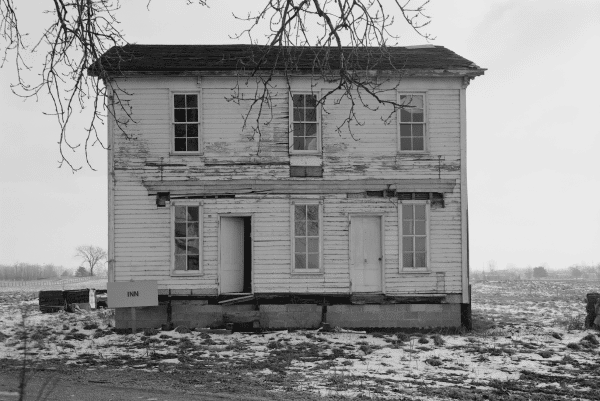
Golden Eagle Inn (1830s)
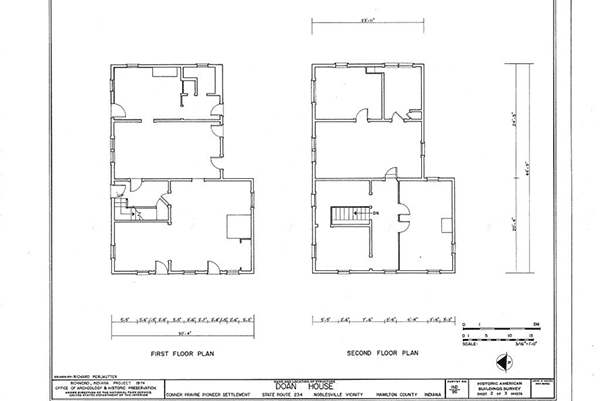
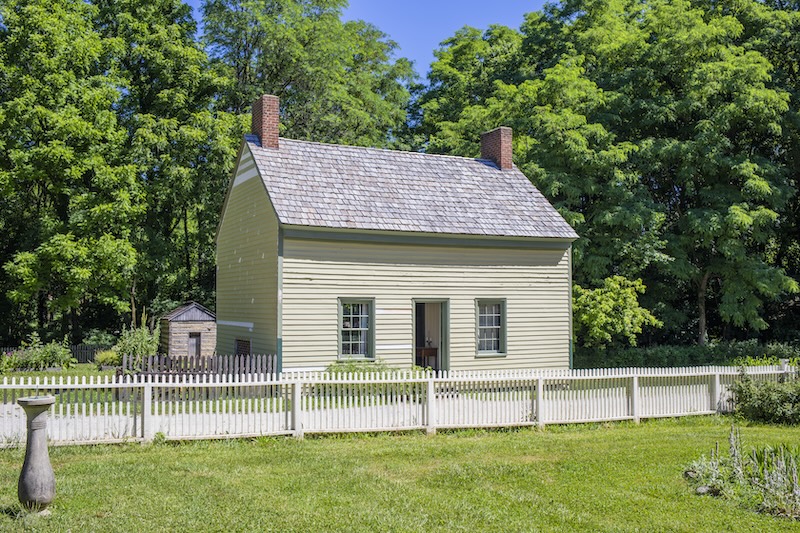
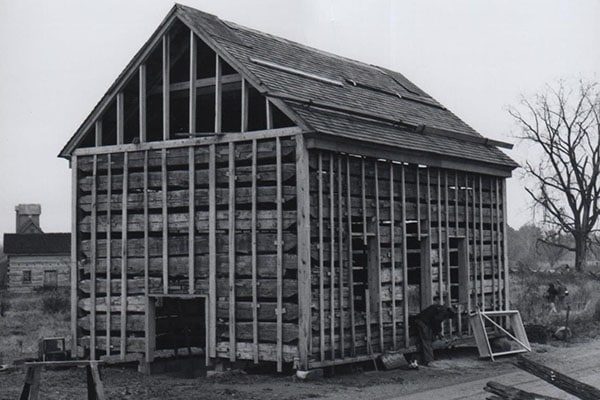
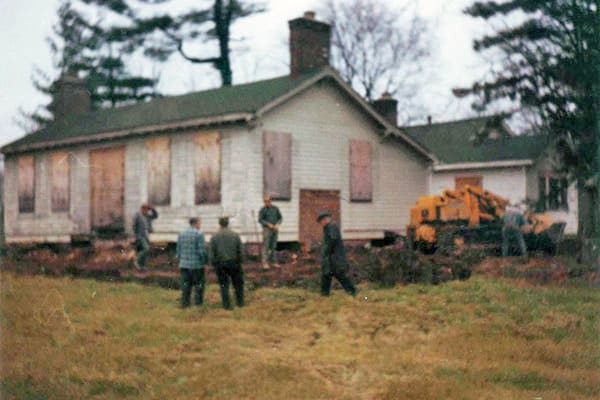
The Golden Eagle Inn was constructed in the 1830s and is believed to have been home to the founders of Westfield, Indiana. It was later owned by the Doan family, which was very active in farming and civic activities in Westfield. The Doan family donated the home in 1972. It has gone through many internal and external reconstructions.
-
-
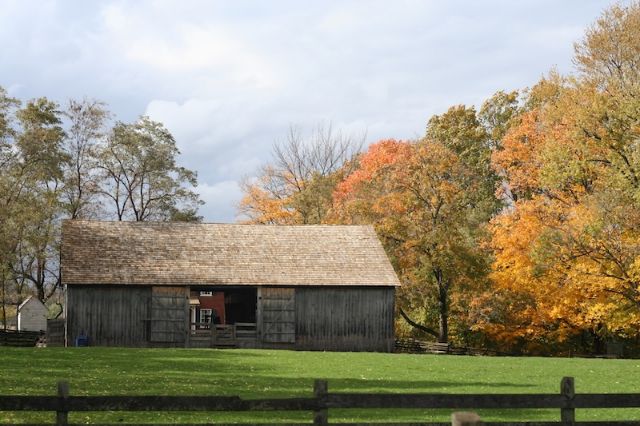
Golden Eagle Barn (1820s)
The Golden Eagle Barn and Dr. Campbell’s barn were located on the same site in Noblesville. One was built in 1826 and the other in 1829. Both barns show insights into the construction and type of structures for the time period.
-
-
Origins Cabin (1834)
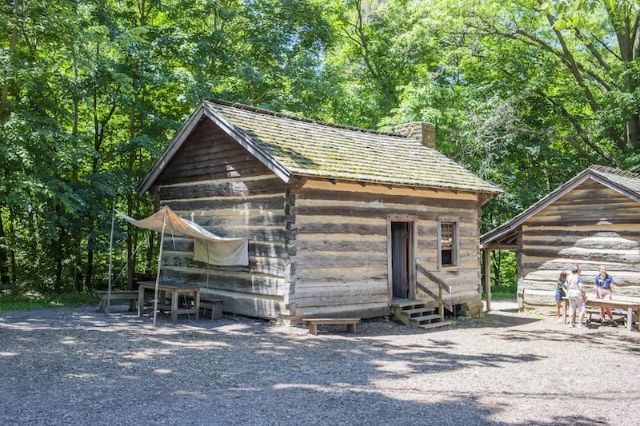
This 1 ½ story log structure was built in 1834 by Simpson Jones in Hancock County, Indiana, near Mohawk. It remained a family dwelling until about 1900 when it was converted to a farm storage shed. In 1973, Lloyd Fuqua moved the cabin 15 miles to his home in Hamilton County and opened it to the public on July 4, 1976. The structure was donated to Conner Prairie by Fuqua’s family in 1996. The cabin was carefully restored by the museum’s historic trades staff.
-
-
Baker Brother's Pottery Shop (2012)
This fully operational pottery shop was dedicated in 2012. This was the second building that was built by Conner Prairie trades staff. The new kiln shed was completed in 2013.
-
-
McClure House (C. 1840)
The home belonging to Prairietown’s McClure family of carpenters was built between 1830 and 1850 in Hamilton County. Believed to be the home of Jacob Heiny, an early farmer in Hamilton County. Known as the Holtkamp-White cabin, this one-room log cabin was restored in 1976, after its move to Conner Prairie.
-
-
McClure Carpenter Shop (2010)
This fully operational carpentry shop was officially dedicated on August 9, 2008, and completed in 2010. This was the first building addition to Prairietown in more than a decade. The carpenter shop was the first at Conner Prairie to be completely built by hand from the ground up.
-
-
Turner House
This two-story home was moved to Conner Prairie from Cicero, Indiana. It was owned by the Fraley Family, however not much more is known about the home.
-
-
Campbell House (1840s)
This one-story Greek Revival house was built around 1840. The home is a modest interpretation of a Greek Revival house but an upscale home for the era and the region. The Campbell House was home to Dr. A.G. Ruddell, the first physician in an area known as Allisonville in the 1830s and 1840s. The house stood at the corner of 465 and Allisonville Road.
-
-
Campbell Barn (1820s)
This barn was allegedly built in the mid-1820s in Hamilton County, Indiana. It shows insights into the construction and type of structures for the time period and region. It is a rectangular barn with hewn support beams and timber siding.
-
-
Prairietown Schoolhouse (1823-1853)
This one-room log cabin was built between the 1820s and 1850s in Bentonville, Indiana, and now serves as Prairietown’s schoolhouse. It has undergone restoration, including the replacement of exterior logs, flooring, roofing, and several supports.
-
-
Whitaker's store (Reconstructed 1972)
The Whitaker Store was built in Crothersville, Jackson County, Indiana. This 1 ½ story log cabin also has an attached one-story cabin. It has been altered considerably since its move to Conner Prairie, with lapped siding added to the main structure.
-
-
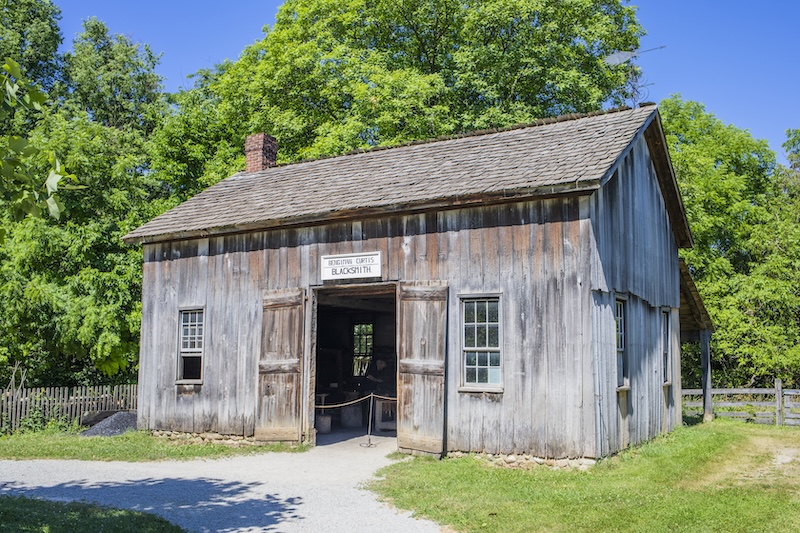
Curtis Blacksmith Shop (Potentially 1840s Reconstructed 1972)
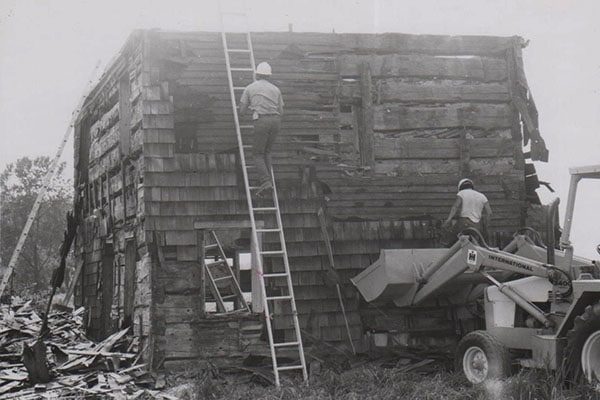
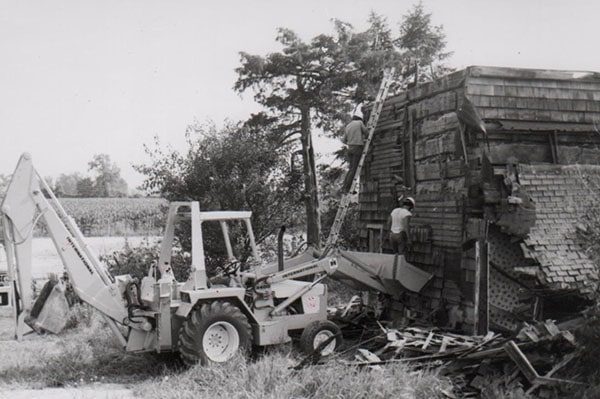
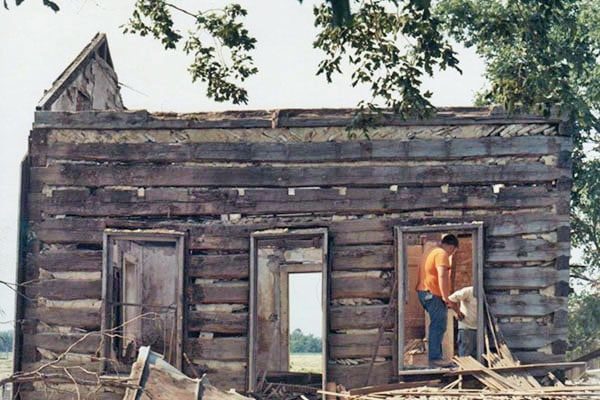
Built in Angola, Indiana, the blacksmith shop originally belonged to the Dygert family. It served as a blacksmith and carpenter shop in the late 1800s and was eventually moved and reconstructed at Conner Prairie in 1972.
-
-
Curtis House (1830s)
This 1830s-era two-story log cabin originally belonged to the John Berger family. It was located along the National Road (present-day U.S. 40) near Lewisville, IN (Henry County). This home served as a regular stop for travelers and stagecoaches bringing families west in the 1830s. It was also said that this home accepted boarders for extra money. This building was reconstructed by Conner Prairie; staff found old Cincinnati newspapers (Daily Gazette) behind printed wallpaper. These newspapers date back to 1837 and 1862.
-
-
Resistance Cabin (1936)
This 1-1/2 story, one-room log home was built near Greencastle, Putnam County, Indiana. Other information about the cabin is unknown at this time.
-
-
Reflection Cabin (Date Unknown)
This 1-1/2 story log cabin was moved from Fortville, Hancock County, Indiana. Its date of construction is unknown, although it was owned by the Hall family of Hancock County. The exterior shed outside the cabin was added after its reconstruction in the 1970s at Conner Prairie.
-
.jpg)
.jpg)
.jpg)
.jpg)
.jpg)
.jpg)
.jpg)
.jpg)
.jpg)
.jpg)
.jpg)
.jpg)
The Junction
- Bank Barn
- Log Barn
- Porter House
- Quartermaster Station
- Cedar Chapel Bridge
-
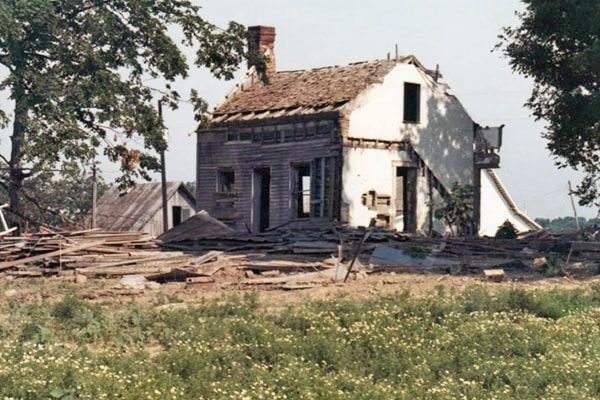
Bank Barn (1840-1850s)
The style is called a ‘bank’ barn because it sits on an embankment. The animal stalls are on the bottom level, while the upper level is used for storage. A bank barn needs to have a strong foundation because the constant shifting of the earth can cause a lot of pressure on the wooden support structures. This barn was likely built sometime in the 1840s/1850s and owned by the Gascho (GOSH-aw) family. The Gaschos were some of the early white settlers in this area and had connections to William Conner. We have another important piece of the Gascho family history in our collection - the covered wagon that brought the family to this area. The Gascho homestead was located on the corner of Pleasant and Cumberland in Noblesville. Learn more about the relocation of the bank barn.
-
-
Log Barn (C. 1840)
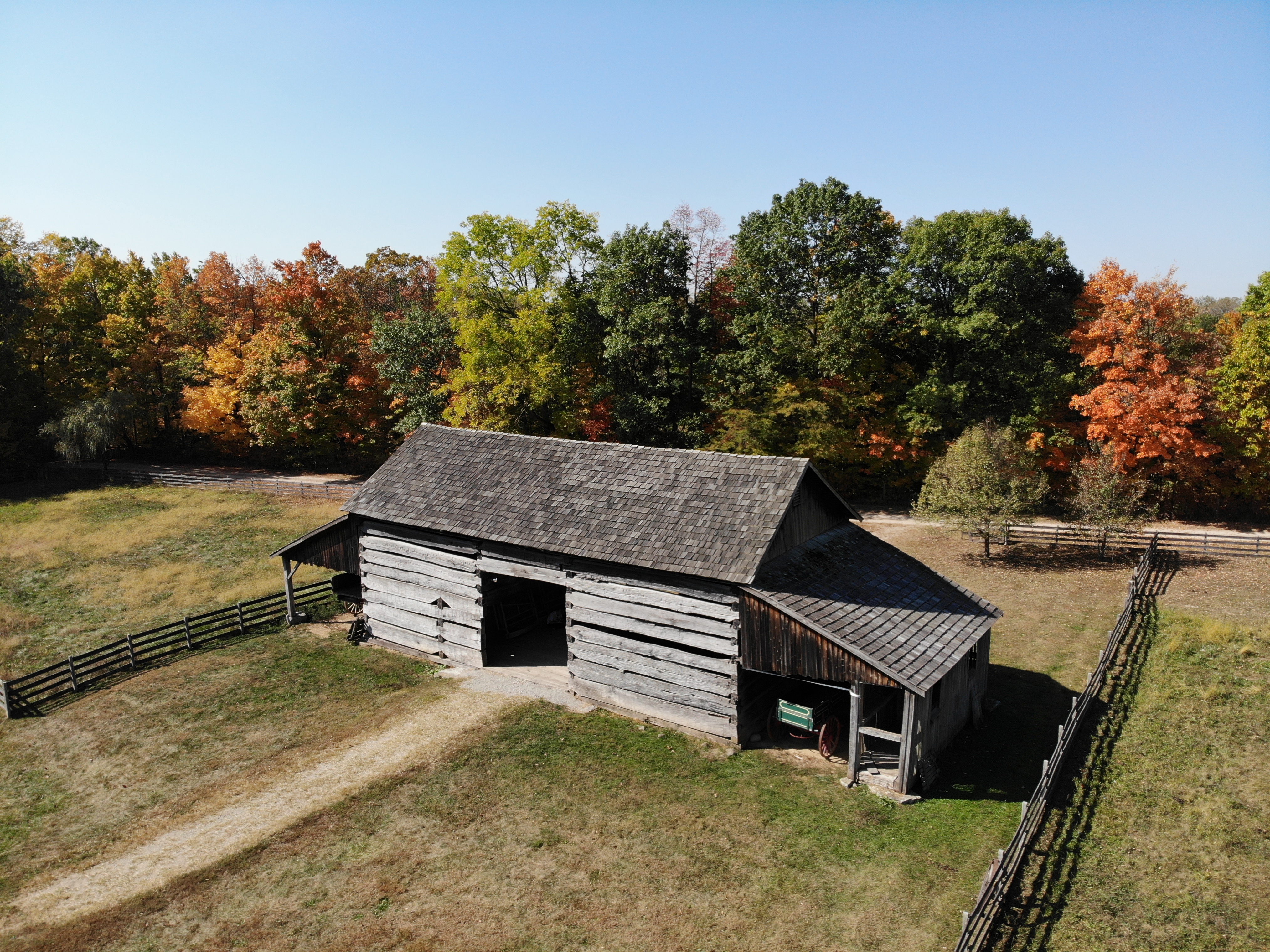
The log barn was built around 1840 in Bentonville, Fayette County, Indiana. It is a double-crib log barn made of poplar. There is evidence of the original stalls and cribs inside. Some of the logs and roof were replaced when the barn first arrived at Conner Prairie in the 1970s. It was placed in its current location in 2002. The barn demonstrates the construction methods and typical building layout of the period. Donated by the Munger and Pflum families.
-
-
Porter House (Reconstructed 2002)
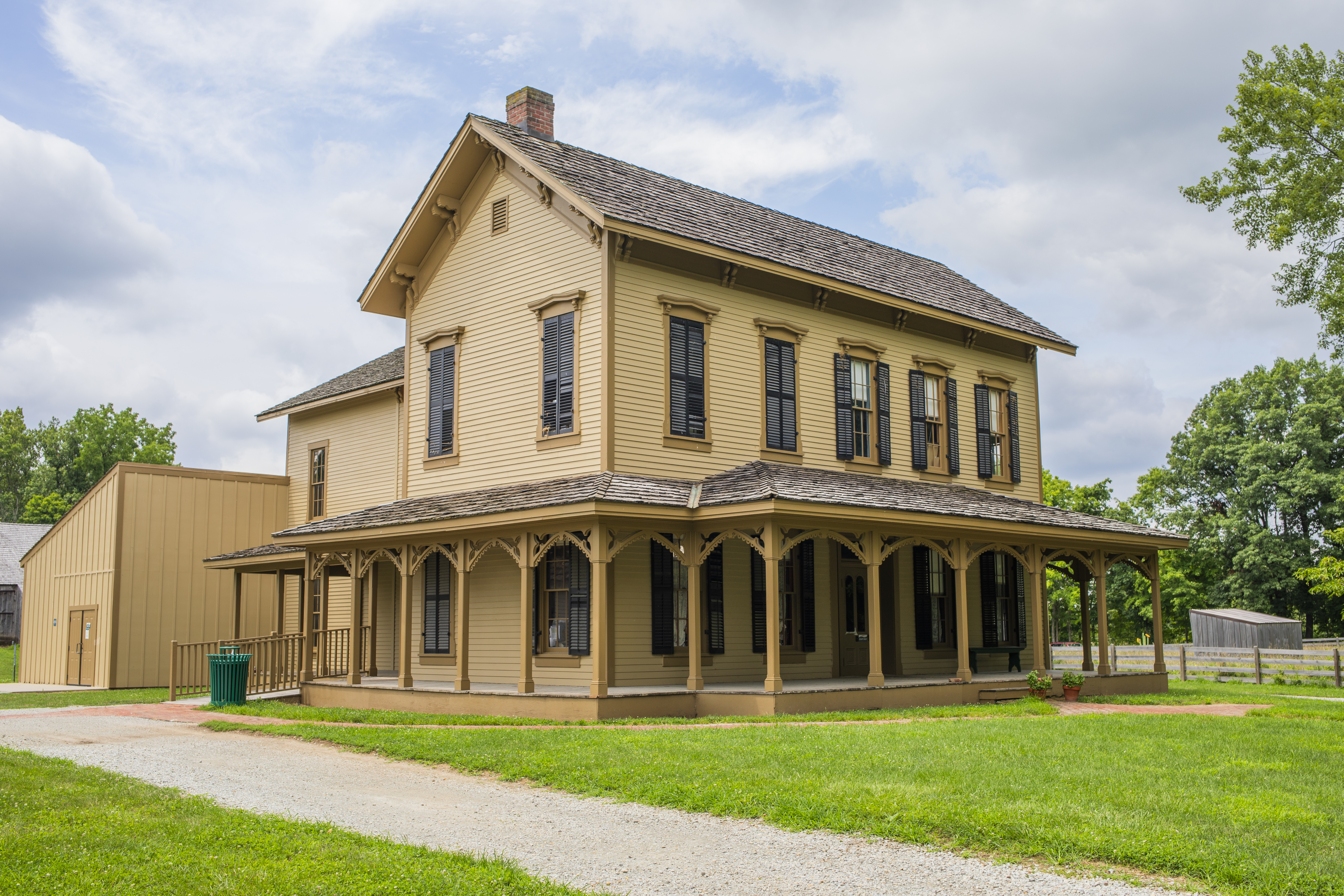
The Porter House (once the Zimmerman Farm House) is based on homes of the era. When the house made a design switch from 1886 to 1863, much of the decorative trim and lattice work was removed to show the difference in architectural trends. The house itself was built in 2002 and incorporates decorative elements from the Wheeler farmhouse from Noblesville, IN. These elements include the central staircase, front door, and some window frames and capitals.
-
-
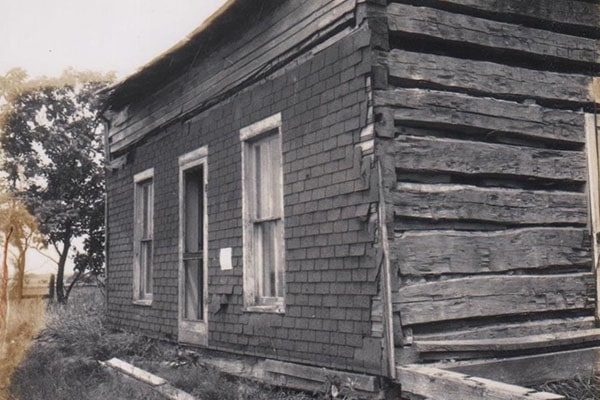
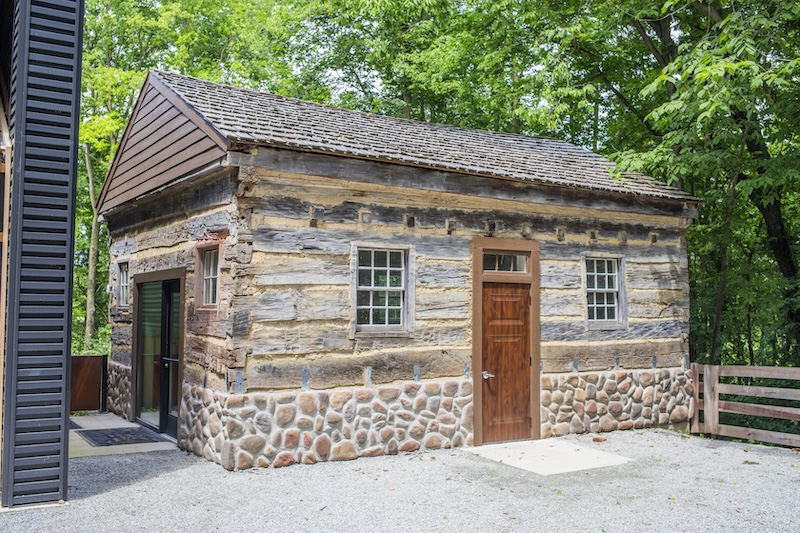
Quartermaster Station (1850)
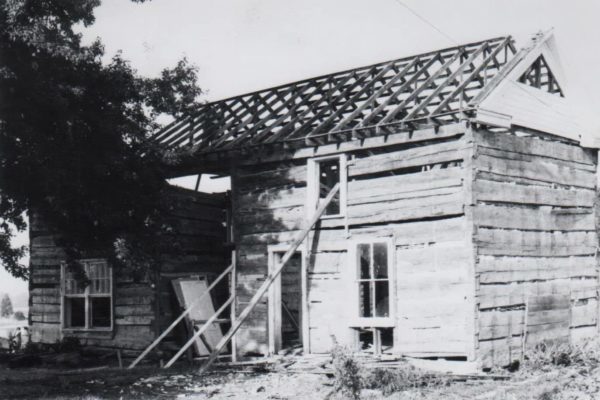
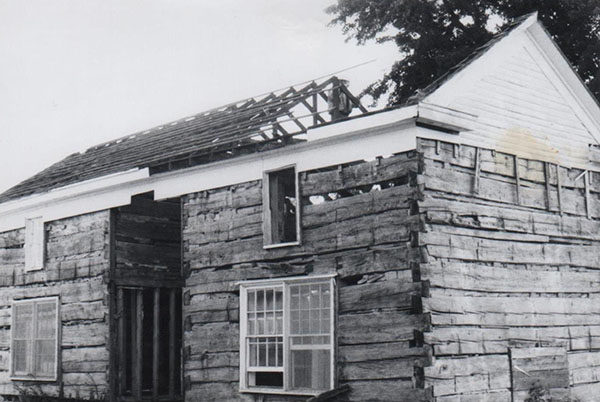
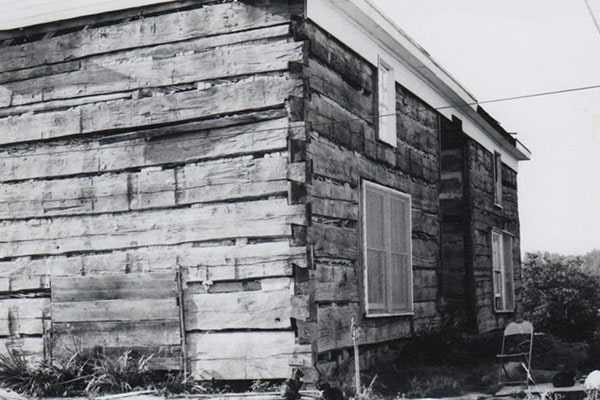
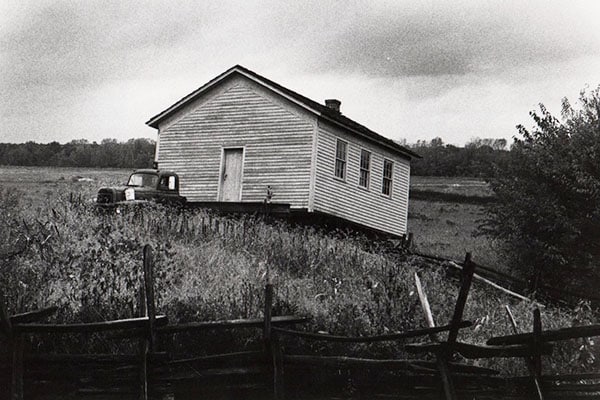
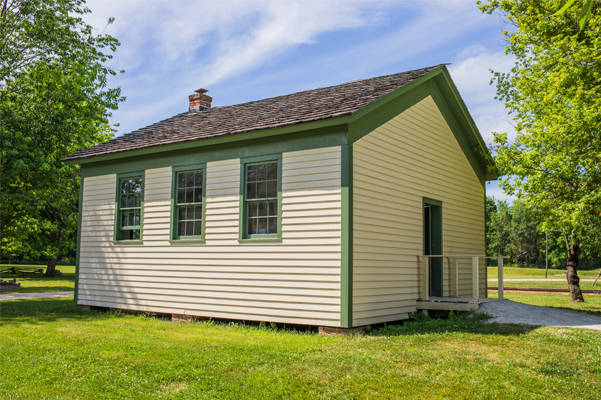
The Telegraph Station (once District School House) was built around the 1850s in Syracuse, Kosciusko County, Indiana. The building was brought to Conner Prairie by Eli Lilly, and it is where he would play pupil in the schoolhouse. It sat in what is now the Lenape camp from 1970 until 2002 when it was relocated to its current location. The school was then redesigned as the telegraph station when the site switched from 1886 to 1863. This square one-room schoolhouse is made of poplar, and the framing, interior walls, and ceiling rest on hand-hewn sills (which are held together by wooden pins).
-
-
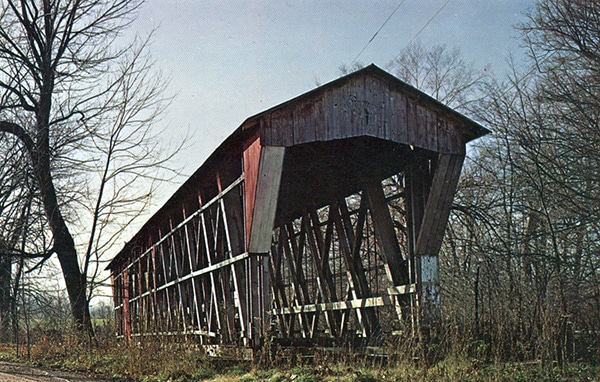
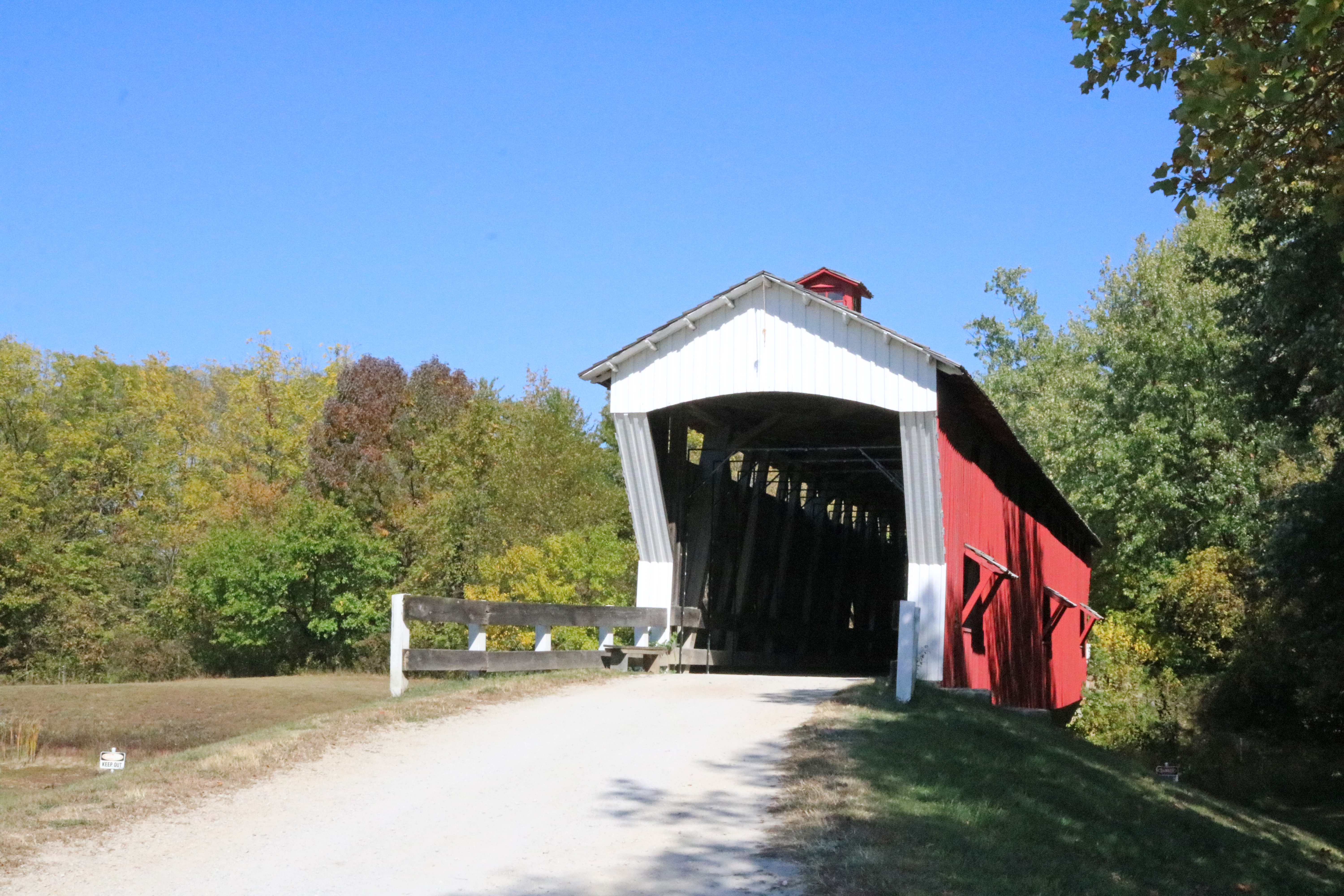
Cedar Chapel Bridge (1884)
This bridge was originally constructed in 1884 near Auburn, DeKalb County, Indiana, by George Woerntz & Sons. The bridge was decommissioned in 1970 when it no longer met transportation needs. This is the only bridge still in existence by this builder and features a Howe Truss design. The Howe Truss was invented in 1840 and is a steppingstone between all-wood and all-iron construction.
-
Lenape Camp
- Lenape Camp
-
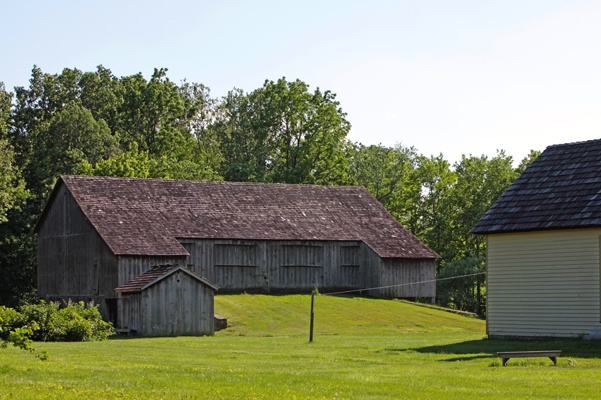
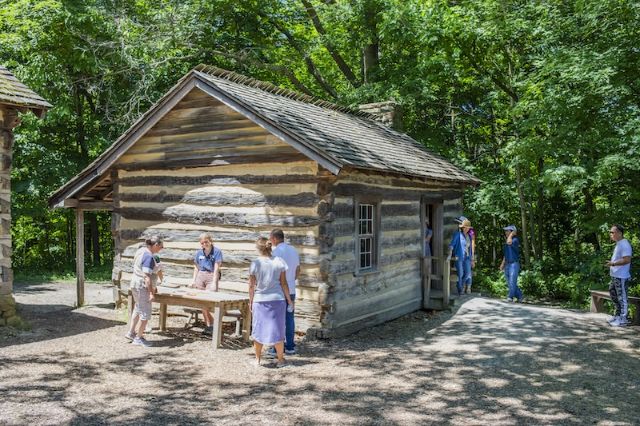
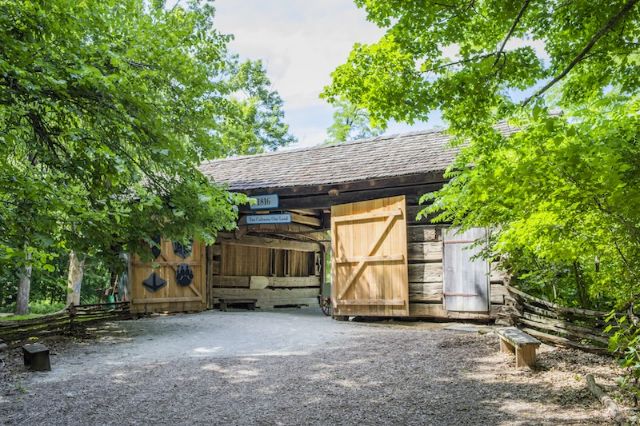
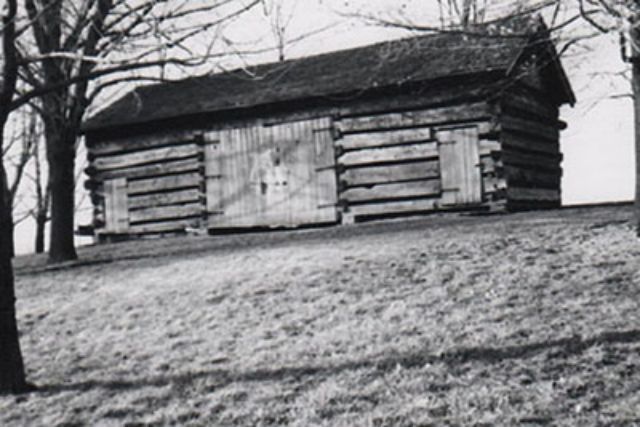
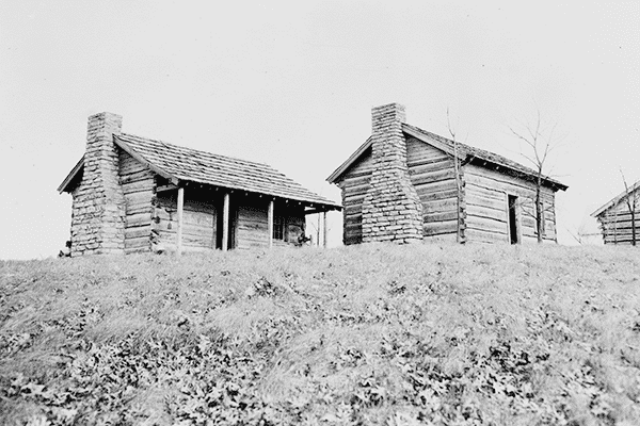
Little is known about these buildings that were moved onto the property by Eli Lilly. The cabins were pieced together from other existing structures obtained by Eli Lilly. All structures are believed to have come from Brown County, Indiana. The two one-room log cabins are a typical home on the frontier; William Conner would have lived in a cabin similar to those with his first wife Mekinges. Not much is known about the two-crib barn.
-
View our Collection at the rural history project
For a deeper dive into Conner Prairie's Collections, visit Indiana University Library's Digital Collections page.
Original Conner Prairie Post Cards
- Village Scene
- William Conner House
- William Conner House with Prairietown folks
- The General Store
- View of the blacksmith's home and Resistance cabin
- Cedar Chapel Bridge
"The village scene is part of our historic re-creation of Indiana in the 1830s. Conner Prairie, through first person presentation, brings to life a cross-section of the people who settled central Indiana. Utilizing some 20 buildings as backgrounds, many of the crafts and skills of early settlers are practiced daily. Conner Prairie is open from the first Tuesday in April through the first Sunday in November and is closed on Mondays. Three special events are celebrated each year: Pioneer craft Days, the second weekend in June; Old Fashioned 4th of July; and Traditional Christmas in December."


"Rear entrance of William Conner Homestead, built in 1823 for Conner's second wife, Elizabeth Chapman. Photography by Lewis G. Hall, Jr."


"East view of the Conner home, the first brick residence in the New Purchase area of Indiana. It was built in 1823 by a successful trader-merchant-farmer." Photo by Zierten


"The general store, on the left, the widow's house, and the blacksmith's house are the commercial and political centers of Conner Prairie's 19th century Indiana frontier settlement." Photo by Lewis G. Hall, Jr.


"The village widow and the blacksmith live across the road from each other and share much of the conversation and activity of Conner Prairie's 1840's Indiana Settlement." Photo by Lewis G. Hall, Jr.


"It was built in 1884 over cedar creek and is now located in a field near Cedar Creek close to Garrett, Indiana. It is 110' long and 12' wide." Photo by John V. Pontiere, Jr.


Curious about how Conner Prairie restores our historic buildings?
Learn more by viewing the video below:
Conner Prairie will collect or build, use, maintain, and preserve appropriate original artifacts, reproductions, and animals that support the institutional mission and long-range plan, and support on-going historical and scientific environments, programs, activities, and exhibits.